


Batteries for Use with Solar Panels: The Complete Guide to Energy Independence
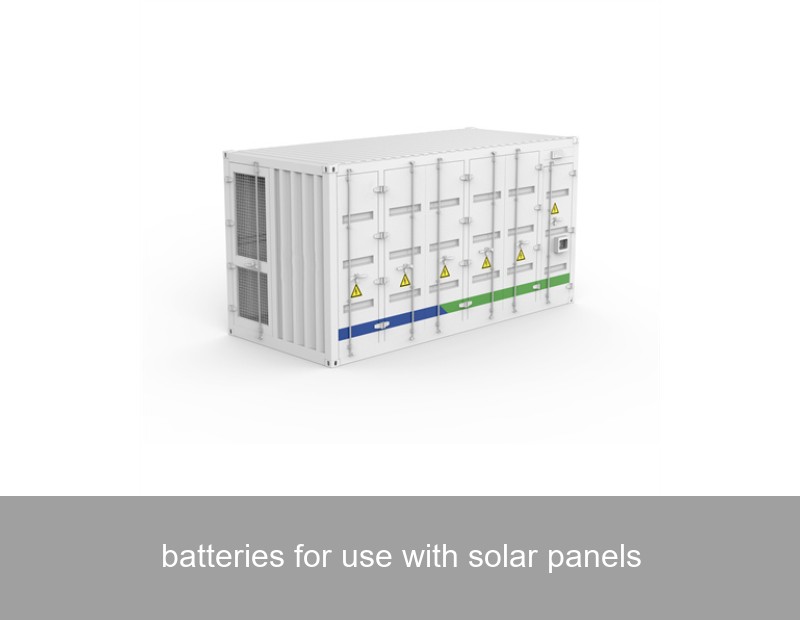
You've made the smart decision to install solar panels. The sun is shining, your meter is spinning backwards, and you're feeling good about your energy bill and your carbon footprint. But what happens when the sun goes down, or on a string of cloudy days? This is where batteries for use with solar panels become the game-changer. They are the essential component that transforms a solar array from a daytime energy saver into a 24/7 personal power plant. For nearly two decades, Highjoule has been at the forefront of this revolution, designing intelligent battery storage systems that unlock the full potential of solar energy for homes and businesses across Europe and the United States.
Table of Contents
- What Are Solar Batteries and How Do They Work?
- Key Benefits: Beyond Just Backup Power
- Real-World Impact: A Case Study from California
- The Future of Solar Battery Technology
- Is Your Home Ready for a Solar Battery?
What Are Solar Batteries and How Do They Work?
In simple terms, a solar battery is a device that stores the excess electricity generated by your solar panels. Instead of sending every unused kilowatt-hour back to the grid, you can store it for later use. Think of your solar panels as a water source and the battery as a reservoir. During peak sunlight (the rainy season for your reservoir), you collect more than you can use immediately. The battery stores that surplus so you can draw from it at night or during peak demand periods (the dry season).
Modern systems, like the Highjoule HES Series for homes or the Highjoule CIB Series for commercial applications, go beyond simple storage. They are integrated energy management systems. A smart inverter coordinates the flow of energy between your solar panels, battery bank, home appliances, and the electrical grid. This brain ensures optimal self-consumption, protects your home during an outage, and can even respond to grid signals to provide community stability.

Image source: Unsplash - A clean, professional installation of a residential battery storage system.
Key Benefits: Beyond Just Backup Power
While providing power during a blackout is a major advantage, the value proposition of solar batteries is multi-faceted:
- Maximize Self-Consumption: Use more of your own solar energy, sometimes increasing the direct consumption of your solar production from 30% to 80% or more, drastically reducing your reliance on grid power.
- Reduce Energy Bills: Avoid drawing expensive electricity from the grid during peak evening hours by using your stored solar energy. This is particularly impactful in regions with Time-of-Use (TOU) rates.
- Energy Resilience: Gain peace of mind with a seamless backup power supply during outages. Critical loads like refrigeration, lighting, and medical equipment stay on.
- Support the Grid & Earn Rewards: In some markets, you can participate in Virtual Power Plant (VPP) programs, where your battery can help balance the grid and earn you additional income or credits.
- Increase Sustainability: By maximizing your renewable energy use, you further decrease your household's or business's carbon emissions.
Choosing the Right Battery for Your Solar System
Not all batteries are created equal. Key specifications matter when selecting a system. Here’s a quick comparison of the dominant technology, Lithium Iron Phosphate (LFP), which Highjoule uses in its core products, against older alternatives:
| Battery Type | Key Advantage | Consideration | Ideal For |
|---|---|---|---|
| Lithium Iron Phosphate (LFP) | Superior safety, long lifespan (6,000+ cycles), excellent thermal stability | Slightly lower energy density than some lithium variants | Highjoule's recommendation for safe, long-lasting residential & commercial storage |
| Lithium NMC | High energy density | Higher fire risk, shorter lifespan than LFP | Electric vehicles (where space is limited) |
| Lead-Acid | Low upfront cost | Very short lifespan, low depth of discharge, requires maintenance | Legacy off-grid systems |
Beyond chemistry, focus on usable capacity (kWh) – how much energy you can actually store; power rating (kW) – how many appliances you can run at once; and round-trip efficiency – the percentage of energy put in that you get back out (Highjoule systems typically exceed 95%). A scalable design is also crucial. The Highjoule HES Series allows homeowners to start with a base unit and easily add more battery modules as their energy needs grow, protecting their investment for the long term.
Real-World Impact: A Case Study from California
Let's move from theory to practice. California, with its high electricity rates, wildfire-related Public Safety Power Shutoffs (PSPS), and strong solar adoption, is a prime market for solar batteries.
The Challenge: A medium-sized winery in Napa Valley, California, had a 100 kW solar array but was still facing crippling demand charges and vulnerability to grid outages that could spoil entire vintages. Over 70% of their solar generation was being exported to the grid in the middle of the day when rates were low, only for them to buy back expensive power during peak operational hours in the late afternoon and evening.
The Solution: Highjoule designed and deployed a turnkey CIB 150 commercial battery system with 180 kWh of storage capacity. The system was integrated with their existing solar and programmed for intelligent, multi-mode operation: peak shaving, demand charge management, and backup power for critical cooling and fermentation control systems.
The Data-Driven Results (after 12 months):
- Demand Charges Reduced by 42%: The battery discharged during the utility's peak windows, flattening the winery's power draw.
- Grid Independence Increased to 85%: The winery now consumes the vast majority of its own solar production on-site.
- ROI Period: Projected to be under 5 years based on savings and available state incentives (like the SGIP).
- Peace of Mind: The system has provided seamless backup through multiple brief grid disturbances, protecting millions of dollars of inventory.
This case exemplifies how the right battery solution, tailored to specific energy profiles and local market dynamics, delivers tangible financial and operational benefits.

Image source: Unsplash - Solar panels on a commercial winery, a common application for industrial-scale battery storage.
The Future of Solar Battery Technology
The innovation curve is steep. We're moving towards even more integrated, intelligent, and grid-responsive systems. Highjoule's R&D is focused on two key areas:
- AI-Driven Energy Management: Future systems will not just store energy but predict it. Using weather data, usage history, and grid price signals, your battery will autonomously optimize its charge/discharge cycles to save you the maximum amount of money. Imagine your system knowing a storm is coming and ensuring it's 100% charged before it hits.
- Vehicle-to-Grid (V2G) Integration: Your electric vehicle will become a mobile battery asset. Highjoule is developing interoperability standards so that your EV can support your home during an outage or even sell energy back to the grid when prices are high, creating a truly dynamic ecosystem. For more on the potential of this technology, see this report from the National Renewable Energy Laboratory (NREL).
Is Your Home Ready for a Solar Battery?
The journey to energy independence starts with the right questions. Do you have time-of-use electricity rates? How important is backup power for your family or business? What are the local incentives available in your area (like the Federal Investment Tax Credit (ITC) in the U.S., which also applies to standalone storage)?
As a global leader since 2005, Highjoule provides more than just hardware. We offer a complete energy solution: from initial consultation and system design using our proprietary modeling software, to professional installation by our certified network, and ongoing monitoring via our Highjoule Energy Hub app. Our systems are designed for the diverse climates and electrical standards of both Europe and North America.
So, we leave you with this: When you look at your solar panels, do you see just a roof installation, or do you see the foundation of your own resilient, efficient, and intelligent energy ecosystem? What would you power first to ensure your home or business never skips a beat?
 Inquiry
 Online Chat