


Battery Backup How Much? A Practical Guide to Sizing Your Power Resilience
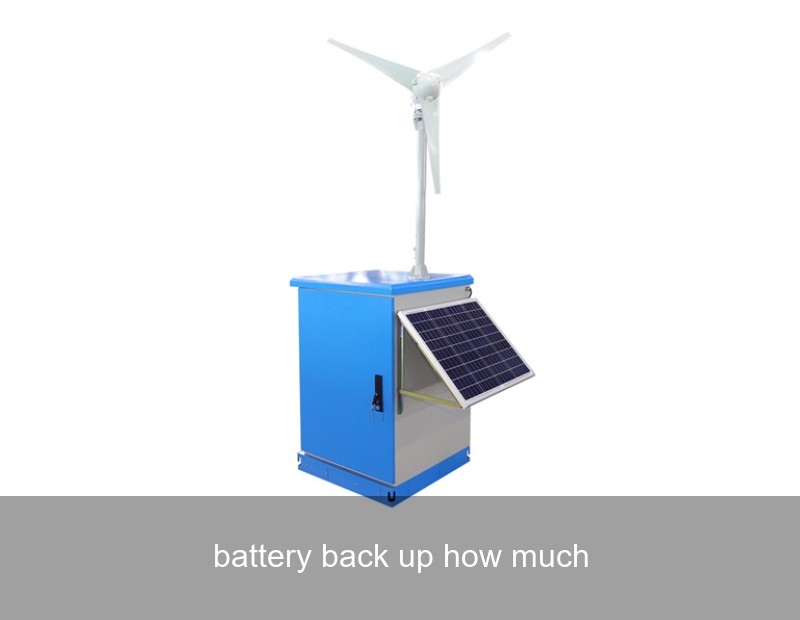
You're considering a battery backup system. It's a smart move, whether you're tired of food spoiling during a blackout, need to keep a home business running, or want to secure your facility's critical operations. But the most common and crucial question that stops people is: "Battery backup how much? How much capacity do I actually need?" The answer isn't a one-size-fits-all number. It's a personalized calculation that balances your power needs, budget, and goals for energy independence. Let's demystify the process together.
How Much Power Do You Really Need? The Core Calculation
Think of your battery backup system like a water tank. The size of the tank (battery capacity in kilowatt-hours, or kWh) determines how much water (electricity) you can store. The flow rate of the faucet (power output in kilowatts, or kW) determines how much you can use at any given moment. You need both to be right.
To start, you need to answer two questions:
- What do I want to power? (The Load List) Make a list of essential appliances and devices.
- For how long? (The Backup Duration) Do you want coverage for a brief 2-3 hour outage, overnight, or multiple days?
| Appliance | Average Running Watts | Estimated Daily kWh Use* |
|---|---|---|
| Refrigerator | 150-400 W | 1-2 kWh |
| LED Lighting (10 bulbs) | 100 W | 1-2 kWh |
| Furnace Fan | 500-800 W | 5-10 kWh |
| Wi-Fi & Modem | 20 W | 0.5 kWh |
| Laptop | 50 W | 0.5 kWh |
| Sump Pump | 800-1500 W | Varies greatly |
| *Source: Aggregated from U.S. Department of Energy estimates. Actual use varies by model and usage pattern. | ||
Key Factors That Determine Your Battery Backup Size
Beyond the basic list, several factors fine-tune the "how much" equation:
- Starting Surge (Inrush Current): Motors in fridges, pumps, or air conditioners require a brief power surge (3-5x running watts) to start. Your system's inverter must handle this peak load.
- Solar PV Integration: This is a game-changer. A battery paired with solar panels can recharge during an outage (if configured for islanding), dramatically extending backup duration. The question shifts from "how much battery" to "how much solar + battery."
- Weather Patterns & Grid Reliability: If you face frequent, long-duration outages or extreme weather events, sizing for longer autonomy (12-24+ hours) becomes critical.
- Load Management: Smart systems can prioritize circuits and shed non-essential loads to conserve battery life. This intelligent management means you might need less raw capacity than you think.

Image: A modern home energy system integrating solar and battery storage. Credit: Unsplash.
A Real-World Example: Sizing a Home Backup System
Let's take a family in Bavaria, Germany, experiencing more frequent grid instability. Their goal: Keep essentials running for up to 12 hours.
- Loads: Refrigerator (2 kWh/day), lighting (1 kWh/day), internet/charging (1 kWh/day), and a critical water circulation pump (3 kWh/day).
- Total Daily Need: ~7 kWh.
- Peak Power Demand: The pump (800W) and fridge (300W) might run simultaneously, requiring ~1.1 kW continuous, with pump surge up to 3.2 kW.
The Sizing: A battery system with at least 7-8 kWh of usable capacity and an inverter rated for continuous output above 1.5 kW with a surge rating over 3.5 kW would meet their needs. If they have a 5 kW solar array, the battery could be smaller (e.g., 5 kWh) as daytime solar would recharge it and power loads directly.
Beyond the Home: Commercial & Industrial Battery Backup Solutions
For a business, the "battery backup how much" question scales dramatically. It's not just about continuity; it's about financial loss prevention, data integrity, and safety. A supermarket's walk-in cooler, a data server farm, or a manufacturing PLC control unit have vastly different needs.
Case Study: California Winery (USA)
A Napa Valley winery faced annual losses from even short power outages during fermentation cycles. Their critical load—temperature control tanks, monitoring systems, and security—totaled 25 kW peak with a daily energy need of 80 kWh. A Highjoule C&I Stack system was deployed: a modular 100 kWh battery storage unit coupled with their existing solar carport. The system provides over 8 hours of full backup, ensures precise temperature control, and participates in the utility's demand response program, creating a new revenue stream. The winery now views the battery not just as insurance, but as a strategic energy asset.

Image: Industrial facilities like wineries have critical, sensitive power needs. Credit: Unsplash.
The Highjoule Approach: Smart, Scalable, and Sustainable
At Highjoule, we understand that "how much" is the starting point of a deeper conversation. Since 2005, we've engineered solutions that move beyond simple backup. Our Residential Energy Hub series, for example, starts at a modular 5 kWh and can be expanded to 20+ kWh. Its integrated AI-powered energy management doesn't just react to outages; it learns your consumption patterns, optimizes solar self-consumption, and can even leverage time-of-use rates to save you money every single day.
For commercial partners, our Industrial Power Platform (IPP) is the answer to "battery backup how much" at scale. These containerized or skid-mounted solutions offer from 100 kWh to multiple megawatt-hours. They provide seamless UPS-grade backup, peak shaving to reduce demand charges, and full integration with renewable microgrids. We don't just sell batteries; we deliver comprehensive Power Resilience as a Service (PRaaS), including system design, financing options, and 24/7 remote monitoring.
Future-Proofing Your Investment
The energy landscape is shifting. With the rise of electric vehicles and dynamic grid tariffs across Europe and the U.S., your home or business is becoming an active node in the energy network. When sizing your system today, consider tomorrow:
- EV Charging: Will you need to power an EV charger during an outage? This adds significant load (7-11 kW per charger).
- Vehicle-to-Home (V2H): Future systems might integrate your EV as a backup battery, changing the capacity calculus.
- Grid Services: Larger systems may generate income by providing grid stability services, improving the return on investment.
A modular system, like those in Highjoule's portfolio, allows you to start with what you need now and add capacity as your needs evolve. This scalable philosophy ensures your investment is protected for the long term.
So, the next time you ask, "Battery backup how much?", remember you're really asking, "How much resilience, independence, and intelligent energy management do I want for my future?" What is the first critical load you would protect if the power went out tonight, and how would that shape your starting point?
 Inquiry
 Online Chat