


Why a Battery Backup Energy Storage Cabinet is the Heart of Modern Power Resilience
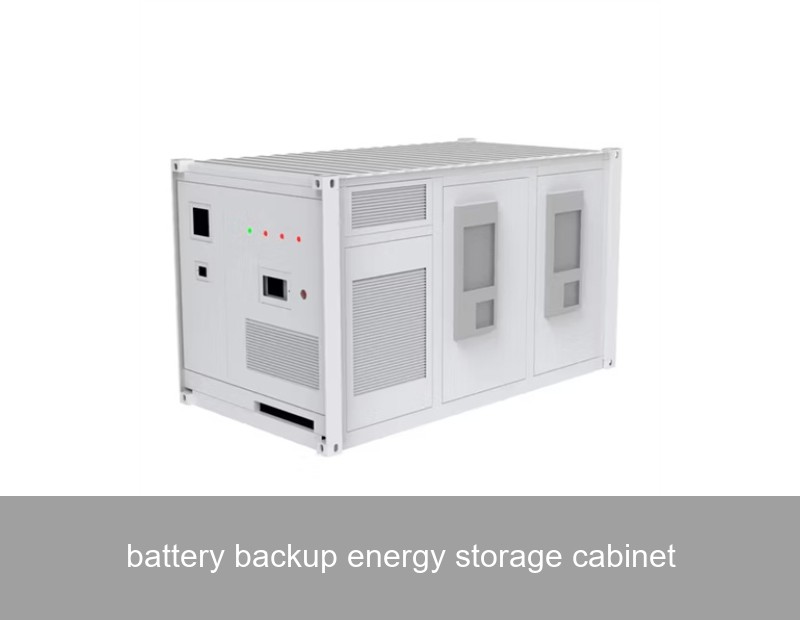
Imagine this: a critical data center in Frankfurt experiences a sudden grid fluctuation. Or a manufacturing line in Ohio halts due to a momentary outage. In seconds, automated systems switch to a silent, self-contained power source, preventing millions in losses. This isn't magic; it's the sophisticated work of a battery backup energy storage cabinet. More than just a box of batteries, this cabinet is the central nervous system for reliable power, intelligently managing energy to ensure continuity, optimize costs, and support sustainability. For businesses and communities in Europe and the US facing increasingly volatile grids and ambitious decarbonization goals, understanding this technology is no longer optional—it's essential.
Table of Contents
- What is a Battery Backup Energy Storage Cabinet?
- The Phenomenon: Grid Instability is the New Normal
- The Data: The Sobering Cost of Downtime
- The Case Study: A German Manufacturing Plant's Solution
- Key Insights: What Makes a Great Storage Cabinet?
- The Highjoule Approach: Engineered for Intelligence and Durability
- Looking Ahead: Your Energy Resilience
What Exactly is a Battery Backup Energy Storage Cabinet?
Let's demystify the term. A battery backup energy storage cabinet is a fully integrated, rack-mounted system that houses lithium-ion battery modules, a battery management system (BMS), thermal management, safety systems, and power conversion components. Think of it as a "power plant in a box." Unlike simple UPS systems, modern cabinets are "grid-interactive." They don't just wait for an outage; they actively participate in daily energy management—storing solar power, reducing peak demand charges, and providing grid services, all while standing ready for backup.

Image Source: Unsplash - Representative image of industrial energy storage
The Phenomenon: Grid Instability is the New Normal
Both in Europe and North America, our electricity grids are undergoing a historic transition. The rapid integration of variable renewable sources like wind and solar is a positive step, but it introduces new challenges to grid stability. Concurrently, aging infrastructure and increasing frequency of extreme weather events—from heatwaves straining capacity to storms causing physical damage—are making power interruptions more common. The result? A growing "resilience gap" that threatens operational continuity for everyone, from hospitals to homeowners.
The Data: The Sobering Cost of Downtime
The financial imperative is clear. Let's look at the numbers:
| Sector | Average Cost of Downtime (per hour) | Primary Risk |
|---|---|---|
| Data Centers | $300,000 - $500,000+ | Data Loss, Contract Penalties |
| Manufacturing | $50,000 - $250,000 | Production Halt, Spoiled Materials |
| Commercial Retail | $5,000 - $30,000 | Lost Sales, Security Systems |
According to a U.S. Department of Energy report, power outages cost the American economy tens of billions annually. In the EU, the push for energy independence is accelerating investments in decentralized storage. This data isn't just statistics; it's a direct line to your bottom line.
The Case Study: Peak Shaving and Backup for a Bavarian Auto Parts Supplier
Consider "Teilefertigung GmbH," a mid-sized automotive parts manufacturer in Bavaria. Their challenges were twofold: high "peak demand" charges from their utility and vulnerability to local grid faults that could stop precision machinery.
- Goal: Reduce energy costs and ensure uninterrupted 24/5 operation.
- Solution: Installation of a 500 kWh/250 kW battery backup energy storage cabinet system, integrated with their existing rooftop solar PV.
- Implementation: The system, featuring Highjoule's H-Cube Commercial Series cabinets, was programmed for intelligent peak shaving. It draws power during low-cost, off-peak hours and discharges during expensive peak periods. Simultaneously, it maintains a 20% state-of-charge as a dedicated backup reserve.
- Results (12-month period):
- 18% reduction in overall electricity costs via peak shaving and solar self-consumption optimization.
- 3 prevented outages (totaling 47 minutes) where the cabinet seamlessly bridged grid failures.
- Estimated ROI period of 4.2 years, not including avoided production loss valued at approximately €120,000 per incident.
This case exemplifies the dual financial and operational role of a modern storage cabinet. It's not an expense; it's a strategic asset.
Key Insights: What to Look for in a High-Performance Storage Cabinet
Not all cabinets are created equal. Based on two decades of engineering at Highjoule, here are the non-negotiable features:
- Intelligent Battery Management System (BMS): The true "brain." It must provide cell-level monitoring for safety, state-of-charge accuracy, and advanced algorithms to maximize battery life and performance.
- Robust Thermal Management: Lithium-ion batteries perform best within a tight temperature range. A liquid-cooled or advanced forced-air system is crucial for longevity, especially in demanding industrial environments.
- Modular & Scalable Design: Your energy needs will evolve. Look for cabinets that allow you to add battery modules or increase power ratings without replacing the entire system.
- Grid-Forming Capabilities (Advanced): The next frontier. This allows the cabinet to "black start" and form a stable microgrid if the main grid goes down completely, a feature increasingly valued in the US and Europe.
- Cybersecurity & Remote Monitoring: As a connected energy asset, robust cybersecurity protocols and secure, cloud-based monitoring platforms are essential for safe operation and performance tracking.
The Highjoule Approach: Engineered for Intelligence and Durability
Since 2005, Highjoule has been at the forefront of making advanced energy storage both powerful and practical. Our philosophy is that a battery backup energy storage cabinet should be a worry-free, value-generating cornerstone of your infrastructure.
Our H-Cube Commercial & Industrial Series embodies this. It's engineered from the ground up with the insights listed above:
- ProActive BMS™: Our proprietary system doesn't just monitor; it predicts and adapts, extending cycle life by up to 20% compared to standard systems.
- Adaptive Liquid Cooling™: Ensures even temperature distribution across all cells, guaranteeing optimal performance from the Arizona desert to Scandinavian winters.
- Universal Grid Interface: Seamlessly integrates with diverse grid standards and inverters across Europe and North America, simplifying deployment.
- Highjoule Energy Cloud: Our secure platform provides real-time analytics, performance reports, and remote system management, putting control at your fingertips.
For larger-scale applications like microgrids and utility support, our H-Block Utility Series cabinets are containerized solutions delivering multi-megawatt power with the same core intelligence.

Image Source: Unsplash - Technician and energy storage system
Looking Ahead: Is Your Operation Truly Prepared for the Next Grid Event?
The conversation has shifted from *if* you need a resilience plan to *what form* that plan will take. A modern battery backup energy storage cabinet offers a dynamic, multi-faceted answer that protects your operations, cuts costs, and supports a cleaner grid.
We invite you to consider: When your next power quality event occurs, will your business simply stop, or will it have the intelligence to adapt and continue? What would the ability to control and optimize your own energy flow mean for your strategic goals in the coming year?
 Inquiry
 Online Chat