


Battery Energy Storage System (BESS): The Intelligent Key to a Renewable Future
it's a sunny afternoon, and solar panels across your neighborhood are generating more electricity than anyone can use. Fast forward a few hours to a cloudy evening, demand peaks, but the sun is gone. This mismatch between renewable energy generation and our consumption patterns is one of the biggest challenges in the clean energy transition. The solution? A Battery Energy Storage System (BESS). Far more than just a collection of batteries, a modern BESS is an intelligent, integrated system that stores electricity for use at a later time, providing stability, resilience, and efficiency. For businesses, communities, and grid operators, understanding BESS technology is no longer a niche interest—it's a critical part of building a sustainable and reliable energy infrastructure.
What is a BESS? More Than Just a Big Battery
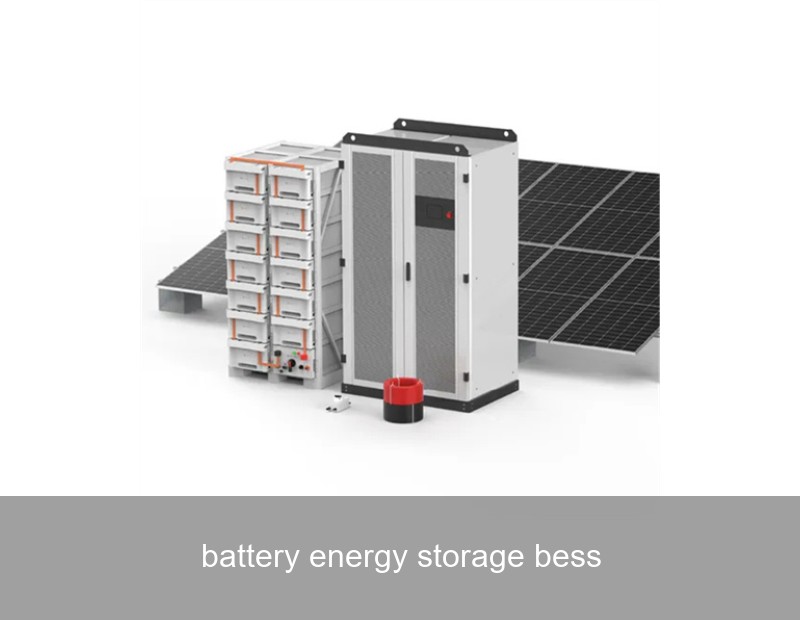
A Battery Energy Storage System is a sophisticated technological solution designed to store electrical energy. At its heart are the battery cells (often lithium-ion, similar to those in your EV, but optimized for stationary storage). However, calling it just a "big battery" is like calling a modern car just an engine. A complete BESS integrates several crucial components:
- Battery Modules & Racks: The core energy storage units.
- Battery Management System (BMS): The "brain" that monitors cell health, voltage, temperature, and state of charge to ensure safety and longevity.
- Power Conversion System (PCS): The critical component that converts stored DC power from the batteries to AC power for the grid or your facility, and vice-versa for charging.
- Energy Management System (EMS): The high-level controller that decides when to charge and discharge based on algorithms, economic signals, or grid needs.
- Thermal Management & Safety Systems: Ensures optimal operating temperature and includes fire suppression and containment.
This integrated approach is what companies like Highjoule have perfected since 2005. We don't just supply components; we deliver intelligent, turnkey BESS solutions where every part is engineered to work in seamless harmony, maximizing performance and safety for commercial, industrial, and utility-scale applications.

A modern, containerized BESS unit, like those deployed by Highjoule, integrates all critical systems for safety and performance.
How a Battery Energy Storage System Works: The Intelligent Power Hub
Think of a BESS as a highly responsive "energy bank." Its operation follows a simple but powerful logic cycle, managed by its intelligent software:
- Charging: The system draws and stores electricity when it is plentiful, cheap, or clean—like during midday solar peaks or windy nights.
- Holding: Energy is kept in reserve, ready for instant deployment, with minimal losses.
- Discharging: On command, the system releases stored energy when it is most needed or valuable—during peak demand periods, grid outages, or when renewable generation drops.
The true magic lies in the EMS. For a business, it can be programmed to avoid costly demand charges by discharging during short periods of peak usage. For a grid operator, it can provide frequency regulation, injecting power in milliseconds to correct tiny fluctuations in grid frequency that keep the entire system stable. This versatility makes BESS a uniquely flexible asset.
Key Applications: Where BESS Shines
The value of a BESS isn't theoretical; it's proven across multiple sectors. Here’s how it delivers tangible returns:
| Application | Primary Value | Typical User |
|---|---|---|
| Commercial & Industrial (C&I) | Peak shaving, demand charge reduction, backup power, time-of-use arbitrage. | Factories, Data Centers, Office Buildings, Shopping Malls |
| Renewable Energy Integration | Smooths solar/wind output, stores excess generation, enables "firm" renewable power. | Solar/Wind Farm Operators, Microgrids |
| Grid Services | Frequency regulation, voltage support, grid congestion relief, deferred infrastructure upgrades. | Utility Companies, Grid Operators (like National Grid) |
| Residential & Community | Energy self-consumption, backup power, participation in virtual power plants (VPPs). | Homeowners, Housing Associations |
A Real-World Case: BESS Stabilizing a European Grid
Let's look at a concrete example from the UK, a market with ambitious net-zero goals and a high penetration of wind power. In 2022, National Grid ESO (the electricity system operator) continued to rely heavily on its Enhanced Frequency Response (EFR) and Dynamic Containment services to maintain grid stability. These services require assets that can respond to frequency deviations in under one second.
A 50 MW / 75 MWh Battery Energy Storage System, similar to Highjoule's GridMax Utility solution, participating in these markets can provide crucial inertia and rapid frequency response. According to a report by National Grid ESO, such fast-acting assets are essential for managing the grid as traditional fossil-fuel plants retire. In one instance, a BESS in Scotland responded to a frequency dip in 0.2 seconds, preventing potential load shedding. This isn't just backup power; it's active grid conditioning, and it's becoming a standard service for large-scale BESS deployments. Highjoule's systems are specifically engineered with sub-second response times to excel in these high-value grid service applications.

BESS units co-located with wind farms, as seen here, are critical for making renewable energy a reliable, 24/7 resource.
Choosing the Right BESS: Key Considerations
Selecting a BESS is a significant investment. To ensure optimal returns, focus on these pillars:
- Safety & Certification: Insist on UL 9540 (system level) and UL 1973 (battery unit) certifications in the US, and equivalent IEC standards in Europe. This is non-negotiable.
- Performance & Lifetime: Look beyond simple power (MW) and energy (MWh) ratings. Understand the guaranteed cycle life and throughput over the system's lifetime. A cheaper system with a shorter lifespan is often more expensive in the long run.
- Intelligence & Software: The EMS is where value is captured. Can it be configured for multiple revenue streams (e.g., arbitrage + frequency response)? Does it offer remote monitoring and predictive analytics?
- Service & Warranty: A comprehensive, long-term service agreement from a reputable provider is essential for protecting your investment.
Highjoule's Advanced BESS Solutions
At Highjoule, we've spent nearly two decades refining our approach to meet these exact considerations. Our product portfolio is built on a foundation of safety, intelligence, and durability.
For C&I customers, our PowerStack C&I Series offers modular, scalable solutions designed for peak shaving and backup power, featuring an intuitive EMS that automatically maximizes economic savings.
For utility and large-scale renewable projects, the GridMax Utility Series provides containerized, high-power solutions ready for the most demanding grid service applications and renewable firming. All Highjoule systems are built with our proprietary, adaptive battery management software and come with full lifecycle support, from feasibility studies and financial modeling to installation and long-term maintenance.
We believe in transparency. You can learn more about the core safety science behind modern lithium-ion systems from authoritative sources like the Department of Energy's resources on battery safety.
The Future of Energy Storage
The trajectory is clear. As noted by the International Energy Agency (IEA), global energy storage capacity is set to multiply exponentially this decade, driven by falling costs and policy support like the Inflation Reduction Act in the US. We're moving beyond single-application systems toward multi-service, AI-optimized storage assets that can simultaneously serve the grid, the renewable generator, and the end-user. Technologies like solid-state batteries and advanced flow batteries are on the horizon, promising even higher safety and longer duration.
As you consider the resilience of your operations or the integration of your renewable assets, what specific energy challenge—be it unpredictable costs, grid dependency, or renewable intermittency—could a strategically deployed Battery Energy Storage System solve for you?
 Inquiry
 Online Chat