


Battery ESS Solar Charger: The Intelligent Heart of Your Energy Independence
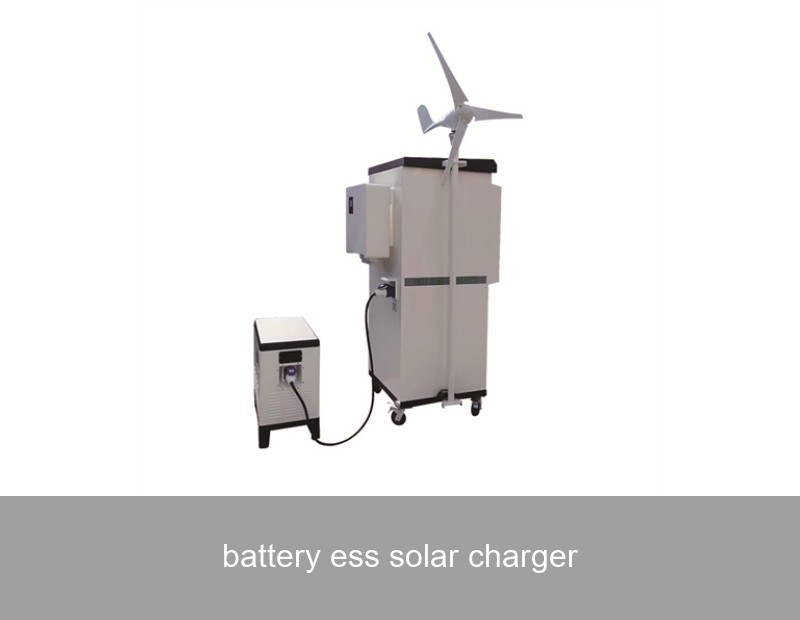
Have you ever looked at your solar panels on a bright day and wondered, "Is all this fantastic, free energy just going to waste when my home doesn't need it?" You're not alone. This is the fundamental challenge of solar power: generation and consumption are rarely in sync. This is where a Battery ESS Solar Charger comes in—it's the critical, intelligent component that manages the flow of energy between your solar panels, your home, and a battery storage system. Let's explore how this technology is revolutionizing energy use for homes and businesses across Europe and the US, turning solar installations from simple generators into resilient, smart power hubs.
Table of Contents
What is a Battery ESS Solar Charger?
At its core, a Battery Energy Storage System (ESS) Solar Charger is the brain and traffic controller of a modern solar-plus-storage setup. It's not just a simple charger like for your phone. Think of it this way: your solar panels are the power plant, your battery is the reservoir, and your home is the city. The solar charger is the sophisticated grid operator, deciding in real-time:
- Should solar power go directly to running your appliances right now?
- Should surplus energy be diverted to charge the battery for use tonight?
- Should the battery discharge to cover your needs during a cloudy period or high utility rate time?
- Is there so much excess that it's safe and profitable to send back to the grid?
This device, often integrated into a hybrid inverter or a dedicated battery management system, ensures every watt-hour of your self-produced solar energy is used optimally. For a system to be truly efficient, this intelligence is non-negotiable.

Image Source: Unsplash - A modern home battery ESS unit, where the solar charger intelligence is typically housed.
Why Does the Solar Charger Matter? The Data Speaks
The phenomenon is clear: energy prices are volatile, and grid stability is a growing concern. The logical response is to maximize self-consumption of solar energy. Here’s where data illuminates the path:
| Scenario | Solar-Only System (No Battery/Charger) | Solar + Basic Battery | Solar + Smart ESS with Advanced Solar Charger |
|---|---|---|---|
| Self-Consumption Rate | ~30-40% (most excess goes to grid) | ~60-70% | 80-95%+ (intelligent load shifting) |
| Grid Dependence During Peak | High | Reduced | Minimal to None |
| Response to Power Outage | No backup | Possible backup | Seamless backup (islanding capability) |
| Financial ROI | Relies on feed-in tariffs | Improved, but static | Optimized via time-of-use arbitrage |
The advanced algorithms in a high-quality solar charger, like those developed by Highjoule for our H-IQ Series energy management systems, continuously analyze weather forecasts, your consumption patterns, and real-time grid electricity prices. This allows the system to make predictive decisions, such as conservatively charging the battery before a forecasted cloudy day or selling energy back during a grid price spike.
A Real-World Case: The Berlin Bakery
Let's ground this in a concrete example. A family-run bakery in Berlin, Germany, installed a 50kW solar array. Initially without storage, they exported most of their afternoon surplus while buying expensive electricity in the early morning for oven pre-heating. Their solar self-consumption was a mere 35%.
In 2023, they integrated a Highjoule H-Cube C&I battery ESS with its advanced multi-mode solar charger. The results after one year were compelling:
- Self-Consumption Increased to 92%: Nearly all solar energy was used on-site.
- Peak Grid Demand Reduced by 88%: The system learned the bakery's schedule and ensured batteries were full before the 4 AM baking shift.
- Annual Energy Cost Savings of €8,500: Beyond just using their own energy, the system avoided drawing power during high-price periods.
- Uninterrupted Operations: During two brief grid outages, the system islanded seamlessly, preventing thousands of euros in lost product and downtime.
This case underscores that the value isn't just in the battery cells, but in the smart "charger" that orchestrates them. For businesses, this intelligence translates directly into operational resilience and a stronger bottom line.

Image Source: Unsplash - Commercial solar installation on a business rooftop, similar to the Berlin bakery case.
Choosing the Right System: Beyond the Hardware
When selecting a battery ESS solar charger solution, it's tempting to focus only on battery capacity (kWh) and inverter power (kW). However, the software intelligence and system integration are what unlock true potential. Here’s what to consider:
- Adaptive Algorithms: Can it learn and adapt to your unique load profile?
- Grid Services Ready: In some markets, like parts of the USA, advanced systems can participate in grid-balancing programs for additional revenue. Is your system capable?
- Scalability: Can you easily add more battery capacity later if your needs grow?
- Manufacturer Expertise: Do they understand both the electrochemical engineering of batteries and the software logic of energy economics?
At Highjoule, with nearly two decades of experience, we design our H-IQ Energy Platform around this holistic view. Our solar chargers are not an afterthought but the core of our systems, built to maximize the lifespan and financial return of every battery cell we install, whether for a residential H-Home system in California or an industrial H-Power Microgrid in Scandinavia. We provide a complete ecosystem—hardware, software, and ongoing performance monitoring—to ensure your investment delivers for decades. For authoritative information on battery storage benefits, you can refer to resources from the U.S. Department of Energy and the International Renewable Energy Agency (IRENA).
Future Trends and Your Next Step
The landscape is evolving rapidly. We're moving towards vehicle-to-home (V2H) integration, where your electric vehicle acts as a mobile battery for your house, requiring even more sophisticated solar charging management. Furthermore, AI-driven predictive energy management is becoming standard, optimizing systems against weather and market data with incredible precision.
The question is no longer if a battery ESS solar charger is valuable, but how intelligent your system needs to be to meet your specific goals for savings, backup, and sustainability. The technology is here, proven, and financially viable.
So, as you consider taking control of your energy future, what specific energy challenge—be it unpredictable bills, demand charges, or a desire for true energy resilience—would you want a smart Battery ESS Solar Charger to solve for you first?
 Inquiry
 Online Chat