


Solar Panels and Inverters: The Dynamic Duo Powering Your Energy Independence
So, you're thinking about going solar. That's fantastic! You've likely seen the shimmering arrays on rooftops and know that solar panels and inverters are the stars of the show. But here's a question we often get at Highjoule: "I have the panels and an inverter, so why isn't my energy bill zero?" It's a brilliant query that cuts to the heart of modern energy independence. The truth is, while this dynamic duo is essential, the real magic happens when they're integrated into a complete, intelligent system. Let's explore how these components work, why they're just the beginning, and how to truly unlock their full potential for your home or business.

Image Source: Unsplash (Photographer: American Public Power Association)
The Solar Panel Evolution: From Silicon to Smart Energy
Modern solar panels are marvels of engineering. They silently convert sunlight into direct current (DC) electricity. While panel efficiency ratings (like 21% or 22%) make for great marketing, the real-world yield is what matters. Factors like roof orientation, shading, and local climate play a huge role. For instance, a south-facing roof in Arizona will produce significantly more than an east-west split array in Germany, even with identical panels.
This is where system design becomes critical. It's not just about mounting panels; it's about configuring them to minimize losses. At Highjoule, our approach begins with a sophisticated energy audit that goes beyond simple roof measurements. We analyze your historical consumption, peak demand periods, and future needs to specify the optimal panel layout and technology—whether it's high-efficiency monocrystalline or robust bifacial panels for certain commercial applications.
Key Panel Considerations:
- Efficiency vs. Cost: Higher efficiency panels cost more but produce more power in limited space.
- Degradation Rate: Quality panels lose less than 0.5% of their output per year.
- Warranty: Look for 25+ year performance warranties guaranteeing 80-90% output at end-of-life.
The Inverter: Unlocking Your Solar Potential
If panels are the muscles, the inverter is the brain and nervous system. Its core job is to convert the DC electricity from your panels into the alternating current (AC) that powers your home and feeds the grid. But not all inverters are created equal.
| Inverter Type | How It Works | Best For | Consideration |
|---|---|---|---|
| String Inverter | Connects a series (string) of panels to one central unit. | Simple, unshaded roofs; cost-effective installations. | Shade on one panel can reduce the output of the entire string. |
| Microinverter | A small inverter attached to each individual solar panel. | Roofs with complex shading, multiple angles; maximizes each panel's output. | Higher initial cost, but often leads to greater overall energy harvest. |
| Power Optimizer System | Optimizers at each panel condition DC power, sent to a central inverter. | A balance of panel-level optimization and central conversion. | Offers module-level monitoring and improved shade tolerance. |
Choosing the right inverter technology is paramount. For a commercial warehouse with a vast, unshaded roof, a high-quality string inverter might be perfectly efficient. For a suburban home with a chimney and a tree casting afternoon shadows, microinverters could boost annual production by 10-25%. At Highjoule, our H-IQ Energy Platform doesn't just stop at selecting the inverter hardware. It integrates inverter data with consumption patterns and grid signals, creating an adaptive system that manages energy flows in real-time.
The Missing Piece: Why Solar Panels and Inverters Need a Best Friend
Here's the fundamental challenge: the sun doesn't always shine when you need power. Your panels might peak at noon, but your home's energy demand often peaks in the early morning and evening. Without a way to store that midday surplus, you end up exporting it to the grid for a low feed-in tariff, only to buy back expensive power later. This is the core limitation of a standalone solar panels and inverters system.
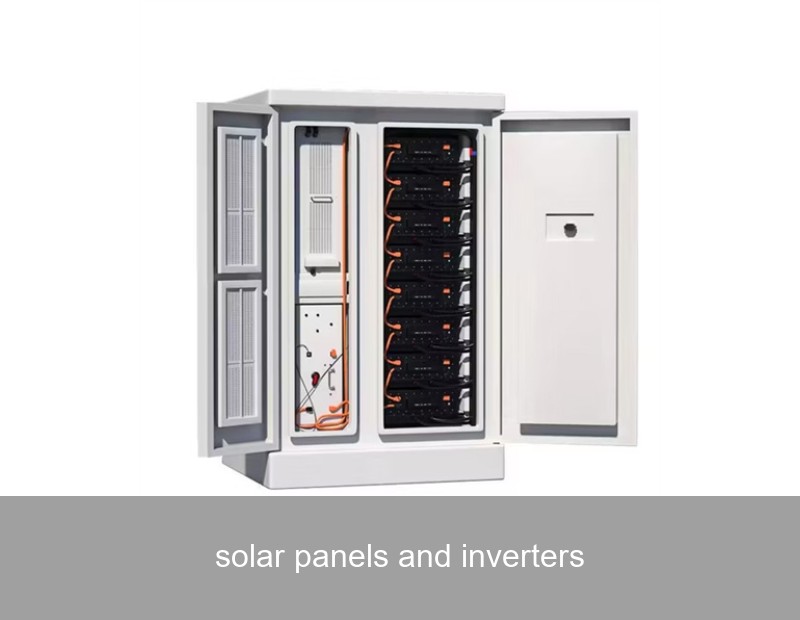
This is where advanced battery storage changes the game. Adding a battery storage system like Highjoule's H-Cell Matrix transforms your solar array from a daytime-only generator into a 24/7 personal power plant. It stores excess solar energy for use at night, during peak rate periods, or even during brief grid outages.

Image Source: Unsplash (Photographer: Andreas Gücklhorn)
Think of it this way: Your solar panels and inverters are excellent at producing cheap, green energy. A smart battery system is expert at managing it. Our systems are designed with hybrid inverters or seamless AC coupling that intelligently decides, moment-by-moment, whether to power your home, charge the battery, or export to the grid based on your preferences and real-time electricity prices.
A Real-World Case Study: Maximizing a Commercial Rooftop in Bavaria
Let's look at real data. A medium-sized dairy processor in Bavaria, Germany, installed a 200 kW rooftop solar system with string inverters in 2018. Their generation profile was excellent, but they were frustrated. Over 40% of their solar production was being exported to the grid during weekends and low-production days, while they still paid high demand charges.
In 2022, they partnered with Highjoule to retrofit a 300 kWh H-Cell Matrix storage system with our advanced energy management software. The results after one year were significant:
- Self-Consumption Rate increased from 58% to 92%.
- Grid Demand Peak was reduced by 65%, slashing capacity charges.
- They achieved an additional 18% return on their original solar investment by avoiding peak tariffs and optimizing grid feed-in.
This case, documented in a Fraunhofer ISE study on commercial storage, illustrates the transformative power of adding intelligence and storage. The solar panels and inverters were the foundation, but the battery and smart management unlocked the true financial and operational value.
Future-Proofing Your Energy Investment
The energy landscape is shifting from a one-way grid to a bidirectional, interactive network. Concepts like virtual power plants (VPPs) and dynamic energy tariffs are becoming reality in Europe and the US. A system comprising only solar panels and inverters is not equipped for this future.
Highjoule's systems are built with this in mind. Our H-IQ Platform can enable participation in grid-balancing services (where regulations allow), turning your storage asset into a potential revenue stream. It can automatically adjust your home's energy use based on real-time carbon intensity data—a feature increasingly valued by environmentally conscious consumers. You can explore how grid services work on the U.S. Department of Energy's grid modernization page.
Choosing the Right Partner for Your Solar Journey
Selecting the right solar panels and inverters is a technical decision. Designing and implementing a system that delivers decades of optimal performance, resilience, and financial return is an expert craft. It requires deep knowledge of component interoperability, local regulations, incentive programs, and long-term energy management.
Since 2005, Highjoule has been at the forefront of this transition from simple solar installations to integrated smart energy systems. We provide end-to-end solutions: from consultancy and custom design using top-tier panel and inverter partners, to our proprietary H-Cell storage and H-IQ software platform, all backed by global monitoring and support. We don't just sell hardware; we deliver a guaranteed energy outcome.
So, as you envision your energy-independent future, what specific energy goal is most important for you to achieve—total bill savings, unwavering backup power, reducing your carbon footprint, or perhaps all three?
 Inquiry
 Online Chat