


Lithium Battery Connection: The Unsung Hero of Your Energy Storage System's Safety and Performance
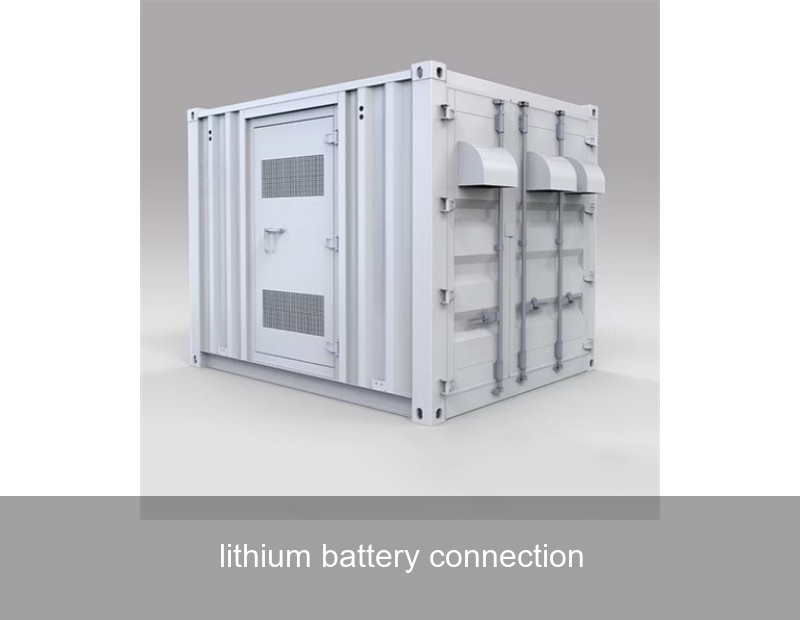
You've done your research. You've chosen high-quality lithium batteries for your solar plus storage project or backup power system. But did you know that the lithium battery connection—the physical links, cabling, and management between cells and packs—is often the critical factor that determines success or failure? A weak connection can lead to inefficiency, heat buildup, and even safety hazards. In this article, we'll explore why proper lithium battery interconnection is the backbone of any reliable energy storage system and how it impacts your return on investment.
Table of Contents
- The Hidden Phenomenon: When Connections Become the Weakest Link
- The Data Behind the Connection: Resistance, Heat, and Efficiency Loss
- Case Study: A German Industrial Plant's Lesson in Systematic Connection
- Expert Insights: Best Practices for Robust Lithium Battery Connections
- Beyond the Wire: How Highjoule's Intelligent Systems Master the Connection Is Your System's Backbone Strong Enough?
The Hidden Phenomenon: When Connections Become the Weakest Link
Imagine a superhighway where the lanes suddenly narrow to a single path. Traffic jams, overheating engines, and frustrated drivers are inevitable. This is a perfect analogy for a poorly executed lithium battery connection within a Battery Energy Storage System (BESS). While most focus on cell chemistry (like NMC or LFP), the physical and electrical interconnection system is frequently overlooked. In the field, we see a common pattern: systems underperforming on their promised cycle life, experiencing unexpected shutdowns, or showing alarming thermal hotspots. More often than not, the root cause traces back to connection points—loose busbars, under-specified cables, corroded terminals, or unbalanced current paths. These issues don't just cause a minor dip in performance; they can accelerate battery degradation and pose significant safety risks, turning a capital investment into a liability.
The Data Behind the Connection: Resistance, Heat, and Efficiency Loss
The science is clear. The primary enemy of any electrical connection is resistance, measured in milliohms (mΩ). Every connection point—from the cell terminal to the system's main DC bus—adds resistance. According to fundamental principles outlined by the National Fire Protection Association (NFPA) in their electrical safety codes, excessive resistance leads to energy loss in the form of heat (I²R loss). Let's break down the impact with a simple table:
| Connection Issue | Added Resistance | Potential Impact on a 100kW System |
|---|---|---|
| Loose Busbar Bolt | 0.5 mΩ extra | Up to 50W of continuous heat generation at full load, potential thermal runaway trigger. |
| Undersized Cable (for given current) | 2-3 mΩ extra per cable run | System efficiency drop of 0.5-1%, translating to hundreds of lost kWh annually. |
| Corroded Terminal | Resistance increases exponentially over time | Voltage imbalance, reduced capacity, and increased risk of arc faults. |
This data isn't just theoretical. A study by the National Renewable Energy Laboratory (NREL) on BESS failures highlighted that interconnection and wiring issues are among the top contributors to system faults and performance degradation. The cumulative effect of these "tiny" resistances across hundreds of connections in a large-scale battery can result in substantial financial losses over the system's lifetime.
Case Study: A German Industrial Plant's Lesson in Systematic Connection
Let's look at a real-world example from Bavaria, Germany. A manufacturing plant installed a 500 kWh lithium-ion storage system in 2020 to optimize self-consumption of rooftop solar and provide peak shaving. Initially, the system underperformed by 15% against its modeled output and frequently triggered high-temperature alarms in one specific module cluster.

A detailed audit revealed the culprit: non-uniform torque application on the laminated busbars connecting the battery modules. Some bolts were over-torqued, deforming the contact surface, while others were under-torqued, creating micro-arcing points. This created uneven current paths and localized heating. The solution wasn't just re-tightening bolts. The plant partnered with Highjoule to retrofit the connection architecture with our Intelli-Bus™ system, featuring:
- Torque Monitoring Hardware: Each connection point has a sensor to ensure perfect, consistent torque.
- Silver-plated, Anti-Corrosion Busbars: To maintain ultra-low contact resistance over decades.
- Distributed Temperature Sensing: Every major connection point is monitored in real-time.
The result? Within one month, system efficiency recovered to 98.5% of its original specification, and the thermal alarms ceased. The plant is now on track to achieve its projected 7-year ROI, a goal that was previously in jeopardy. This case underscores that the lithium battery connection is not a mere assembly step but a core design philosophy.
Expert Insights: Best Practices for Robust Lithium Battery Connections
As a technical expert at Highjoule, I advise clients to think of connections as a living part of the system. Here are the non-negotiable best practices:
- Design for the Full Current Spectrum: Connections must handle not just continuous current but also peak currents (e.g., during inverter surge) without voltage sag.
- Use the Right Materials: Copper is standard, but for harsh environments, tinned or silver-plated surfaces resist corrosion. Insulation must be flame-retardant and durable.
- Implement Redundant Monitoring: Voltage and temperature sensing shouldn't only be at the module level but at critical interconnection junctures to detect anomalies early.
- Plan for Thermal Expansion: Metals expand and contract with temperature cycles. Rigid connections can crack. Our designs incorporate flexible braided straps or specially designed busbars that accommodate this movement.
- Prioritize Serviceability: Connections will need inspection and maintenance. A design that allows safe, easy access without full system shutdown saves time and money.
Beyond the Wire: How Highjoule's Intelligent Systems Master the Connection
At Highjoule, we engineer resilience into every link of the chain. Our product philosophy recognizes that a lithium battery connection is both a physical hardware challenge and a data management one. For instance, our flagship H-Series Commercial BESS doesn't just feature premium, UL-listed components. Its built-in Cell-Link Guardian™ software creates a digital twin of the entire interconnection network. It continuously analyzes resistance trends and thermal data across thousands of points, predicting potential failure points before they cause downtime.

For residential clients, our Echo Home Battery system uses a proprietary, tool-less plug-and-play connector system. This eliminates installer error in torque settings and ensures every unit from the first to the last in a stack has identical, low-resistance contact. This attention to the granular detail of connection integrity is what allows Highjoule to offer industry-leading warranties and ensures our systems deliver sustainable power, day in and day out, from California to Cologne.
Is Your System's Backbone Strong Enough?
When evaluating your next or existing energy storage project, ask your provider: "How do you specifically design for and monitor the health of the internal lithium battery connections?" The answer will tell you everything you need to know about the system's long-term reliability and safety. What single connection point in your current setup might be silently costing you performance?
 Inquiry
 Online Chat