


Battery for Battery Price: Unpacking Value Beyond the Initial Cost
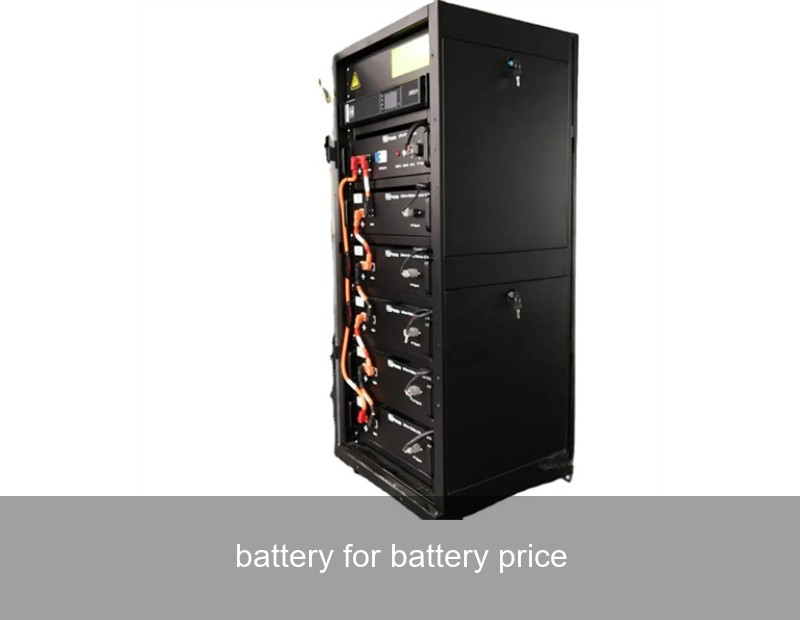
When you hear "battery for battery price," what comes to mind? For many homeowners and businesses across Europe and the US looking at energy storage, the immediate reaction is to compare the upfront cost per kilowatt-hour (kWh). It's a natural starting point. However, focusing solely on the sticker price is like buying a car based only on its showroom tag, ignoring fuel efficiency, reliability, and resale value. The true cost of a battery storage system is woven into its entire lifespan. This article will guide you through the critical factors—from cycle life and degradation to software intelligence—that determine real-world value, ensuring your investment delivers long-term savings and energy resilience.
The Price Trap: When Cheap Becomes Expensive
Let's start with the phenomenon. The global demand for energy storage is surging, driven by rising electricity costs and the renewable transition. This has led to a flood of products with varying price points. A 2023 report by the International Energy Agency (IEA) noted a significant drop in average lithium-ion battery pack prices, yet a wide dispersion in quotes persists. The temptation to opt for the lowest "battery for battery price" is strong, especially with tight budgets.
But here's the data-driven reality: Two 10 kWh batteries with a 20% price difference are not 20% different in value. If the cheaper battery degrades 30% faster, its effective usable capacity over 10 years plummets. You're essentially paying for 10 kWh but only consistently using 7 kWh, while also facing earlier replacement costs. The levelized cost of storage (LCOS)—a metric that accounts for total lifecycle cost per kWh delivered—reveals the truth. A lower upfront price often correlates with a higher LCOS.

Image source: Unsplash. A quality battery system is an engineered asset, not just a collection of cells.
The Three Pillars of True Battery Value
So, how do you assess value? Look beyond the price tag to these three non-negotiable pillars.
Pillar One: Longevity & Cycle Life
Cycle life is the number of complete charge/discharge cycles a battery can undergo before its capacity falls below a specified percentage (often 80%). A battery rated for 6,000 cycles will outlast one rated for 3,000 cycles by years, effectively halving its long-term cost per cycle.
- Chemistry Matters: Lithium Iron Phosphate (LFP) chemistry, used in Highjoule's ResiCore residential and CommPower commercial systems, offers inherently longer cycle life and superior thermal stability compared to older NMC blends.
- Depth of Discharge (DoD): A battery warrantied for 100% DoD every day provides more usable energy than one limited to 80% DoD, effectively increasing your purchase's value.
Pillar Two: Performance & Round-Trip Efficiency
Round-trip efficiency (RTE) is the percentage of energy put into the battery that you can actually use. A 90% RTE means for every 10 kWh from your solar panels, you get 9 kWh back. A system with 85% RTE wastes more of your self-produced energy, increasing reliance on the grid.
| Efficiency Factor | Impact on Value |
|---|---|
| High RTE (e.g., 95%) | Maximizes solar self-consumption, faster payback. |
| Low RTE (e.g., 85%) | Loses more expensive stored energy as heat. |
| Power Rating | High continuous power (e.g., 5kW vs 3kW) allows running more appliances simultaneously during an outage. |
Pillar Three: Intelligence & Warranty
The "brain" of the system is where premium providers separate themselves. Advanced Battery Management Systems (BMS) and energy management software optimize every cycle for longevity and cost-saving.
- Adaptive Software: Like Highjoule's SmartGrid OS, it learns consumption patterns, integrates with time-of-use rates, and can participate in grid services, creating revenue streams that offset cost.
- Warranty as a Promise: A robust 10-year, end-of-warranty capacity guarantee (e.g., 70% remaining) is a manufacturer's confidence in their product. It's a direct financial safeguard for your investment.
Real-World Value in Action: A German Case Study
Let's ground this in a real example. A medium-sized bakery in Bavaria, Germany, installed a 50 kWh storage system in early 2020 to offset high commercial electricity rates and ensure backup power for refrigeration.
- Option A (Low Upfront Cost): €25,000. Basic system, 85% RTE, 4,000 cycle warranty to 70% capacity.
- Option B (Higher Upfront): €32,000. High-efficiency system (like Highjoule's CommPower Series), 95% RTE, 6,000 cycle warranty, with smart grid functionality.
The bakery chose Option B. Over three years, the higher efficiency saved an additional ~2,200 kWh annually from solar spillage. The intelligent software shifted load to capitalize on solar production and avoid peak tariffs. According to data from the Fraunhofer ISE, such smart charging can increase financial yield by 15-20%. Furthermore, the system's participation in a local grid-balancing pilot program generated modest annual income. Their analysis showed the payback period for Option B was actually shorter due to these operational savings and revenues, proving the higher "battery for battery price" delivered superior lifetime economics.

Image source: Unsplash. Businesses are leveraging smart storage for cost control and resilience.
The Highjoule Approach: Engineering for Lifetime Value
At Highjoule, our philosophy is built on delivering the lowest Levelized Cost of Storage for our customers. Since 2005, we've seen that the most sustainable solution is also the most economical over time. Our products, from the residential ResiCore to the industrial-scale MicroGrid Max, are designed with the three pillars at their core:
- LFP Chemistry: Standard across our portfolio for safety and longevity.
- Proprietary BMS: Continuously monitors and balances each cell, extending life.
- SmartGrid OS Platform: This isn't just an app; it's an AI-driven platform that optimizes energy flows for your financial and resilience goals, whether you're in sunny California or a cloudier part of the UK.
We pair this with industry-leading warranties and expert support, because a battery system is a 10+ year partnership. Our services include detailed energy analytics, system health monitoring, and integration support to ensure you extract every ounce of value from day one.
Making Your Informed Choice
The journey to energy independence is exciting. When evaluating your storage options, we encourage you to shift the conversation from "What is the battery for battery price?" to "What is the total cost of ownership over the next decade?"
Ask potential providers: What is the guaranteed end-of-warranty capacity? What is the round-trip efficiency under real operating conditions? Can the software adapt to future energy tariffs or grid service programs? The answers will quickly separate commodity hardware from a true long-term asset.
What specific energy cost or resilience challenge in your home or business would you most want a smart battery system to solve?
 Inquiry
 Online Chat