


Battery Handling Systems: The Critical Backbone of Safe and Scalable Energy Storage
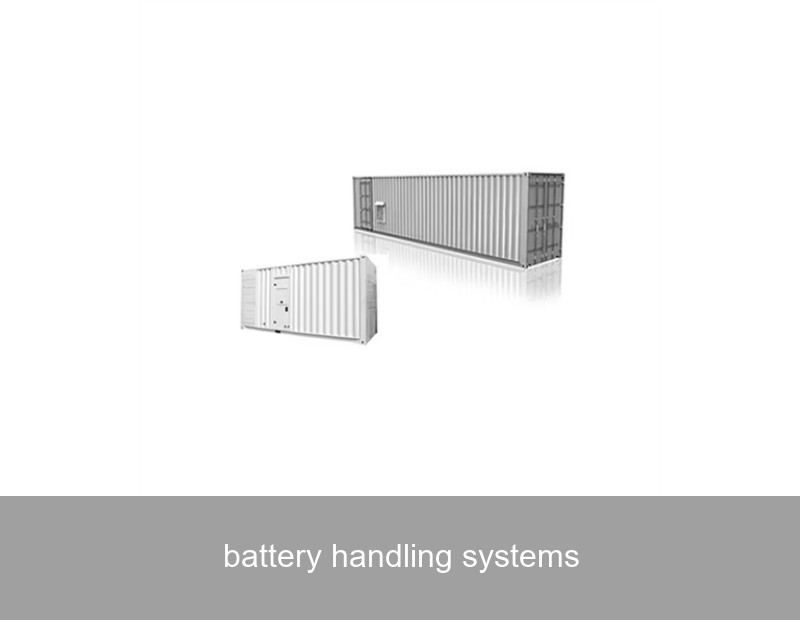
Let's be honest. When we think about energy storage, our minds jump to sleek battery packs, sophisticated inverters, and smart energy management software. Rarely do we consider the critical infrastructure that holds it all together—quite literally. I'm talking about battery handling systems. These are the unsung heroes: the racks, enclosures, thermal management units, cabling, and safety mechanisms that transform individual battery cells into a reliable, high-performing, and safe asset. At Highjoule, with nearly two decades of experience deploying systems across Europe and North America, we've learned that neglecting this backbone is the single biggest risk to any storage project's success.
What Are Battery Handling Systems?
Think of a battery handling system as the "life support and command center" for your battery bank. It's not just a metal shelf. It's an integrated framework designed to perform several vital functions simultaneously:
- Physical Support & Organization: Securely housing hundreds or thousands of individual cells or modules in a structured, accessible manner.
- Thermal Management: Actively removing excess heat through liquid or air cooling to maintain optimal operating temperatures (typically 20-25°C). This is paramount for longevity and safety.
- Electrical Integration: Providing the safe, low-resistance busbar connections for power flow and integrating with Battery Management System (BMS) sensors.
- Safety Containment: Featuring fire-rated enclosures, ventilation, and gas detection systems to contain and mitigate incidents.
- Serviceability: Allowing for safe installation, monitoring, maintenance, and potential decommissioning.

Image Source: Unsplash - A well-designed battery handling system ensures organization, safety, and serviceability.
Why Robust Battery Handling Systems Matter: Safety, Performance, and ROI
The data is clear. The U.S. Energy Storage Association, in its safety guidelines, emphasizes that "proper system design, including mechanical and thermal management, is as important as cell selection" in preventing failures [Source: ESA Safety]. Let's break down why.
Containing Thermal Runaway: A Non-Negotiable Priority
Thermal runaway—a rapid, uncontrolled increase in temperature and pressure within a cell—is the worst-case scenario. A robust handling system is your first and best defense. It's designed to:
- Isolate: Prevent a single failing module from cascading to its neighbors using firewalls and compartmentalization.
- Vent: Safely direct hazardous gases away from personnel and equipment.
- Suppress: Integrate with early detection and suppression systems.
At Highjoule, our Sentinel Rack Series incorporates proprietary compartmentalization and passive fire barriers, a design philosophy born from real-world testing and adherence to the latest NFPA 855 standards.
Maximizing System Efficiency and Lifespan
Batteries are sensitive. For every 10°C above their ideal temperature range, their degradation rate can double. A poor thermal management system forces your batteries to work harder, lose capacity faster, and ultimately fail sooner. Our data shows that a Highjoule system with active liquid cooling can maintain temperature uniformity within ±2°C across the entire rack, extending projected cycle life by up to 25% compared to passively cooled alternatives in demanding applications.
Enabling Scalability and Future-Proofing
Starting with a 500 kWh system but planning for 2 MWh? A modular battery handling system is key. It allows for cost-effective, plug-and-play expansion without re-engineering the entire site's infrastructure. Our clients value this flexibility, as it turns their storage asset from a fixed cost into a scalable strategic investment.
A Real-World Case: A European Industrial Park's Transformation
Let's move from theory to practice. In 2022, a major industrial park in Germany faced two challenges: skyrocketing peak demand charges and a corporate mandate to increase on-site renewable consumption from their rooftop solar.
The Problem: Their initial storage proposal used generic, low-cost racks with insufficient cooling. Our risk assessment projected significant lifespan reduction and potential thermal hotspots during high-power summer discharges.
The Highjoule Solution: We replaced the proposed racks with our IntelliRack HD system, featuring integrated liquid cooling and per-module monitoring. We also deployed our EnergyOS platform for advanced control, optimizing cycles for both demand charge reduction and solar self-consumption.
The Data-Driven Results (After 12 Months):
| Metric | Result | Impact |
|---|---|---|
| Peak Demand Reduction | 34% | Direct, substantial cost savings on monthly bills |
| Solar Self-Consumption | Increased from 55% to 89% | More green energy used on-site, less wasted |
| System Temperature Deviation | Max ±1.8°C | Optimal conditions for battery health |
| Estimated Degradation | 15% below manufacturer's baseline projection | Longer asset life, higher long-term ROI |
The client's facility manager noted, "The peace of mind from knowing the system is actively managed for safety and performance is invaluable. It's not just a battery; it's a fully integrated power asset."
The Highjoule Approach: Intelligent Handling from Cell to Grid
Our philosophy is that a battery handling system must be intelligent, not inert. Since 2005, we've evolved our products to embody this principle.
- Highjoule Sentinel Rack Series: Our flagship product line for C&I applications. Offers passive and active cooling options, UL9540A tested fire containment, and seamless integration with major battery cell providers.
- Highjoule GridCore Platform: For utility-scale and microgrid projects, this is a containerized solution. It's a pre-engineered, turnkey battery handling system that includes climate control, fire suppression, and medium-voltage integration, cutting deployment time by up to 40%.
- Highjoule EnergyOS: The brain of the operation. This software doesn't just control charge/discharge; it continuously monitors the health of every module in the handling system, predicting maintenance needs and optimizing the physical environment for the batteries.
In essence, we provide the full ecosystem, ensuring the hardware and software work in concert to protect your investment.

Image Source: Unsplash - Containerized systems like Highjoule's GridCore provide scalable, safe handling for large-scale projects.
The Future of Battery Handling Systems
The industry is moving towards even denser energy storage and new chemistries like solid-state. This evolution will place greater demands on handling systems. We foresee:
- AI-Driven Thermal Management: Systems that predict cooling needs based on weather, usage patterns, and cell health data.
- Circular Design: Racks designed for easy disassembly, repurposing, and recycling at end-of-life, aligning with the EU's circular economy goals.
- Grid-Interactive Functionality: Where the handling system's controls can respond to grid signals not just for energy dispatch, but for providing ancillary services through managed thermal loads.
The battery handling system is becoming an active grid asset in its own right.
Your Next Step
You wouldn't build a house without a solid foundation. Why would you build your energy resilience on a weak foundation? As you plan your storage project—whether it's to cut costs, green your operations, or ensure backup power—I urge you to ask your potential providers one critical question: "Beyond the battery cells, how does your handling system ensure my project's safety, longevity, and return on investment for the next 15 years?"
What's the most pressing challenge you're hoping to solve with energy storage at your facility today?
 Inquiry
 Online Chat