


Powering the Future: How Industrial Leaders Like Powerland Industries Ltd. Can Leverage Advanced Battery Storage
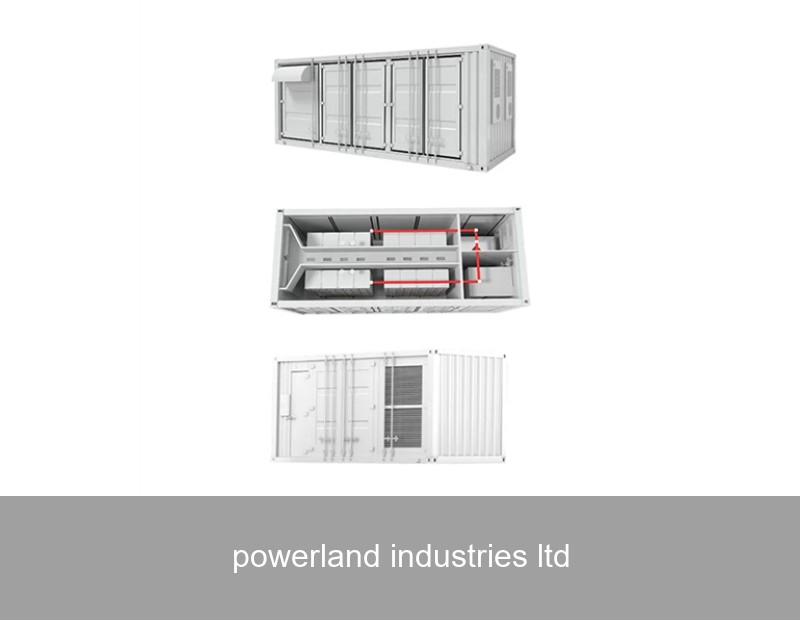
Table of Contents
If you're managing operations for a major industrial player like Powerland Industries Ltd., you're no stranger to complex challenges. Supply chain logistics, production efficiency, and workforce management are daily priorities. Yet, there's a foundational element that underpins it all, often only grabbing attention when it fails or becomes prohibitively expensive: energy. For forward-thinking industrial firms, the conversation is shifting from simply paying the utility bill to actively managing energy as a strategic asset. This is where advanced Battery Energy Storage Systems (BESS) are rewriting the rules of the game.
The Industrial Power Challenge: More Than Just a Bill
Let's face it, industrial energy consumption is a different beast. We're not talking about a few kilowatt-hours to run a fridge. Facilities like those operated by Powerland Industries Ltd. require massive, consistent, and high-quality power for heavy machinery, process lines, and climate control. The pain points are threefold:
- Demand Charges: A significant portion of an industrial electricity bill isn't just for how much you use, but for the highest rate (peak demand) at which you draw power from the grid in a given period. A single spike can cost tens of thousands.
- Grid Reliability and Power Quality: Even a momentary outage or voltage dip can halt production lines, damage sensitive equipment, and spoil in-process materials. The cost of downtime is staggering.
- Sustainability Mandates: Shareholders, customers, and regulators are increasingly demanding clear carbon reduction roadmaps. Simply relying on grid power, which may still be fossil-fuel heavy in some regions, is no longer a sufficient answer.
The traditional response has been to grin and bear it, or perhaps install backup diesel generators. But there's a smarter, cleaner, and more economical solution emerging as the cornerstone of modern industrial energy strategy.
BESS: The Unsung Hero of Industrial Energy Management
A Battery Energy Storage System is far more than just a big battery. It's an intelligent, integrated energy asset. Think of it as a sophisticated shock absorber and power reservoir for your entire facility. Here’s how it works in practice:
- Peak Shaving: The BESS monitors your facility's power draw in real-time. When it senses a surge that would create a costly demand peak, it instantly discharges stored energy to supplement the grid supply, "shaving" the peak off your consumption profile.
- Backup Power & UPS Support: In the event of a grid outage, a modern BESS can provide seamless backup power, bridging the gap until generators start up or, for shorter outages, powering critical loads entirely. This ensures continuous operation.
- Energy Arbitrage & Time-of-Use Optimization: In markets with variable electricity pricing, the system can charge when rates are low (often at night) and discharge when rates are high, directly reducing energy supply costs.

Image Source: Unsplash - Representative image of a large-scale battery installation.
The financial case is compelling. According to a 2023 report by the National Renewable Energy Laboratory (NREL), commercial and industrial battery storage can reduce electricity bills by 10-30% through demand charge management alone, with payback periods becoming increasingly attractive.
Case Study: A European Automotive Component Manufacturer
Consider a real-world example from Germany. A mid-sized automotive component plant, facing steep demand charges and seeking to green its operations, partnered with Highjoule to implement a tailored solution.
The Challenge: The plant's energy demand spiked during simultaneous high-power processes, leading to monthly demand charges exceeding €40,000. They also sought to integrate a new rooftop solar PV array but were limited by grid connection constraints.
The Highjoule Solution: We deployed a containerized HJ-IndustrialStack 500 system, a 500 kWh / 750 kVA lithium-iron-phosphate (LFP) battery storage solution with our proprietary EnergyOS management platform.
The Data-Driven Results (After 12 Months):
| Metric | Before BESS | After BESS | Improvement |
|---|---|---|---|
| Average Monthly Demand Charge | €42,500 | €26,100 | 38.6% Reduction |
| Solar Self-Consumption | 35% (limited by grid) | 89% | 154% Increase |
| Grid Dependency During Peak Hours | 100% | 15-40% | Major Reduction |
| CO2e Emissions Offset | N/A | ~185 tonnes/year | Tangible Sustainability Gain |
This case mirrors the potential for an industrial conglomerate like Powerland Industries Ltd. – turning energy from a fixed cost into a manageable, optimized variable.
Highjoule's Tailored Solutions for Industrial Energy Resilience
At Highjoule, founded in 2005, we understand that one size does not fit all. Our approach for industrial clients is consultative and engineered to scale. We provide end-to-end solutions, from initial feasibility analysis and financial modeling to system design, installation, and ongoing performance optimization via our cloud-based EnergyOS platform.
Our flagship product line for industrial applications, the HJ-IndustrialStack Series, is built for durability, safety, and maximum ROI:
- Modular & Scalable Design: Start with a 250 kWh unit and expand to multi-megawatt-hour systems as your needs grow. This is ideal for large enterprises with multiple facilities or phased implementation plans.
- Ultra-Safe LFP Chemistry: We use lithium-iron-phosphate batteries, renowned for their long cycle life, thermal stability, and safety—a non-negotiable for industrial settings.
- Grid-Forming Inverter Technology: Our systems can "island" and create a stable microgrid, keeping essential processes online even if the main grid fails. This is a step beyond simple backup.
- Seamless Renewable Integration: Whether you have existing solar, are planning new arrays, or are considering wind, our systems are designed to maximize your self-consumption and smooth out intermittent generation.

Image Source: Unsplash - Representative image of an engineer monitoring an energy management system.
Future-Proofing Your Operations with Intelligent Storage
The energy landscape is evolving at a breakneck pace. Electrification of transport (think fleet charging), participation in grid services markets for additional revenue, and preparing for carbon taxes are all on the horizon for industrial leaders. A sophisticated BESS isn't just a cost-saving tool today; it's the foundational platform for future energy flexibility.
For a company with the scale and vision of Powerland Industries Ltd., the strategic question isn't merely "Can we reduce our energy bill?" It's broader: "How do we build energy resilience into our core operational DNA, protect our bottom line from volatile energy markets, and demonstrate tangible progress on our sustainability commitments?"
As the International Energy Agency (IEA) highlights, energy storage is a critical enabler of secure, clean, and efficient energy transitions worldwide, with the industrial sector poised to be a major adopter.
So, we leave you with this: What would a 30% reduction in your peak demand charges do for your competitive edge? And how would the certainty of uninterrupted power transform your risk management profile?
 Inquiry
 Online Chat