


Beyond the Basics: Why a Modern Battery Protection System is Your Energy Storage's Guardian
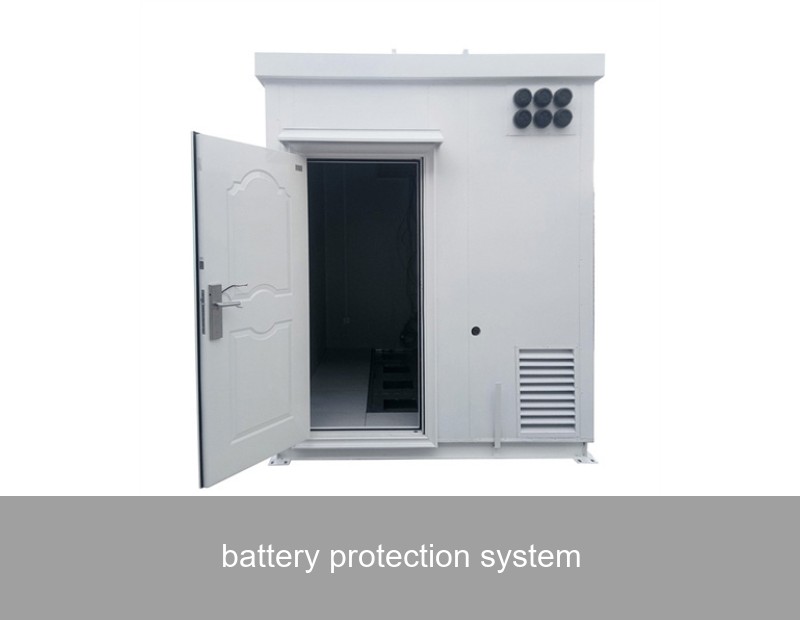
Think of your home's electrical panel. It has circuit breakers that trip during a surge, protecting your wiring and appliances from damage. Now, imagine a system a thousand times more sophisticated, constantly monitoring, managing, and safeguarding the heart of your renewable energy setup: the battery. This is the critical role of a battery protection system (BPS). It's not just a safety feature; it's the intelligent guardian that ensures longevity, efficiency, and safety for your entire energy storage investment. As we integrate more batteries into our homes, businesses, and grids, understanding this unsung hero becomes paramount.
Table of Contents
What Exactly is a Battery Protection System?
At its core, a Battery Protection System is an integrated suite of hardware and software designed to keep a battery within its safe operating window. Think of it as the battery's personal doctor, bodyguard, and logistics manager, all in one. While basic protection against extreme overcharge and deep discharge has always existed, modern battery protection systems for commercial and residential storage are marvels of predictive analytics. They don't just react to emergencies; they anticipate stress and optimize performance in real-time, balancing every cell in the pack to maximize both safety and usable capacity.
The High Stakes: Why Your BPS Choice Matters (Phenomenon & Data)
Let's talk about the elephant in the room: battery failures. While rare, thermal runaway—a uncontrolled overheating chain reaction—is a known risk, particularly in large, dense lithium-ion packs. The U.S. Energy Storage Association, in its safety guidelines, emphasizes that robust safety systems are the foundation of industry credibility.
But safety is just the headline. The real, daily impact of a subpar BPS is financial: premature degradation. Data from the National Renewable Energy Laboratory (NREL) shows that operating a lithium-ion battery consistently outside its ideal voltage range can accelerate capacity loss by up to 300% over time. That means a battery meant to last 15 years might be spent in just 5, turning your sustainable investment into an expensive disappointment.

Image: Advanced battery systems require sophisticated monitoring, a core function of the BPS. Source: Unsplash (Representative image)
Guardian at Work: Key Functions of an Advanced BPS
So, what does this guardian actually do? It's a multi-layered defense and optimization strategy.
- Cell Balancing: This is perhaps the most critical ongoing function. No two battery cells are perfectly identical. Over hundreds of cycles, small differences in capacity or internal resistance can cause cells to drift apart in charge level. The BPS actively redistributes energy to ensure all cells charge and discharge uniformly, preventing any single weak cell from dragging down the entire pack's performance or becoming a safety hazard.
- Thermal Management: The system continuously monitors temperature across the battery pack. It can engage cooling or heating systems to maintain the battery in its "Goldilocks zone"—typically between 15°C and 25°C (59°F to 77°F). This is vital for performance, longevity, and safety.
- Electrical Protection: This is the classic "circuit breaker" function, but with precision. It protects against over-voltage, under-voltage, over-current, and short circuits, instantly disconnecting the battery if dangerous thresholds are approached.
- State Estimation & Communication: A modern BPS doesn't work in silence. It uses complex algorithms to provide accurate State of Charge (SOC) and State of Health (SOH) readings. It communicates this vital data to the user and to broader energy management systems, enabling smart, grid-responsive behavior.
This is where the expertise of a provider like Highjoule becomes crucial. Our Sentinel BMS (Battery Management System, the brain of the protection system) is engineered into every Highjoule storage solution. It goes beyond basic protection, offering predictive analytics that can alert operators to subtle changes in cell behavior weeks before a potential issue, enabling proactive maintenance. For our commercial clients, this level of insight is not just about safety; it's about asset management and maximizing return on investment.
From Theory to Practice: A German Logistics Center Case Study
Let's make this concrete with a real example from our European operations. A major logistics company near Frankfurt, Germany, installed a 1.2 MWh battery storage system in 2021 to manage peak shaving and provide backup power for its refrigeration units. Their initial, cost-focused system had a rudimentary BPS.
The Phenomenon: Within 18 months, they noticed a 15% reduction in usable capacity. Their system was cutting off discharge earlier than planned, failing to meet peak load demands.
The Data & Diagnosis: Highjoule was brought in for an assessment. Our analysis revealed severe cell imbalance within several modules. The original BPS lacked active balancing, only disconnecting the entire pack when the weakest cell hit the low-voltage limit. Data logs showed a temperature gradient of up to 8°C across the pack during operation, further stressing the cells.
The Solution & Outcome: We retrofitted the system with Highjoule's Sentinel BMS and integrated auxiliary thermal management controls. The active balancing immediately reclaimed the "lost" capacity. Within three months, the system's capacity fade rate stabilized to the expected <1% per year. The client now has full visibility into their battery's health via our cloud platform and has avoided a premature, six-figure battery replacement. This case underscores that the battery protection system is not an accessory; it's integral to the asset's financial model.
| Metric | Before Highjoule Sentinel BMS | After Highjoule Sentinel BMS (6 Months) |
|---|---|---|
| Usable Capacity | 85% of rated | 98% of rated |
| Cell Voltage Deviation | Up to 120 mV | Less than 20 mV |
| Estimated Battery Lifespan | ~7 years | ~15 years (projected) |
Choosing the Right Protection for Your Residential or Commercial Project
Whether you're a homeowner with solar or a plant manager overseeing a microgrid, ask these questions:
- Is the BPS active or passive? Passive systems simply bleed off excess energy from high cells as heat. Active systems (like Highjoule's) shuttle energy between cells, which is far more efficient and effective.
- What is the monitoring and communication capability? Can you access granular data? Does it integrate with your solar inverter and energy management system?
- Does it offer predictive features? Look for systems that track long-term trends in impedance and balance currents to forecast issues.
- Is it designed for your specific battery chemistry? Protection parameters for LFP (Lithium Iron Phosphate) differ from those for NMC (Nickel Manganese Cobalt).
Highjoule designs systems with these questions at the forefront. Our Residential Energy Vault and Commercial GridMatrix solutions come with chemistry-specific, AI-enhanced protection as standard, because we believe premium storage should be defined by its intelligence and resilience, not just its raw kilowatt-hour rating.

Image: Integrated home energy systems rely on robust internal protection. Source: Unsplash (Representative image)
The Future Horizon: Where Battery Protection is Headed
The next generation of battery protection systems is moving from guardian to visionary. We're developing systems that integrate real-time grid data (like frequency and price signals) with battery health algorithms. Imagine a system that knows to slightly reduce power output during a peak demand event if it senses a minor cell anomaly, prioritizing long-term health without the user ever noticing. This is the path toward truly self-healing, grid-adaptive energy storage assets. Research institutions like the Fraunhofer Society are pioneering AI models for failure prediction, which will soon become mainstream in advanced BPS designs.
Given that the battery is often the most valuable single component in your energy ecosystem, doesn't it deserve the most sophisticated protection available? What single question about your current or planned battery system's safety and longevity would you most want answered by a truly intelligent protection system?
 Inquiry
 Online Chat