


Beyond the Battery: How Advanced Battery Management System Products Unlock True Energy Potential
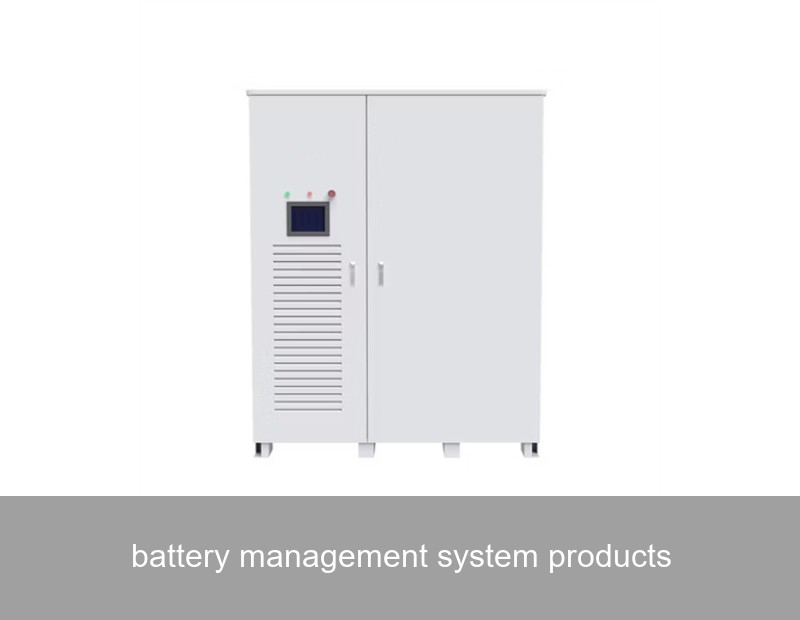
Imagine your home energy storage system as a high-performance sports team. The battery cells are the star athletes, packed with raw power. But what coordinates their efforts, prevents injury, maximizes their output, and ensures they play as a cohesive unit for years? That’s the role of the Battery Management System (BMS) – the indispensable coach and strategist. In this article, we'll explore why cutting-edge battery management system products are the critical brain behind the brawn, transforming simple battery packs into intelligent, safe, and reliable assets for your home or business.
Table of Contents
- The Silent Hero in Your Energy Storage
- More Than Monitoring: Core Functions of a Modern BMS
- From Data to Decisions: The BMS as an Intelligence Hub
- A Real-World Case: The Munich Multi-Family Home Project
- Choosing the Right BMS: What to Look For
- Highjoule's Approach: Embedded Intelligence for Peace of Mind

Image: The intricate electronics of a modern BMS are the nerve center of any safe battery system. (Source: Unsplash)
The Silent Hero in Your Energy Storage
You rarely see it or interact with it directly, but a high-quality battery management system is working tirelessly 24/7. Its primary mission? Guardian and optimizer. Without it, even the most advanced lithium-ion battery bank is prone to underperformance, accelerated aging, and in worst-case scenarios, critical failure. Think of it this way: would you drive a car without a dashboard, fuel gauge, or engine computer? A BMS provides that essential oversight and control for your energy investment.
More Than Monitoring: Core Functions of a Modern BMS
Today's battery management system products are sophisticated pieces of engineering. Let's break down their key responsibilities:
- Cell Monitoring & Voltage Balancing: It continuously measures the voltage and temperature of each individual cell or module. Why does this matter? Even cells from the same production batch have tiny variations. The BMS actively balances them, ensuring all cells charge and discharge uniformly. This prevents overcharging of stronger cells and under-utilization of weaker ones, directly extending pack lifespan.
- State-of-Health (SoH) & State-of-Charge (SoC) Calculation: This is your battery's "fuel gauge" and "long-term prognosis." An advanced BMS doesn't just measure voltage; it uses complex algorithms to estimate exactly how much energy is left (SoC) and the overall degradation of the battery compared to its original capacity (SoH).
- Thermal Management: Batteries perform best within a specific temperature window. The BMS monitors temperatures and can interface with cooling or heating systems to maintain the ideal operational environment, crucial for both safety and efficiency.
- Safety Protection & Communication: This is non-negotiable. The BMS is the last line of defense. It will disconnect the battery in milliseconds if it detects dangerous conditions like over-voltage, under-voltage, over-temperature, or short circuits. Simultaneously, it communicates all this vital data to the user interface and any external energy management systems.
| BMS Function | Technical Action | Benefit to You |
|---|---|---|
| Cell Balancing | Redistributes energy between cells during charge/discharge cycles | Up to 25% longer battery lifespan, more consistent performance |
| Precise SoC Estimation | Uses Coulomb counting and model-based algorithms | Accurate "fuel gauge," prevents unexpected shutdowns, optimizes self-consumption |
| Thermal Regulation | Activates cooling/heating systems based on sensor data | Maintains peak efficiency, prevents thermal runaway, enhances safety |
| Fault Diagnostics | Continuous logging and analysis of performance parameters | Early warning of potential issues, enables predictive maintenance |
From Data to Decisions: The BMS as an Intelligence Hub
The true power of a modern BMS lies in its data. By processing thousands of data points per second, it transitions from a simple protector to an intelligent energy advisor. For instance, by analyzing long-term degradation trends (SoH), a system can predict when your battery will reach 80% of its original capacity, allowing for proactive financial planning. This data, when integrated with solar production and household consumption forecasts, enables the entire system to make smarter decisions—like storing excess solar for the evening peak instead of exporting it at low rates.
A Real-World Case: The Munich Multi-Family Home Project
Let's look at a concrete example from our target market. A 12-unit apartment building in Munich, Germany, installed a 120 kWh solar-plus-storage system in 2022. The goal was to maximize self-consumption of solar power and provide backup power for common areas. The integrator initially considered a cost-saving option with a basic BMS.
After a technical review, they opted for a system featuring Highjoule's Sentinel BMS platform. The difference was stark. The advanced BMS enabled:
- Per-module monitoring and balancing, which was crucial given the complex, high-capacity bank.
- Seamless integration with the building's existing energy management system (EMS) for optimized load shifting.
One year of operational data revealed the impact: The system achieved a 98.5% self-consumption rate for the solar array (surpassing the projected 92%) and showed a cell voltage deviation of less than 10mV across the entire pack, indicating exceptional balance and minimal stress. The building manager noted, "The granular data from the BMS dashboard allowed us to fine-tune our consumption schedule, saving an additional €1,200 annually on grid fees we hadn't even anticipated." This case underscores that an advanced BMS isn't an expense; it's a value driver that ensures the promised ROI of your storage investment.

Image: Multi-family homes, like this one, benefit greatly from intelligent storage systems with robust BMS. (Source: Unsplash)
Choosing the Right BMS: What to Look For
Not all battery management system products are created equal. When evaluating a storage solution, ask these key questions:
- Is it UL 9540 or equivalent certified? This safety standard is paramount, especially in North America.
- What is the balancing current? A higher current (e.g., 2A vs. 100mA) means faster, more effective correction of cell imbalances.
- How transparent is the data? Can you access cell-level metrics, or are you only given a basic SoC percentage?
- Does it support open protocols? Compatibility with standards like Modbus, CAN bus, or SunSpec ensures future-proof integration with other smart home or grid services.
For deeper technical insights on BMS standards, organizations like the Sandia National Laboratories Energy Storage Safety provide valuable resources.
Highjoule's Approach: Embedded Intelligence for Peace of Mind
At Highjoule, we believe intelligence should be built-in, not bolted-on. Our Sentinel BMS is engineered from the chip level up to be the core of our residential and commercial storage solutions. It goes beyond basic protection to deliver:
- Adaptive Learning Algorithms: Our BMS learns your battery's unique aging pattern, continuously refining its SoC and SoH calculations for unparalleled accuracy over the system's 15+ year life.
- Grid-Interactive Readiness: In markets like California or Germany where virtual power plants (VPPs) are emerging, the Sentinel BMS provides the precise, reliable communication stack needed to participate in grid-support services safely and profitably.
- Proactive Health Reporting: Integrated directly into the Highjoule customer app, it provides clear, actionable insights—not just raw data—about system performance and health, often flagging maintenance needs before they become problems.
Our BMS is a testament to nearly two decades of focus on making storage systems not just durable, but truly smart and sustainable. It’s the reason our systems are trusted by homeowners and businesses across Europe and North America to deliver on the full promise of renewable energy independence.
Considering the rapid evolution of energy markets, a robust BMS is your gateway to future opportunities. As noted by the International Energy Agency (IEA), the flexibility offered by smart storage is key to decarbonizing power grids.

Image: Clear data visualization from an advanced BMS empowers users to understand their energy. (Source: Unsplash)
Your Energy, Intelligently Managed
The journey to energy resilience is more than just buying batteries. It's about choosing a system with the intelligence to protect your investment, maximize its value every single day, and adapt to the energy landscape of tomorrow. The battery management system is the cornerstone of that intelligence.
What unanswered questions do you have about how the brain of your future energy storage system could impact your long-term savings and sustainability goals?
 Inquiry
 Online Chat