


Unlocking Business Potential: The Strategic Guide to Commercial Battery Storage
Have you ever looked at your business's electricity bill and felt a pang of frustration? You're not alone. For commercial and industrial operators across Europe and the US, energy costs are more than a line item—they're a volatile and often unpredictable operational challenge. But what if you could turn your energy consumption from a cost center into a strategic asset? This is where commercial battery storage comes in, transforming how businesses interact with the grid, manage costs, and build resilience. As a product technology expert at Highjoule, a global leader in advanced energy storage since 2005, I've seen this shift firsthand. Let's explore how intelligent battery systems are powering a smarter, more sustainable future for business.
Table of Contents
- The Problem: Rising Costs and Grid Instability
- The Data: Why Battery Storage Makes Financial Sense
- The Solution: Core Components of a Commercial Battery System
- The Highjoule Approach: Intelligence Meets Durability
- Real-World Impact: A Case Study from Bavaria
- The Future Outlook and Your Next Step
The Problem: Rising Costs and Grid Instability
Commercial energy users are caught in a perfect storm. Wholesale electricity prices are increasingly volatile, driven by geopolitical factors and the transition to renewable energy. Simultaneously, grid infrastructure in many regions is aging, leading to more frequent and costly power quality events like sags, surges, and short interruptions. For a manufacturing plant, a data center, or a supermarket chain, even a momentary outage can mean spoiled inventory, halted production, and lost revenue. Relying solely on the grid is becoming a risky business strategy.
This volatility creates a clear business imperative: the need for greater control over energy supply and costs. This is the core promise of a battery storage system for commercial use—it's not just a backup; it's an active financial and operational tool.
The Data: Why Battery Storage Makes Financial Sense
Let's talk numbers. The business case for commercial battery storage is built on multiple, stacked revenue streams and cost savings. Here’s a breakdown of the key value drivers:
| Value Stream | How It Works | Potential Impact |
|---|---|---|
| Demand Charge Reduction | Batteries discharge during short periods of peak power demand, flattening your "demand spike." | Can reduce this portion of the bill by 20-40%, often paying for the system itself. |
| Energy Arbitrage | Store cheap electricity (e.g., at night or from solar) and use it during expensive peak hours. | Leverages time-of-use rate differentials for direct savings. |
| Backup Power & Resilience | Provides seamless, instantaneous power during grid outages. | Avoids downtime costs, which can be thousands per minute for critical operations. |
| Grid Services (e.g., Frequency Response) | Automatically sells fast-response power balancing services to the grid operator. | Creates a new revenue stream; lucrative in markets like the UK's National Grid or US ISOs. |
According to a report by the National Renewable Energy Laboratory (NREL), commercial-scale storage can deliver significant value across these streams, with payback periods increasingly competitive, especially when paired with on-site solar PV. The key is an intelligent system that can dynamically prioritize these value streams based on real-time signals.
The Solution: Core Components of a Commercial Battery System
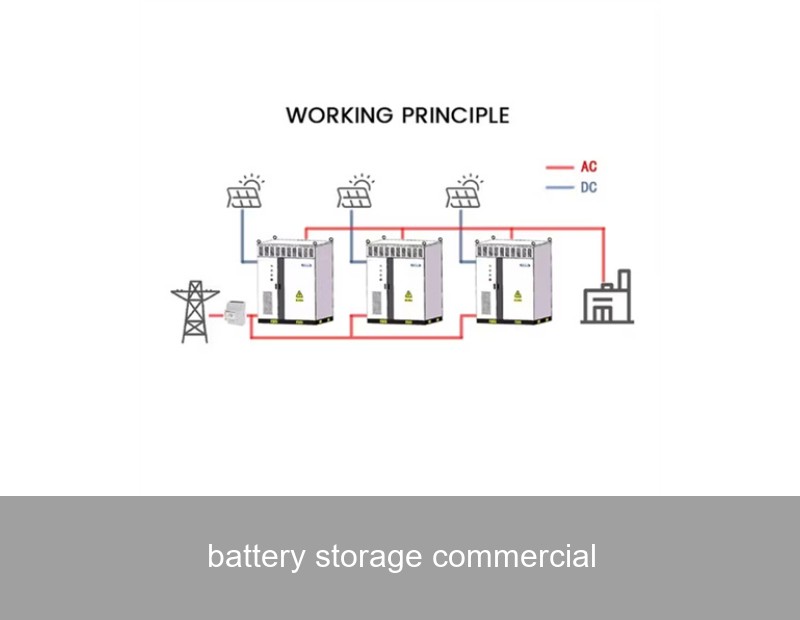
So, what exactly are you investing in? A modern commercial battery storage solution is far more than a rack of batteries. It's an integrated energy asset comprising three critical layers:
- The Battery Bank: Typically using Lithium Iron Phosphate (LFP) chemistry for its superior safety, long cycle life (often 6,000+ cycles), and stability. This is the "muscle" of the system.
- The Power Conversion System (PCS): This bi-directional inverter is the "heart." It converts DC battery power to AC for your facility and back again, managing the flow with precision.
- The Energy Management System (EMS): This is the "brain." A sophisticated software platform that makes real-time decisions—should we charge, discharge, hold, or provide grid services?—based on weather forecasts, electricity prices, and your operational schedule.
Without a smart EMS, you're leaving most of the value on the table. It's this intelligence that transforms a capital expense into a high-performing investment.
The Highjoule Approach: Intelligence Meets Durability
At Highjoule, we've spent nearly two decades refining this integrated approach. Our H-Series Commercial Energy Storage systems are engineered for the rigors of C&I applications. We start with bank-grade LFP cells in a modular, scalable design, allowing a business to start at 100 kWh and expand to multi-megawatt-hour installations as needs grow.

But our true differentiator is JouleMind AI, our proprietary energy management platform. Think of it as your 24/7 energy trader and grid strategist. It doesn't just react; it forecasts. By integrating with local weather data, wholesale market price feeds (like ENTSO-E in Europe or PJM in the US), and your building management system, JouleMind AI optimizes every kilowatt-hour for maximum economic return. For a cold storage facility, it might prioritize demand charge reduction during the afternoon cooling peak, then shift to energy arbitrage in the evening, all while being ready to provide backup if a storm is forecasted.
Furthermore, our global service network provides proactive monitoring and support, ensuring your energy asset performs reliably year after year, maximizing your return on investment.
Real-World Impact: A Case Study from Bavaria
Let's make this concrete. A mid-sized automotive parts manufacturer in Bavaria, Germany, faced annual electricity costs exceeding €500,000, with steep demand charges and participation in a strict interruptible load program that threatened production.
In 2022, they partnered with Highjoule to deploy a 750 kWh / 1.5 MWh H-Series system integrated with their existing rooftop solar. The objectives were clear: cut demand charges, increase self-consumption of solar power, and gain backup capability for critical assembly lines.
- Demand Charges Reduced by 32%: The system expertly shaved peaks by discharging during simultaneous high machinery loads.
- Solar Self-Consumption Raised from 55% to 89%: Excess solar energy that was being sold at low feed-in tariffs was now stored and used onsite.
- Added Revenue Stream: The system occasionally participates in the German primary control reserve market, managed automatically by JouleMind AI, generating approximately €15,000 in ancillary service revenue annually.
- Enhanced Resilience: The facility now has 4 hours of backup power for its cleanroom and robotic assembly units, a priceless insurance policy.
The project achieved a simple payback period of under 5 years, and the client is now planning a second phase to cover more of their facility. This is the power of a well-designed battery storage commercial solution in action.
The Future Outlook and Your Next Step
The landscape is evolving rapidly. We're moving towards true virtual power plants (VPPs), where aggregations of distributed assets like Highjoule systems can act as a unified, grid-stabilizing force. Policies like the U.S. Inflation Reduction Act (IRA) and various EU Green Deal initiatives are creating unprecedented investment tax credits and incentives for commercial storage, improving economics further.
The question for your business is no longer if battery storage is relevant, but when and how to integrate it into your energy strategy. The first step is a detailed analysis of your load profiles, utility tariffs, and sustainability goals.
What single energy cost or risk factor, if addressed, would most significantly improve your company's operational bottom line and strategic flexibility?
 Inquiry
 Online Chat