


Battery Storage for Commercial Buildings: The Smart Foundation for Modern Business Energy
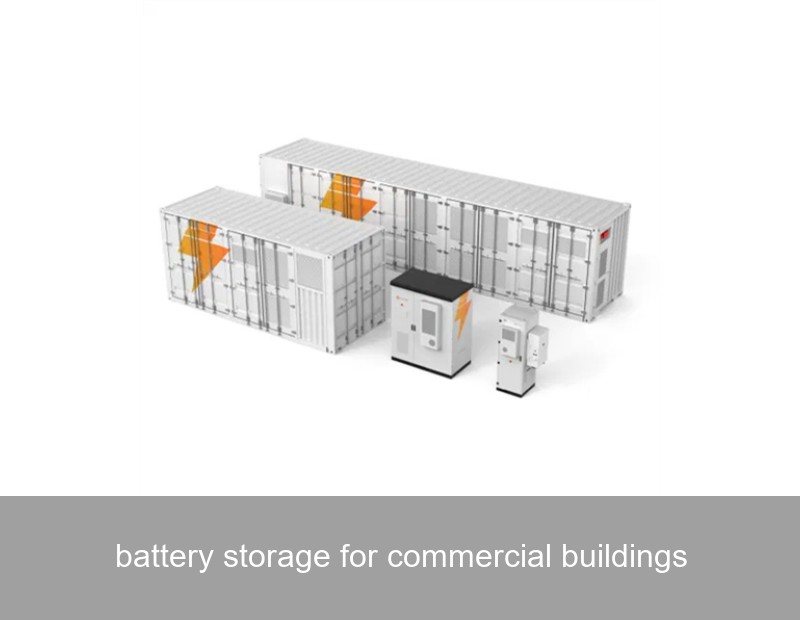
Imagine your commercial building not just as a structure that consumes power, but as an intelligent, responsive energy hub. This is no longer a futuristic concept. For facility managers, CFOs, and business owners across Europe and the US, integrating battery storage for commercial buildings is becoming a strategic imperative. It's the key to unlocking energy independence, resilience, and significant cost savings in an era of volatile energy prices and increasing grid demands. At Highjoule, with nearly two decades of experience since 2005, we've seen this shift firsthand. We design advanced battery energy storage systems (BESS) that transform commercial properties from passive ratepayers into active energy managers.
Table of Contents
- The Pressure: Rising Costs and Unreliable Grids
- The Data: Why Battery Storage Makes Financial Sense
- The Highjoule Solution: More Than Just a Battery
- Case Study: A European Retail Chain's Success Story
- Implementing Your System: Key Considerations
- The Future is Interactive: Your Building as a Grid Asset
The Pressure: Rising Costs and Unreliable Grids
Let's face it, the traditional energy model for businesses is under strain. You're likely experiencing a double squeeze: spiraling electricity costs and growing concerns about grid reliability. In the EU, electricity prices for non-household consumers saw extreme volatility, with prices in some member states still significantly above pre-energy crisis levels (Eurostat, 2024). In the US, commercial electricity rates have steadily climbed, while extreme weather events from heatwaves to winter storms are testing grid infrastructure, leading to more frequent and costly outages.
This phenomenon isn't just an invoice line item; it's a direct hit to your operational budget and continuity. Demand charges—fees based on your highest power draw in a billing period—can constitute up to 50% of a commercial electricity bill. A single spike in energy use, perhaps from simultaneous HVAC, lighting, and machinery loads, can set a costly demand peak for the entire month.

Image: A modern commercial building. Integrating battery storage turns such structures into active energy assets. (Source: Unsplash)
The Data: Why Battery Storage Makes Financial Sense
The business case for commercial battery storage is built on clear, quantifiable pillars. We move from the general phenomenon to the specific data that drives investment decisions.
| Financial Lever | How Battery Storage Helps | Typical Impact |
|---|---|---|
| Demand Charge Management | Discharges during peak usage times to "shave" the building's draw from the grid. | Can reduce demand charges by 20-40%. |
| Energy Arbitrage | Stores cheap electricity (e.g., overnight or from solar) for use during expensive peak periods. | Lowers overall energy cost per kWh consumed. |
| Backup Power & Resilience | Provides seamless, instantaneous power during grid outages. | Prevents operational downtime, data loss, and revenue interruption. |
| Incentives & Revenue | Qualifies for tax credits (e.g., US ITC) and can participate in grid services programs. | Improves ROI, with payback periods often between 5-8 years. |
This isn't theoretical. A 2023 NREL report highlights that commercial-scale storage can provide multiple stacked value streams, enhancing economics significantly. The key is an intelligent system that dynamically decides the most valuable use for the stored energy at any given moment.
The Highjoule Solution: More Than Just a Battery
Here's where expertise matters. A commercial battery storage system is not a commodity. It's a sophisticated, integrated energy asset. This is the core of Highjoule's offering. We provide turnkey, intelligent battery storage for commercial buildings that is engineered for safety, longevity, and maximum financial return.
Our H-Series Commercial ESS is built with industry-leading lithium-iron-phosphate (LFP) battery chemistry, known for its superior safety profile and long cycle life. But the real magic is in our Energy Management System (EMS)—the brain of the operation. Think of it as your 24/7 automated energy trader. It:
- Predicts your building's load patterns and utility rate schedules.
- Optimizes charging (from the grid or solar) and discharging to maximize savings.
- Controls seamlessly, providing backup power without interruption.
- Monitors system health and performance remotely.
For businesses with solar PV, our systems create perfect synergy. The solar array generates clean energy, and the Highjoule BESS stores excess production for use at night or on cloudy days, dramatically increasing your self-consumption and reducing grid reliance.
Case Study: A European Retail Chain's Success Story
Let's make this concrete. A major retail chain in Germany, with over 150 mid-sized stores, faced steep demand charges and wanted to stabilize its energy costs while supporting its sustainability goals. They partnered with Highjoule for a phased rollout of our H-Series systems.
The Challenge: High, unpredictable demand peaks from lighting, refrigeration, and HVAC across multiple locations.
The Highjoule Implementation: We installed 100 kWh/150 kW battery storage systems at each pilot store, integrated with existing building management systems. Our cloud-based EMS centrally monitors and optimizes all units, leveraging time-of-use tariffs and automated demand response.
The Results (After 18 Months):
- Average 28% reduction in monthly demand charges per store.
- 15% decrease in overall energy costs from arbitrage.
- Enhanced power quality, protecting sensitive electronics.
- A clear pathway to meet corporate carbon reduction targets.
The project proved that standardized, intelligent storage solutions can deliver scalable savings. The chain is now expanding the deployment.

Image: A technician performing maintenance on a commercial battery storage system. Highjoule systems are designed for safety and serviceability. (Source: Unsplash)
Implementing Your System: Key Considerations
Thinking about taking the next step? Here’s a logical pathway to evaluate battery storage for your commercial building:
- Energy Audit & Analysis: Highjoule experts start by analyzing 12-24 months of your utility bills to identify savings potential from demand charge reduction and arbitrage.
- Site Assessment: We evaluate your electrical infrastructure, physical space (indoor/outdoor), and any existing solar to design a safe, compliant, and optimal system.
- Financial Modeling: We provide a clear proforma outlining capital cost, available incentives (like the ITC in the US), projected savings, and ROI timeline.
- Design & Integration: Our engineering team creates a detailed design, ensuring seamless integration with your building's electrical system and any energy assets.
- Installation & Commissioning: Highjoule-certified technicians handle the full installation, followed by rigorous testing and commissioning.
- Ongoing Support & Optimization: Our remote monitoring and service ensure your system performs at its peak for its entire lifespan, with software updates that adapt to new utility rates and market opportunities.
The Future is Interactive: Your Building as a Grid Asset
The evolution of battery storage for commercial buildings is moving towards grid interactivity. With a Highjoule system, your building can potentially participate in utility demand response programs or emerging frequency regulation markets, generating additional revenue. You're not just saving money; you're contributing to grid stability and the broader integration of renewables.
So, the question is no longer "Can we afford to invest in battery storage?" but rather, "Can we afford not to, given the rising costs of grid dependency and the tangible value of energy control?" What would a 25% reduction in your facility's energy costs do for your bottom line this year?
 Inquiry
 Online Chat