


Why Large-Scale Battery Storage is the Keystone of a Modern Energy Grid
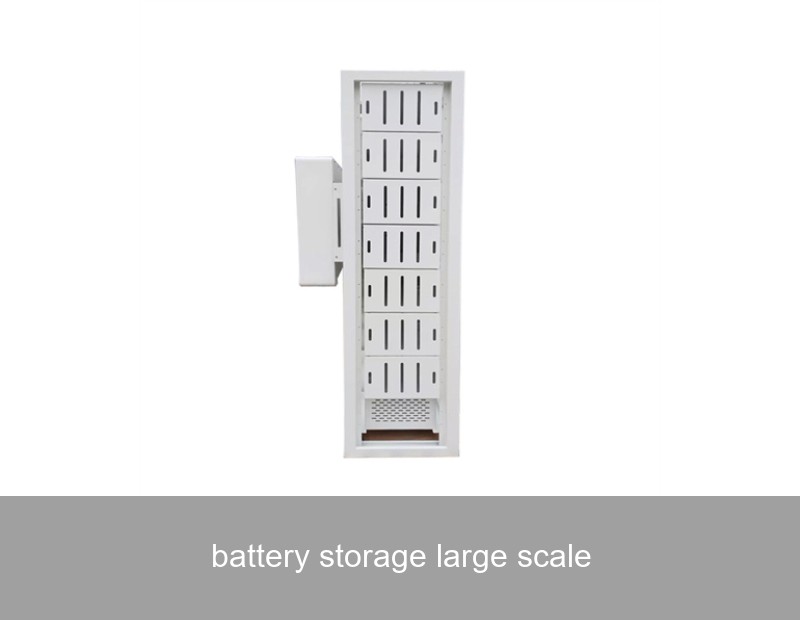
Imagine a world where the sun doesn't shine at night and the wind takes a break. This isn't a fantasy; it's the daily reality of our renewable energy transition. The intermittent nature of solar and wind power creates a fundamental challenge: how do we keep the lights on when generation dips? The answer, increasingly, lies in battery storage large scale systems. These are not the small units in your home, but massive, grid-connected facilities acting as giant power banks for entire cities and regions. For businesses, utilities, and communities, mastering this technology is key to unlocking a reliable, cost-effective, and sustainable energy future.
Table of Contents
- The Challenge: From Intermittency to Grid Stability
- The Solution: How Large-Scale Battery Storage Works
- The Tangible Benefits of Grid-Scale Batteries
- Case Study: California's Shift from Peaker Plants to Batteries
- Highjoule's Role in Powering Large-Scale Storage Solutions
- The Future Outlook and Your Next Step
The Challenge: From Intermittency to Grid Stability
Let's talk about the "duck curve." It's not a cartoon, but a real graph that gives grid operators headaches. Coined in California, it shows the net load on the power grid throughout a day with high solar penetration. In the middle of the day, solar floods the grid, pushing net demand dangerously low. Then, as the sun sets and people return home, demand surges rapidly while solar generation plummets, creating a steep, upward curve that resembles a duck's belly. This rapid ramp requires quick-response power sources, traditionally provided by fossil-fueled "peaker plants." These plants are expensive to run, emit high levels of CO2, and often sit idle, making them a costly and dirty solution.

Image Source: U.S. Department of Energy
The data is stark. According to the International Energy Agency (IEA), global electricity storage needs are set to increase 35-fold by 2030 to support decarbonization goals. Without massive deployment of large-scale battery storage, we risk grid instability, curtailed (wasted) renewable energy, and slowed progress on climate targets.
The Solution: How Large-Scale Battery Storage Works
Think of a grid-scale battery storage system as the ultimate shock absorber and time-shift tool for electricity. These facilities, often rated in megawatts (MW) and megawatt-hours (MWh), are sophisticated ecosystems of hardware and intelligence. Here’s a simplified breakdown:
- Battery Racks & Modules: Thousands of individual lithium-ion (or other chemistry) cells are assembled into containers, forming the core energy reservoir.
- Power Conversion System (PCS): The brain of the operation. It's a bidirectional inverter that converts DC electricity from the batteries to AC for the grid, and vice-versa for charging.
- Energy Management System (EMS): The strategic commander. This software platform uses algorithms and market signals to decide when to charge (often when renewable power is cheap/plentiful) and when to discharge (when demand and prices are high).
- Grid Connection: A substation links the entire system to the high-voltage transmission or distribution network.
The magic is in the software. A modern EMS doesn't just react; it predicts. By forecasting weather, grid load, and energy prices, it optimizes every charge-discharge cycle for maximum economic and grid-support value.
The Tangible Benefits of Grid-Scale Batteries
Deploying battery storage large scale isn't just a technical fix; it delivers multi-layered value. Let's quantify it:
| Benefit | Description | Impact |
|---|---|---|
| Renewable Integration | Soaks up excess solar/wind power and releases it later. | Reduces renewable curtailment, increases clean energy utilization. |
| Grid Stability & Frequency Regulation | Responds to grid frequency fluctuations in milliseconds. | Maintains grid reliability, prevents blackouts, defers costly grid upgrades. |
| Peak Shaving & Energy Arbitrage | Stores cheap off-peak energy, discharges during expensive peak hours. | Lowers wholesale electricity costs, reduces reliance on peaker plants. |
| Backup Power & Resilience | Provides black-start capability and critical backup for essential services. | Enhances community and industrial resilience against extreme weather events. |
Case Study: California's Shift from Peaker Plants to Batteries
The theory becomes compelling reality when we look at real-world deployments. A prime example is the Moss Landing Energy Storage Facility in California, USA. Originally a natural gas-powered plant site, it has been transformed into one of the world's largest battery storage installations, with phases exceeding 750 MW / 3,000 MWh of capacity.

Image Source: NBC News
Here’s the impact, backed by data from the California Independent System Operator (CAISO):
- Peaker Plant Replacement: The batteries directly offset the need to run local gas-fired peaker plants during high-demand evening hours.
- Grid Support: During a heatwave in September 2022, the facility discharged a record amount of stored energy, providing critical power to over 225,000 homes and helping to prevent rolling blackouts.
- Economic & Environmental Payoff: By charging with abundant midday solar and discharging at peak times, the system lowers energy costs and has significantly reduced CO2 emissions associated with peak demand generation.
This case proves that large-scale battery storage is not a future concept but a present-day workhorse, delivering reliability and sustainability at grid scale.
Highjoule's Role in Powering Large-Scale Storage Solutions
At Highjoule, we've been at the forefront of this energy revolution since 2005. We understand that a successful battery storage large scale project is more than just hardware; it's a fully integrated, intelligent system designed for longevity and performance. Our approach for commercial, industrial, and utility clients is built on three pillars:
- Highjoule H-Series Utility Storage System: Our flagship containerized solution is engineered for durability and ease of deployment. Featuring industry-leading lithium iron phosphate (LFP) battery chemistry for enhanced safety and lifecycle, the H-Series comes with a fully integrated, UL-certified design that reduces on-site installation time and complexity. Its modular architecture allows for seamless scaling from a few megawatts to hundreds.
- Athena GridOS™ Energy Management Platform: This is where we add the "smart" to storage. Athena GridOS™ is a proprietary AI-driven platform that doesn't just manage the battery—it optimizes its entire value stack. It can perform frequency regulation, participate in wholesale energy markets, provide peak shaving for a factory, and ensure backup power, all simultaneously, maximizing the return on investment.
- Full Lifecycle Partnership: From initial feasibility studies and financial modeling to long-term operation and maintenance, Highjoule partners with clients for the entire journey. Our experts ensure your project meets local grid codes in Europe and North America and performs optimally for decades.
For a European example, our systems are currently helping a German industrial park integrate its on-site wind and solar generation, using a 20 MWh Highjoule system to stabilize the local grid and achieve nearly 90% energy self-sufficiency.
The Future Outlook and Your Next Step
The trajectory is clear. As renewable penetration deepens globally and grid demands become more complex, large-scale battery storage will evolve from a valuable asset to an indispensable grid component. We're already seeing advancements in longer-duration storage technologies and even more sophisticated grid-forming inverters that can "strengthen" weak grids.
But the question isn't just about technology; it's about strategy. Whether you're a utility planner navigating the retirement of legacy assets, a commercial developer aiming for net-zero operations, or a municipality building a resilient microgrid, the time to model storage into your plans is now.
What specific grid challenge or energy cost pressure could a strategically placed large-scale battery system solve for your organization in the next 18 months?
 Inquiry
 Online Chat