


Solar Panels for Home in Sweden: Understanding Prices and Maximizing Your Investment
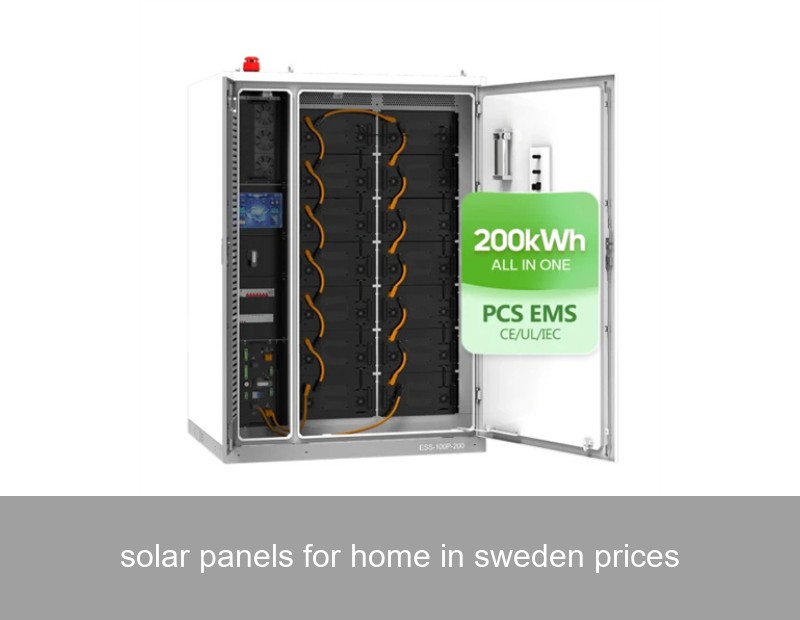
Thinking about joining the over 500,000 Swedish households that have embraced solar power? You're likely asking the same question many do: "What are the real prices for solar panels for home in Sweden, and is it worth it?" While the initial cost is a key factor, the true value lies in understanding the complete picture—system performance, long-term savings, and the right technology for Sweden's unique climate. This guide will break down the costs, showcase real results, and explain how choosing an intelligent energy storage system can transform your solar investment from good to exceptional.
Table of Contents
- The Real Price Breakdown: More Than Just Panels
- The Sweden Factor: Climate, Incentives, and Payback Time
- Real-Life Case Study: The Andersson Family in Västerås
- Beyond Panels: The Game-Changer for Swedish Homes
- The Highjoule Solution: Intelligent Storage for Swedish Resilience
- Making Your Decision: Key Questions to Ask
The Real Price Breakdown: More Than Just Panels
A solar energy system is an integrated solution. The price you see advertised for panels is just one piece. A typical home installation price in Sweden includes:
- Solar Panels (Photovoltaic Modules): Usually 40-50% of the total cost. Prices vary by efficiency and brand.
- Inverter(s): The "brain" that converts DC solar power to usable AC power for your home (10-15% of cost).
- Mounting System & Hardware: Crucial for withstanding Swedish winds and snow loads.
- Installation & Labour: Certified installer expertise ensures safety and optimal performance.
- Planning, Permits, and Grid Connection Fees.
As of 2024, a standard 10 kW system (sufficient for many detached homes) can have a total installed price range of 80,000 to 130,000 SEK before any subsidies. This variance depends heavily on system complexity, component quality, and installer.

Image: A well-installed home solar system in a Swedish setting. Source: Unsplash
The Sweden Factor: Climate, Incentives, and Payback Time
Sweden presents a unique scenario. We have fewer sun hours than Southern Europe, but higher electricity prices and strong government support improve economics. The key is maximizing self-consumption—using the power you generate yourself.
- Climate: Long summer days offer excellent production, while winter output is low. This seasonal mismatch is a critical design consideration.
- Incentives: The Swedish Energy Agency's solar subsidy can cover up to 20% of installation costs. You also benefit from selling excess power back to the grid via nätnytta.
- Payback: With current electricity prices and subsidies, payback times typically range from 8 to 12 years. The system lifespan is 25+ years, meaning over a decade of nearly free electricity.
Real-Life Case Study: The Andersson Family in Västerås
Let's look at real data. In 2022, the Andersson family installed a 12 kW solar array on their detached home. Their goal was to reduce their rising electricity bills and increase energy independence.
| Metric | Detail |
|---|---|
| System Size | 12 kWp (30 panels) |
| Total Investment (before subsidy) | 145,000 SEK |
| Energy Agency Subsidy Received | 29,000 SEK |
| Net System Cost | 116,000 SEK |
| Annual Production (2023) | 9,800 kWh |
| Self-Consumption Rate (without storage) | ~35% |
| Annual Bill Savings (2023 vs. 2021) | Approx. 15,000 SEK |
Their experience is common: they produce ample energy, but without storage, 65% of it is exported to the grid when they aren't home, buying it back at a higher price at night. This limits their savings and independence. This is the central challenge for Swedish solar homeowners.
Beyond Panels: The Game-Changer for Swedish Homes
This brings us to the pivotal insight: For homes in Sweden, the value of solar panels is unlocked not just by production, but by smart consumption. An advanced battery energy storage system (BESS) is what bridges the gap. It stores your surplus daytime energy for use in the evening, overnight, and during cloudy periods. This can increase your self-consumption rate from 30-40% to 70% or more, dramatically accelerating your payback period and insulating you from grid price volatility.
The Highjoule Solution: Intelligent Storage for Swedish Resilience
This is where Highjoule's expertise becomes critical. As a global leader with nearly two decades of experience, we understand that a battery is more than just a box—it's an intelligent energy management hub. Our Residential Energy Storage Systems are engineered for climates like Sweden's.
Our systems, such as the Highjoule HES Series, feature:
- Lithium Iron Phosphate (LFP) Chemistry: Renowned for safety, longevity (10,000+ cycles), and excellent performance in a wide temperature range.
- Integrated AI-Powered Energy Manager: The system learns your consumption patterns and weather forecasts to optimize when to store, use, or even sell energy, maximizing your economic return.
- Scalability and Modular Design: Start with a capacity that fits your budget and easily expand later as your needs grow.
- All-in-One Design: Includes hybrid inverter, battery, and management system for a seamless, compact installation.
For the Andersson family, adding a 10 kWh Highjoule HES system would have potentially doubled their self-consumption, increasing annual savings by an estimated 6,000-8,000 SEK and shortening their payback period significantly. More importantly, it would provide backup power during outages—a growing concern.

Image: An example of a sleek, wall-mounted home battery storage unit. Source: Unsplash
Making Your Decision: Key Questions to Ask
When evaluating prices for solar panels for home in Sweden, shift the conversation from cost to value. Ask your installer:
- What is the estimated annual self-consumption percentage of my proposed system without storage?
- How would adding a battery like Highjoule's change that percentage and my long-term savings?
- Is the battery chemistry safe and durable for Scandinavian temperature swings?
- Does the system have smart energy management to adapt to changing tariffs and my habits?
We encourage you to explore data from authoritative sources like the International Energy Agency's PV report to understand global trends that impact local prices.
Ready to Calculate Your True Potential?
While online calculators can give a basic estimate, a true assessment requires looking at your specific roof, consumption, and goals. The most effective step is to partner with a certified installer who can model a holistic solution—panels and intelligent storage. What would your energy independence look like if you could store the midnight sun for a winter's evening?
 Inquiry
 Online Chat