


Baykee Solar Energy Storage Cabinet: The Cornerstone of Modern Energy Independence
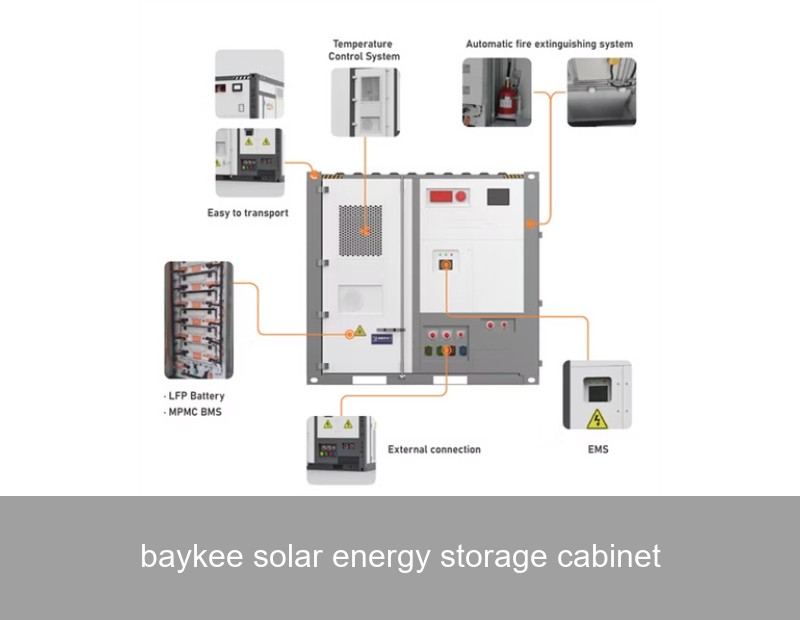
Have you ever looked at your solar panels on a bright, sunny day and wondered, "Where is all this excess energy going?" For many homeowners and businesses across Europe and the US, the answer has historically been back to the grid, often for minimal compensation. This is where the Baykee solar energy storage cabinet changes the game. More than just a battery box, it's the intelligent heart of a self-sufficient energy system, transforming how we capture, store, and utilize solar power. As grid instability and energy costs rise, the ability to store your own green energy is shifting from a luxury to a critical component of financial and operational resilience. Let's explore how this technology works and why its integration is key to a sustainable future.
Table of Contents
The Phenomenon: Wasted Sun, Rising Bills
Solar panel adoption has soared, but there's a catch: generation and consumption are rarely in sync. Homes are often empty during peak production hours, while factories ramp up demand as the sun sets. This mismatch creates a dual challenge. First, surplus solar energy is exported to the grid at low, feed-in tariff rates. Second, you must buy back expensive electricity from the grid during evenings or cloudy periods. It's a frustrating cycle that undermines the economic and environmental goals of going solar. The physical manifestation of this problem? Rooftops working hard while their potential remains untapped, and energy bills that are lower but not yet minimized.

Image: Solar panels with integrated storage are key to energy independence. Credit: Unsplash
The Data: Quantifying the Storage Advantage
The value proposition of a solar energy storage cabinet is backed by compelling numbers. According to the International Renewable Energy Agency (IRENA), coupling solar PV with storage can increase the share of self-consumed solar electricity from 30-50% to over 80%. For a typical household, this can slash grid electricity purchases by 60-80%. In commercial settings, the impact is even more pronounced. Consider demand charges—fees based on the highest power draw in a billing period. By using stored solar energy to "shave" these peak loads, businesses can reduce this significant portion of their utility bills by 20-40%. The U.S. Department of Energy notes that for critical facilities, the value of avoided downtime during outages can far exceed simple energy savings.
| Metric | Solar Only | Solar + Storage Cabinet |
|---|---|---|
| Self-Consumption Rate | ~35% | ~85% |
| Annual Grid Import Reduction | 40% | 90%+ |
| Payback Period (Est.) | 7-9 years | 6-8 years (with incentives) |
| Backup Power During Outage | No | Yes (Critical Loads) |
Case Study: A German Bakery's Recipe for Resilience
Let's look at a real-world application. "Brotzeit Bakery" in Bavaria, Germany, installed a 50kW solar array in 2020. While it cut daytime costs, their ovens and refrigeration, operating early morning and late afternoon, still relied heavily on the grid. In 2022, they integrated a Baykee solar energy storage cabinet system with 120 kWh of capacity.
The results after one year were telling:
- Grid Independence: Increased self-consumption of solar power from 48% to 94%.
- Cost Savings: Reduced overall energy costs by 68%, with demand charge savings accounting for nearly half of that.
- Operational Assurance: During a planned local grid shutdown, the bakery operated normally for the full 8-hour duration, preventing an estimated €5,000 in lost sales and spoiled ingredients.
The bakery manager noted, "The storage system isn't an expense; it's an insurance policy that pays for itself. Our energy costs are predictable, and we can guarantee production no matter what happens on the grid."
The Insight: More Than Just a Battery Box
The true sophistication of a modern Baykee energy storage cabinet lies in its integrated intelligence. It's a system comprising:
- Advanced Battery Modules: Typically using Lithium Iron Phosphate (LFP) chemistry for safety, longevity (6,000+ cycles), and stable performance.
- Hybrid or AC-Coupled Inverter: The brain that manages DC-AC conversion, charging/discharging cycles, and grid interaction.
- Battery Management System (BMS): Continuously monitors cell voltage, temperature, and state of charge to ensure safety and maximize lifespan.
- Thermal Management System: Critical for maintaining optimal operating temperatures, ensuring efficiency in both summer heat and winter cold.
- Energy Management Software (EMS): The strategic layer that learns consumption patterns, responds to time-of-use rates, and can even participate in grid services like frequency regulation.
This integrated approach is what separates a mere container of batteries from a smart, grid-interactive asset.
The Highjoule Solution: Engineered for Performance and Safety
At Highjoule, we've spent nearly two decades refining this very technology. We understand that a solar energy storage cabinet must be uncompromising on safety, adaptable to diverse needs, and simple to manage. Our HES Series (Highjoule Energy Storage) cabinets are engineered with this philosophy at their core.
Our products, like the HES-10 and HES-30 units, are designed for the European and North American markets, meeting stringent certifications like UL 9540 and IEC 62619. What sets them apart?
- Modular & Scalable Design: Start with what you need and expand capacity seamlessly as your energy requirements grow.
- Proactive Safety Architecture: Featuring multi-level protection from the cell to the system level, with passive fire retardants and active cooling systems. Our cabinets are built to contain and isolate any potential thermal event, a critical consideration for commercial and residential installation.
- Highjoule SmartConnect Platform: Our proprietary EMS provides real-time monitoring, predictive energy scheduling, and remote firmware updates. You can optimize for maximum self-consumption, cost savings, or backup readiness with a few clicks on your smartphone.
- Versatile Integration: Whether for new solar installations or retrofitting existing arrays, for residential villas, commercial stores, or industrial microgrids, our systems are designed for seamless integration.

Image: A modern, compact energy storage cabinet installed in a home. Credit: Unsplash
For larger-scale applications, Highjoule's Containerized Battery Energy Storage Systems (BESS) provide megawatt-scale solutions, leveraging the same core technology and safety principles for utility and large industrial projects. Our services extend from initial consultancy and system design to installation support and long-term performance monitoring, ensuring our clients' investments deliver value for decades.
Why Chemistry Matters: LFP vs. Others
A key decision in storage is battery chemistry. While many early systems used NMC, Highjoule primarily utilizes Lithium Iron Phosphate (LFP). Why? LFP offers superior thermal and chemical stability, dramatically reducing fire risk. It also boasts a much longer cycle life, meaning it retains more capacity over 10+ years. While slightly less energy-dense, its safety and longevity make it the ideal choice for stationary storage, a view supported by leading researchers at institutions like the National Renewable Energy Laboratory (NREL).
Your Energy, Your Control: What's Next?
The journey towards energy independence is accelerating. With technologies like the Baykee solar energy storage cabinet evolving rapidly, the question is no longer if you should store energy, but how and when to integrate it into your energy strategy. The grid is becoming a two-way street, and your storage system can be a responsible citizen, supporting grid stability while prioritizing your needs.
What specific energy challenge—be it unpredictable bills, demand charge spikes, or the need for unwavering backup power—is most critical for your home or business to solve in the next year?
 Inquiry
 Online Chat