


Understanding Energy Storage Cabinet Price with Battery: A Smart Investment Guide
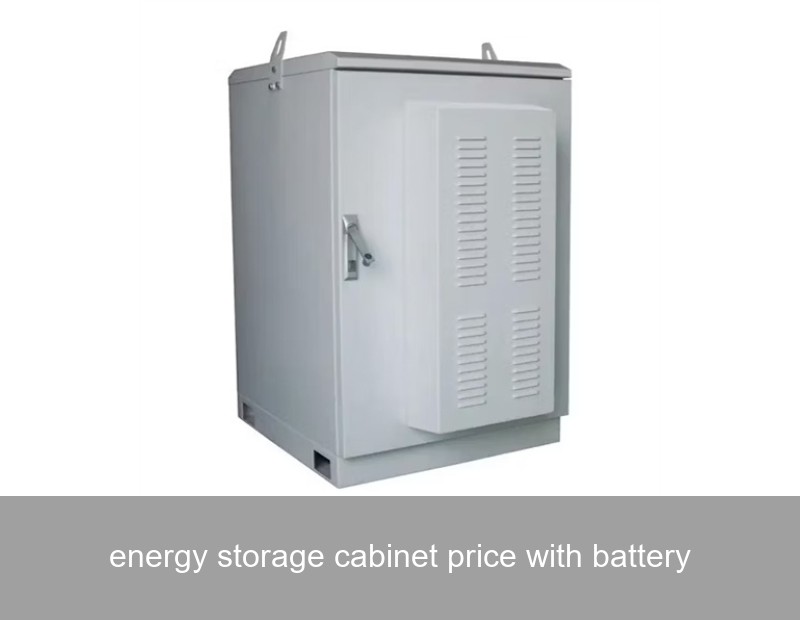
If you're exploring the world of backup power or energy independence, you've likely encountered the term "energy storage cabinet." But the big question always is: what determines the energy storage cabinet price with battery, and is it a worthwhile investment? The answer isn't a single number. It's a story of technology, value, and long-term savings. In this guide, we'll demystify the costs, explore what you're truly paying for, and show how a system from a leader like Highjoule—a global provider since 2005—delivers value far beyond the initial price tag.
Table of Contents
- The Real Breakdown: What's Inside the Energy Storage Cabinet Price?
- Key Factors Influencing Your System's Cost
- The Heart of the System: Battery Technology & Cost Implications
- From Price to Payback: A Real-World Case Study
- The Highjoule Approach: Engineering Value into Every Cabinet
- Making the Right Decision for Your Needs
The Real Breakdown: What's Inside the Energy Storage Cabinet Price?
Think of an energy storage cabinet not as a simple box of batteries, but as an integrated power ecosystem. The price encompasses several critical components:
- Battery Cells & Modules: The core energy reservoir, typically using Lithium Iron Phosphate (LFP) chemistry for safety and longevity.
- Battery Management System (BMS): The "brain" that monitors cell health, ensures safety, and maximizes cycle life.
- Power Conversion System (PCS): This includes inverters and converters that manage AC/DC power flow, connecting your storage to the grid and your loads.
- Thermal Management: A crucial cooling/heating system to keep batteries at optimal temperature, directly impacting performance and lifespan.
- Safety & Enclosure: Robust, often IP-rated cabinets, with integrated fire suppression, circuit protection, and security features.
- Energy Management Software (EMS): The intelligence layer for controlling when to charge, discharge, and optimize for self-consumption or grid services.
As you can see, the energy storage cabinet price with battery is an investment in engineered safety, intelligence, and reliability. Choosing a system that balances these elements is key.

Credit: A modern energy storage installation. The cabinet design, safety features, and integration quality are significant parts of the system's value.
Key Factors Influencing Your System's Cost
Why does one 20 kWh system cost differently from another? Here are the primary drivers:
| Factor | Impact on Price | Consideration |
|---|---|---|
| Energy Capacity (kWh) | Direct, mostly linear cost increase. | Size based on your daily load, not just peak power. |
| Power Rating (kW) | Higher power inverters/PCS increase cost. | Determines how many appliances you can run simultaneously. |
| Battery Chemistry | LFP is cost-competitive for long life; NMC may have higher energy density. | LFP is the preferred choice for stationary storage due to safety and cycle life. |
| System Intelligence & Grid Services | Adds 10-20% but unlocks major revenue/value. | Can the system participate in demand response or virtual power plants? |
| Installation & Grid Interconnection | Variable, site-dependent. | Includes permits, electrical work, and utility fees. |
The Heart of the System: Battery Technology & Cost Implications
The battery is the largest single cost component. Today, Lithium Iron Phosphate (LFP) dominates the commercial and residential storage market for excellent reasons. While the upfront energy storage cabinet price with battery using LFP might be comparable to other chemistries, its total cost of ownership is often lower. LFP batteries offer superior cycle life (often 6,000+ cycles), enhanced safety (they are more thermally stable), and are free from cobalt, making them more sustainable and less prone to price volatility.
For instance, a Highjoule IntelliCube commercial storage system utilizes premium-grade LFP cells coupled with an advanced liquid cooling system. This doesn't just store energy; it guarantees performance over a 15+ year lifespan, effectively reducing the levelized cost of stored energy (LCOS). You're not just buying kWh today; you're buying reliable kWh for decades.
From Price to Payback: A Real-World Case Study
Let's move beyond theory to a real application. Consider a mid-sized dairy processing plant in Bavaria, Germany. Their challenge: high demand charges from the grid and a desire to increase the self-consumption of their rooftop solar PV.
- Solution: Installation of a 120 kWh / 100 kW Highjoule IntelliCube energy storage cabinet.
- Strategy: The system was programmed to peak-shave (discharge during short periods of highest grid demand) and store excess solar generation for use in the evening.
- Financial Outcome (Annual):
- Demand Charge Savings: €18,500
- Increased Solar Self-Consumption Savings: €8,200
- Total Annual Savings: €26,700
- Payback: With a total project cost (including installation) of approximately €150,000, the simple payback period was under 6 years. Given the system's warranted performance of 15 years, this represents a highly attractive ROI and a significant reduction in operational carbon footprint.
This case shows that the energy storage cabinet price with battery must be evaluated as a capital expenditure with a clear, calculable return, not just an equipment cost. You can explore more on Germany's energy storage incentives via the Fraunhofer Institute for Solar Energy Systems.
The Highjoule Approach: Engineering Value into Every Cabinet
At Highjoule, we've spent nearly two decades refining how to build intelligence, durability, and safety into our systems. This engineering philosophy directly impacts the value proposition behind our energy storage cabinet price with battery.
Our IntelliCube series for commercial & industrial applications and HomePower series for residential use are designed with a core principle: maximize lifetime value. We achieve this through:
- Proactive Safety Architecture: Multi-layer protection from cell to grid, including state-of-the-art thermal runaway detection and suppression.
- Adaptive Liquid Cooling: Maintains perfect cell temperature year-round, extending battery life by up to 30% compared to passive air-cooled systems.
- Grid-Flexible Intelligence: Our EMS is future-proofed, allowing systems to adapt to new utility tariffs and even participate in grid-balancing programs, creating potential revenue streams. Learn about the evolution of grid services from the U.S. National Renewable Energy Laboratory (NREL).
- Modular & Scalable Design: Start with what you need and expand seamlessly. This protects your initial investment and allows your storage to grow with your energy needs.

Credit: Advanced monitoring and control software, like Highjoule's EMS, turns a storage cabinet into a smart grid asset.
Making the Right Decision for Your Needs
So, how do you navigate the decision? Focus on Total Cost of Ownership (TCO) and capabilities, not just the sticker price. Ask your provider:
- What is the warranted throughput or cycle life of the system?
- How does the BMS and thermal management protect my investment?
- Can the software be updated to take advantage of future grid programs?
- What is the installation and commissioning process, and what ongoing support is offered?
The energy storage cabinet price with battery is the entry ticket to a more resilient, efficient, and sustainable energy future. The right system pays for itself and then continues to deliver value for years.
Ready to Calculate Your Specific Scenario?
Every facility, home, and energy profile is unique. What would your payback period look like if you could cut your demand charges by 40% or increase your solar self-consumption to 80%? Our team at Highjoule specializes in creating tailored models to show the precise financial and operational benefits for your property. What's the first energy cost you'd like to tackle—soaring peak demand rates, unreliable grid power, or simply maximizing your renewable investment?
 Inquiry
 Online Chat