


How to Become a Solar Panel Distributor and Lead the Energy Transition
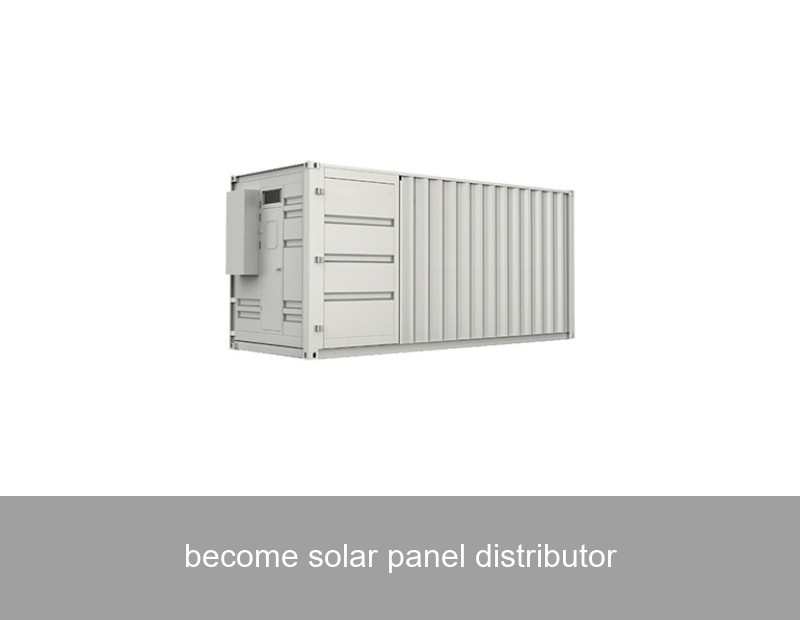
Table of Contents
- The Solar Surge: More Than Just a Trend
- The Distributor's Crucial Role in the Solar Value Chain
- Step-by-Step: Your Path to Becoming a Distributor
- Case Study: Powering Growth in the European Market
- Beyond Panels: The Essential Role of Smart Energy Storage
- Partnering for Success: Choosing the Right Manufacturer
- Your Future in Solar Distribution
Have you been watching the solar energy market explode and wondered how to be a part of it, not just as a customer, but as a key player? The ambition to become a solar panel distributor is a powerful one, placing you at the heart of the clean energy revolution. It's a business opportunity fueled by undeniable global momentum, but success requires more than just sourcing panels. It's about providing complete solutions and understanding the evolving needs of installers and homeowners. Let's explore how you can build a thriving business in this dynamic sector.
The Solar Surge: More Than Just a Trend
This isn't a temporary boom. It's a fundamental shift in how we generate and consume power. Driven by climate goals, energy security concerns, and compelling economics, solar photovoltaic (PV) capacity is soaring. In the United States, the Solar Energy Industries Association (SEIA) reports that solar accounted for 53% of all new electricity-generating capacity added in 2023. Meanwhile, Europe, spurred by the REPowerEU plan, is accelerating deployments to break free from fossil fuel dependencies.
But here's the critical insight for anyone looking to become a solar panel distributor: the market is maturing. Customers are no longer satisfied with just panels on the roof. They want reliable, 24/7 clean energy, maximized savings, and resilience against blackouts. This is where the conversation evolves from simple solar to integrated solar-plus-storage systems.

The modern solar installation is the starting point for a smarter home energy system.
The Distributor's Crucial Role in the Solar Value Chain
As a distributor, you are the vital link between manufacturers and the local installers who are the face of the industry. Your value extends far beyond warehousing and logistics. Successful distributors are:
- Solution Providers: Offering not just products, but packaged systems (panels, inverters, storage, monitoring).
- Technical Support Hubs: Providing pre- and post-sales technical guidance to installers.
- Market Educators: Helping installers sell the benefits of advanced systems like storage to end customers.
- Quality Curators: Vetting products for performance, durability, and compliance with local standards.
Step-by-Step: Your Path to Becoming a Distributor
Building a sustainable distribution business requires careful planning. Here is a logical progression to follow:
| Phase | Key Actions | Critical Considerations |
|---|---|---|
| 1. Market Research & Business Plan | Analyze local competition, installer needs, and incentive programs. Define your niche (residential, commercial, agricultural). | Do installers in your region struggle with grid constraints? Is there demand for backup power? Your findings here will dictate your product strategy. |
| 2. Legal & Financial Foundation | Register your business, obtain necessary licenses/permits, secure warehousing, and establish financing for inventory. | Understand the warranty and liability structure for the products you'll distribute. Product liability insurance is a must. |
| 3. Partner Selection (The Most Critical Step) | Choose manufacturing partners known for quality, reliability, and strong distributor support. Look for a complete product portfolio. | A partner with cutting-edge storage technology is no longer a "plus"—it's essential for future-proofing your business. |
| 4. Build Your Sales & Support Engine | Hire or train technical sales staff. Develop marketing materials and installer training programs. | Your ability to educate and support installers will be your biggest competitive advantage. |
Case Study: Powering Growth in the European Market
Let's look at a real-world example. A distributor in Southern Germany, facing a market saturated with basic solar offers, decided to differentiate. They partnered with a manufacturer of high-efficiency panels and integrated battery storage systems. Their focus shifted to selling "energy independence packages" for homeowners.
The Data-Driven Result: By providing installers with the tools and training to sell these systems, they grew their average project value by over 40% within 18 months. During a period of grid instability, their sales of storage-coupled systems tripled, as reported in the European Market Outlook for Solar Power 2023-2027. This demonstrates that distributors who enable installers to meet complex customer needs capture greater market share and resilience.
Beyond Panels: The Essential Role of Smart Energy Storage
This is the cornerstone of a modern distributor's portfolio. Storage is what transforms solar from a daytime savings tool into a 24/7 power solution. It allows homeowners to use more of their own solar energy, provides backup power during outages, and can even enable participation in grid services in some markets.
When evaluating storage solutions to offer, you must look for:
- Safety & Longevity: Cell chemistry (like Lithium Iron Phosphate), robust battery management systems (BMS), and long warranty cycles.
- Integration & Intelligence: Seamless compatibility with major inverters and smart energy management software that optimizes usage.
- Scalability: Modular designs that allow customers to expand their storage capacity as needs grow.
This is precisely where a partner like Highjoule becomes invaluable. As a global leader in advanced energy storage systems since 2005, Highjoule doesn't just sell batteries. They provide intelligent, integrated storage solutions for residential, commercial, and microgrid applications. Their HES (Highjoule Energy Storage) product line features modular, scalable systems with industry-leading safety standards and sophisticated energy management software. For a distributor, this means you can offer a premium, future-proof storage solution that integrates seamlessly with leading solar PV brands, creating a complete and highly desirable package for your installer network.

Integrated battery storage is the key to maximizing solar investment and providing energy security.
Partnering for Success: Choosing the Right Manufacturer
Your choice of manufacturing partner will make or break your distribution business. Look for these attributes:
- Proven Track Record & Financial Stability: You need a partner that will be around in 10+ years to honor product warranties.
- Comprehensive Support: Marketing funds, technical training, co-op advertising, and responsive sales management.
- Product Roadmap Alignment: Are they investing in the technologies your market will demand tomorrow (e.g., vehicle-to-grid readiness, advanced software)?
- Distributor-First Mindset: Clear territorial protections and policies that support, rather than undermine, your local business.
Highjoule exemplifies this partnership model. They work closely with their distribution network, providing not just top-tier products like their HES Series but also in-depth technical training, sales enablement tools, and marketing support. Their focus on sustainable, smart energy solutions ensures that as a Highjoule distributor, you are positioned at the forefront of the energy transition, equipped to meet the most sophisticated customer demands.
Your Future in Solar Distribution
The journey to become a solar panel distributor is undoubtedly challenging, but the opportunity has never been greater. The market is moving decisively from solar-only to solar-plus-storage, and distributors who can supply and support these integrated systems will lead the next wave of growth. It's about building a business that doesn't just sell hardware but enables energy independence and resilience for your community.
Are you ready to evaluate not just the solar panels, but the complete energy ecosystem you will need to offer to build a truly future-proof distribution business? What will be the first step you take to differentiate your future portfolio in this competitive and exciting market?
 Inquiry
 Online Chat