


Lithium Ion Battery Manufacturing in China: Powering the Global Energy Transition
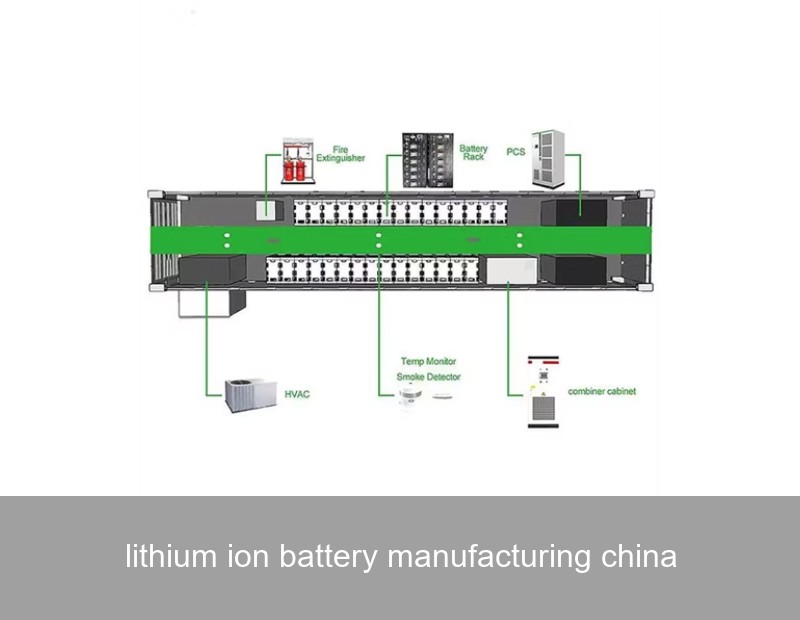
If you're looking into solar storage for your home or a large-scale battery system for your business, you've undoubtedly encountered a central truth: the heart of most modern energy storage systems, the lithium-ion battery cell, is overwhelmingly manufactured in China. This isn't just a minor market detail; it's a defining reality of the global clean energy landscape. For customers and businesses in Europe and the US, understanding the dynamics of lithium ion battery manufacturing in China is crucial for making informed decisions about the technology that will store their renewable power, ensure their energy security, and manage their electricity costs. The sheer scale and efficiency of China's production have driven down costs globally, accelerating the adoption of battery storage. But what does this mean for the quality, innovation, and reliability of the final energy storage system powering your property? Let's unpack the story behind the cells.
How China Leads in Lithium-Ion Battery Manufacturing
China's dominance isn't an accident. It's the result of a deliberate, multi-faceted strategy that has created an ecosystem unmatched anywhere else in the world. For end-users, this translates to accessible technology, but it also raises important considerations about supply chain diversification and system-level engineering.
Unmatched Scale and Integrated Supply Chain
Imagine a single facility that produces more battery cells in a year than the entire output of some continents. This is the reality in China. Companies like CATL and BYD operate "gigafactories" at a scale that defies comparison. This massive scale creates immense cost advantages through economies of scale. More importantly, China has built a vertically integrated supply chain. From mining and refining critical minerals like lithium and cobalt (often through partnerships abroad) to producing anodes, cathodes, and separators, much of the value chain is consolidated. This control reduces complexity, minimizes logistics costs, and shields production from global market volatilities to a significant degree. For global system providers, this means a reliable, high-volume source of cells, but it also underscores the need for rigorous quality control and testing protocols at the system assembly level.

Image Source: Unsplash (Representative image of advanced battery manufacturing automation)
Focused Innovation and R&D Investment
While China is famous for scale, it's a mistake to overlook its innovation. Chinese manufacturers are leaders in several key battery chemistries, particularly Lithium Iron Phosphate (LFP). LFP batteries, known for their exceptional safety, long cycle life, and avoidance of nickel and cobalt, have become a cornerstone of global energy storage. This shift was largely propelled by Chinese R&D. The country filed over 75% of the world's patent applications for battery technologies in 2020, according to the IEA. This continuous innovation cycle directly benefits consumers, leading to safer, longer-lasting, and more cost-effective storage solutions.
Strategic Government Policy and Support
The Chinese government's long-term strategic planning has been instrumental. For over a decade, battery technology and electric vehicles have been designated as strategic emerging industries, receiving substantial state support through subsidies, research grants, and favorable policies. This created a fertile ground for companies to experiment, scale, and capture global market share. The result is a highly competitive domestic market that forces continuous improvement and cost reduction.
Real-World Impact: A European Case Study
Let's move from theory to practice. How does the scale of lithium ion battery manufacturing in China translate to a real project in, say, Germany?
Project: A mid-sized German manufacturing plant aimed to reduce its reliance on the volatile grid, lower its energy costs, and meet corporate sustainability goals. They installed a 1.2 MWh on-site battery energy storage system (BESS) coupled with an existing rooftop solar array.
The Chinese Connection: The battery cells at the core of the BESS were LFP cells from a leading Chinese manufacturer. This choice was driven by the optimal balance of cost, safety (a critical factor for an industrial site), and a guaranteed cycle life of over 6,000 cycles.
Results with Highjoule Integration: Here's where the narrative extends beyond the cell. The German company didn't just buy battery cells; they partnered with Highjoule for a complete, intelligent storage solution. Highjoule's engineering team integrated those high-quality Chinese LFP cells into its proprietary HPS Series commercial storage system. The system features Highjoule's advanced battery management system (BMS) and energy management software (EMS), which are crucial for:
- Safety & Longevity: Precisely monitoring and balancing each cell cluster to prevent overheating and ensure the cells perform to their promised lifespan.
- Intelligent Control: Automatically shifting energy use to maximize self-consumption of solar power and perform peak shaving, reducing the plant's demand charges.
- Grid Services: Providing frequency regulation capabilities, a potential future revenue stream.
Outcome: Within the first year, the facility reduced its peak grid demand by 40% and increased its solar self-consumption from 35% to over 80%. The project payback period was calculated at under 7 years. The case demonstrates that while the cell origin is Chinese, the system's intelligence, safety, and financial performance are delivered by the integrator's expertise.
| Driver | Description | Impact on Global Market |
|---|---|---|
| Production Scale | World's largest concentration of gigafactories (e.g., CATL, BYD). | Drives down global cell prices, enabling wider adoption. |
| Supply Chain Control | Significant control over raw material processing and component production. | Ensures production stability but creates geographic concentration risk. |
| LFP Chemistry Leadership | Pioneered and scaled Lithium Iron Phosphate technology. | Made safe, long-life batteries the standard for stationary storage. |
| Government Strategy | Long-term policy support and R&D funding since the 2000s. | Created a protected environment for industry to mature and dominate. |
Looking Beyond the Cell: The Importance of System Integration
This brings us to the most critical point for any energy storage buyer: a battery cell is not a battery storage system. Think of it like the engine of a car. A world-class engine (the cell) is essential, but without a well-designed chassis, transmission, brakes, and software (the BMS, EMS, thermal management, and power electronics), you won't have a safe, reliable, or high-performing vehicle. This is where companies like Highjoule add indispensable value.
With nearly two decades of experience since 2005, Highjoule specializes in designing and manufacturing complete, UL/Certified and CE-compliant storage solutions for commercial, industrial, and residential applications. We source quality cells from trusted global suppliers, including leading Chinese manufacturers, but our core intellectual property lies in the system architecture. Our HES Series for residential and HMG Series for microgrids are built with:
- Multi-Layer Safety Protocols: From cell-level fusing to module-level isolation and system-level shutdowns.
- Adaptive Software: Our AI-driven EMS learns energy usage patterns to optimize savings and can integrate with grid signals for demand response.
- Global Compliance & Service: Systems are pre-certified for key markets like the EU and US, backed by a global warranty and monitoring network.
This system-level expertise ensures that the underlying advantage of cost-effective lithium ion battery manufacturing in China is fully realized as a safe, reliable, and smart asset on your property.
Future Trends in Lithium-Ion Battery Manufacturing
The landscape is evolving. While China's dominance is secure in the near term, several trends are shaping the future:
- Geographical Diversification: Policies like the U.S. Inflation Reduction Act are incentivizing regional battery manufacturing. We are likely to see a "China+" supply chain develop over the next decade.
- Next-Generation Chemistries: Research into solid-state, sodium-ion, and other chemistries is intense globally. While China is investing heavily, this could open new competitive fronts.
- Sustainability & Traceability: European and North American markets are increasingly demanding transparent, low-carbon, and ethically sourced supply chains. Manufacturers providing this will gain a premium.

Image Source: Unsplash (Representative image of a technician servicing a grid-scale BESS)
Choosing the Right Battery Storage Partner
So, as a business owner or project developer in Europe or the Americas, what should you focus on? The origin of the cell is one data point, but it should not be the deciding factor. Your priority should be the total system performance, safety certification, and the integrator's track record.
Ask potential suppliers: How do you qualify and test the cells you use? What is the design philosophy of your BMS? Can you provide independent performance and safety certification for the complete system, not just the cells? What does your long-term service and performance guarantee look like?
At Highjoule, we believe in harnessing global manufacturing strengths—including the efficiency of lithium ion battery manufacturing in China—and layering them with our deep system integration expertise, stringent quality control, and intelligent software. This approach delivers what you truly need: a resilient, cost-saving, and future-ready energy asset.
Is your organization evaluating how battery storage can stabilize energy costs and support sustainability goals, and what specific concerns do you have about ensuring long-term system reliability and safety beyond the battery cell's data sheet?
 Inquiry
 Online Chat