


Understanding BESS Battery 300Ah Price: A Smart Buyer's Guide to Energy Storage
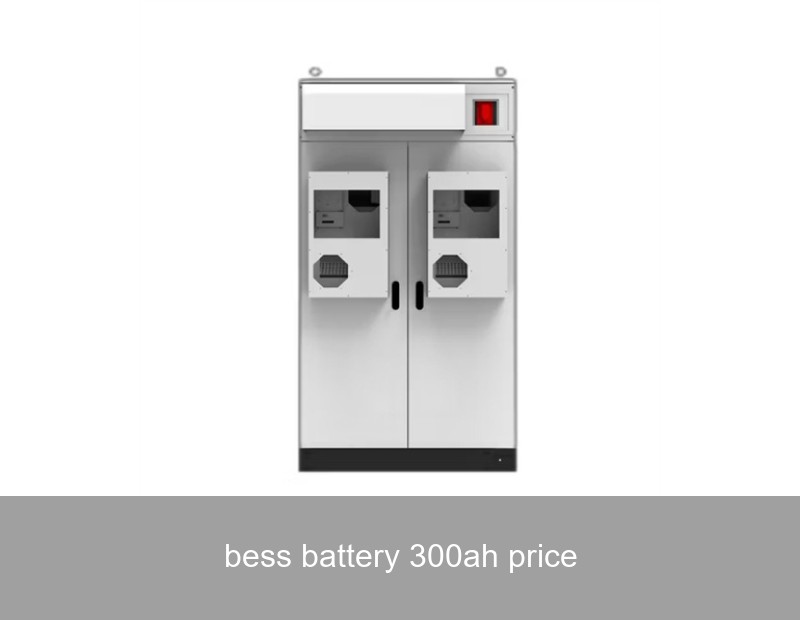
If you're researching energy storage, you've likely encountered the term "BESS" and specifications like "300Ah." You're probably also asking a crucial question: what determines the BESS battery 300Ah price? The figure you see on a spec sheet is more than just a number; it's a gateway to understanding the true value, longevity, and return on investment of a Battery Energy Storage System (BESS). For homeowners and businesses in Europe and the US looking to achieve energy independence or optimize power costs, peeling back the layers on pricing is the first step toward a sound decision. Let's demystify the costs together.
Table of Contents
- The Real Breakdown of a 300Ah BESS Price Tag
- Beyond Amp-Hours: Key Factors That Dictate Your System's Cost & Value
- From Spec to Savings: A Real-World Case Study
- The Highjoule Approach: Delivering Value Beyond the Kilowatt-Hour
- Making the Right Choice for Your Energy Needs
The Real Breakdown of a 300Ah BESS Price Tag
When you see a price for a "300Ah BESS battery," it's essential to understand what that amp-hour (Ah) rating actually means. In simple terms, it describes the battery's capacity to store electrical charge. A 300Ah battery at 48 volts (a common system voltage) can store roughly 14.4 kilowatt-hours (kWh) of usable energy, depending on the depth of discharge. But the BESS battery 300Ah price isn't just for the battery cells.
Think of it like buying a car. The sticker price includes the engine (battery cells), but also the transmission, chassis, and safety systems. A complete BESS includes:
- Battery Cells & Module Assembly: The core Li-ion (often LFP) cells packaged into modules.
- Battery Management System (BMS): The critical "brain" that monitors voltage, temperature, and health for safety and longevity.
- Power Conversion System (PCS): The inverter/charger that converts DC battery power to AC for your home or business.
- Thermal Management: Cooling or heating systems to keep batteries at optimal temperature.
- Enclosure & Safety Hardware: The physical cabinet, fire suppression, and disconnects.
- Energy Management Software: The intelligent software that decides when to charge from solar/grid and when to discharge to maximize savings.
Therefore, the final BESS battery 300Ah price is a sum of all these components plus installation, permitting, and the provider's expertise. A quote that seems surprisingly low may be cutting corners on the BMS or software, which are vital for a system that lasts 10-15 years.

Image: A complete BESS installation involves more than just battery cells. Source: Unsplash
Beyond Amp-Hours: Key Factors That Dictate Your System's Cost & Value
Focusing solely on the 300Ah capacity is like shopping for a house based only on square footage. The neighborhood, build quality, and amenities matter immensely. Here are the primary factors influencing the price and long-term value:
| Factor | Impact on Price | Impact on Long-Term Value |
|---|---|---|
| Cell Chemistry (LFP vs. NMC) | LFP (Lithium Iron Phosphate) may have a higher upfront cost. | Superior safety, longer cycle life (6000+ cycles), and better stability, leading to lower cost per cycle over time. |
| Cycle Life & Warranty | Systems rated for 10,000 cycles cost more than those for 3,000. | A longer, more comprehensive warranty (e.g., 10+ years, 70% retained capacity) protects your investment. |
| System Scalability | Modular architecture might involve a slightly higher initial investment. | Allows you to start with a 300Ah system and easily expand capacity later as needs grow, future-proofing your investment. |
| Grid Services & Software Intelligence | Advanced software platforms add to the system cost. | Enables participation in utility demand response programs (in some markets) and optimizes self-consumption of solar, maximizing financial returns. |
For instance, a BESS battery 300Ah price built with premium LFP chemistry, a robust liquid-cooled thermal system, and a 10-year warranty will understandably be higher than a basic, air-cooled system with a shorter lifespan. The true metric is the Levelized Cost of Storage (LCOS) – the total cost of owning and operating the system over its lifetime divided by the total energy it will deliver. A lower upfront price can often mean a much higher LCOS.
From Spec to Savings: A Real-World Case Study
Let's move from theory to practice. Consider a medium-sized dairy farm in Bavaria, Germany. The farm had significant refrigeration loads and a sizable rooftop solar PV system. Their challenge was high evening energy costs and solar curtailment during peak production hours.
Phenomenon: High grid tariffs during evening hours were eroding solar savings.
Data & Solution: They installed a 300Ah/48V (approx. 14.4 kWh) LFP BESS with a hybrid inverter. The system was programmed for time-of-use arbitrage: storing excess solar generation from midday and discharging it during the expensive 5 PM to 10 PM window.
Results (Case Study Data): Within the first year:
- Grid Energy Consumption Reduction: Reduced grid imports during peak hours by over 85%.
- Solar Self-Consumption: Increased the direct usage of their own solar power from 35% to nearly 70%.
- Payback Period: The calculated simple payback period, factoring in the BESS battery 300Ah price and installation, was under 7 years, thanks to Germany's high electricity prices and supportive policy frameworks for storage.
This case highlights how the right system, priced for quality and performance, translates directly into tangible financial and operational resilience.
The Highjoule Approach: Delivering Value Beyond the Kilowatt-Hour
At Highjoule, with nearly two decades of experience since 2005, we understand that our customers aren't just buying a battery; they are investing in energy resilience and financial predictability. Our product philosophy ensures that the BESS battery 300Ah price you receive encompasses unparalleled long-term value.
Our HPS Series for commercial and industrial applications and HRS Series for residential use are built around this principle. They feature:
- Ultra-Safe, Long-Life LFP Chemistry: All our systems utilize Lithium Iron Phosphate cells, chosen for their exceptional safety profile and cycle life, directly contributing to a lower total cost of ownership.
- Intelligent Energy Management: Our proprietary Highjoule SynergyOS doesn't just react; it learns your load patterns and weather forecasts to optimize charge/discharge cycles, seamlessly integrating with solar and the grid. This intelligence is what turns a storage system into a true asset.
- Fully Modular & Scalable Design: Start with a 300Ah configuration today. As your needs evolve—whether adding an EV charger or expanding your business—you can scale your storage capacity seamlessly without replacing the entire system.
- Global Support & Warranty: Backed by our 10-year performance warranty and a network of certified installers across Europe and North America, we ensure your investment is protected for the long haul.
We believe transparency is key. That's why our quotes clearly detail how each component contributes to the overall BESS battery 300Ah price, empowering you to make an informed comparison based on lifetime value, not just initial cost.

Image: A complete home energy system with solar and storage. Source: Unsplash
Making the Right Choice for Your Energy Needs
So, how should you proceed when evaluating a BESS? First, shift the conversation from "What is the BESS battery 300Ah price?" to "What is the total value and cost over 15 years?" Engage with providers who ask detailed questions about your energy consumption patterns, solar production, and long-term goals.
Request detailed quotes that break down hardware, software, and installation. Ask about the specific cell chemistry, cycle life rating under real-world conditions, and the capabilities of the energy management software. Don't hesitate to ask for references or case studies from your region, similar to the Bavarian farm example. For more on evaluating storage technologies, resources like the National Renewable Energy Laboratory (NREL) provide excellent, unbiased information.
Ultimately, the most suitable system is one that aligns with your financial and energy resilience goals, backed by a provider with a proven track record. What specific energy challenge—be it unpredictable bills, frequent outages, or a desire to maximize your solar investment—is driving you to consider a BESS solution today?
 Inquiry
 Online Chat