


BESS Developer: How Much Does a Battery Energy Storage System Really Cost?
If you're a project developer, asset owner, or investor stepping into the dynamic world of battery energy storage systems (BESS), one question inevitably dominates early conversations: "How much?" It's the right question to ask, but the answer is rarely a simple number on a quote. The cost of a BESS project is a multi-layered equation, influenced by technology choices, scale, location, and the intelligence embedded within the system itself. As a BESS developer, understanding this total cost of ownership—from capital expenditure (CAPEX) to long-term operational revenue—is what separates a viable project from a truly profitable one. Let's demystify the costs and explore what truly drives value in a modern energy storage deployment.
The Core Cost Drivers: Breaking Down the "How Much?"
Asking "how much for a BESS?" is like asking "how much for a house?" Location, size, materials, and features all dramatically alter the price. For a grid-scale or commercial & industrial (C&I) BESS, we can categorize the primary cost components as follows:
1. Battery Cells & Modules (The "Battery" Itself)
This is often the most visible cost, typically representing 30-50% of the total system CAPEX. Prices fluctuate based on lithium-ion chemistry (e.g., LFP vs. NMC), commodity prices, and manufacturing scale. While LFP (Lithium Iron Phosphate) cells might have a slightly higher upfront cost per kWh than some NMC variants, their longer cycle life and superior safety profile often make them the preferred choice for stationary storage, offering better long-term economics. Sourcing from tier-1 manufacturers is non-negotiable for bankability.

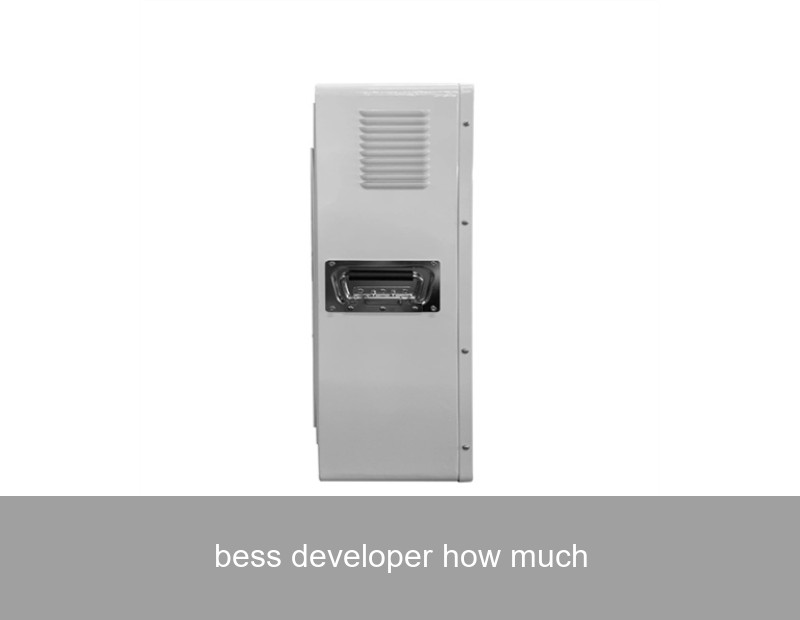
Image Source: Unsplash - Representative image of battery modules.
2. Balance of System (BOS)
This encompasses everything else that makes the batteries work as a system:
- Power Conversion System (PCS): The inverters that convert DC from the batteries to AC for the grid. Efficiency and reliability here are paramount.
- Energy Management System (EMS): The "brain" that controls charging and discharging based on market signals or grid needs.
- Thermal Management: A sophisticated cooling system (liquid or air-based) is critical for safety, performance, and longevity.
- Safety & Fire Suppression: Dedicated systems, sensors, and enclosures meeting strict local codes (like NFPA in the US).
- Enclosure & Racking: From containerized solutions to custom-built buildings.
3. Software & Intelligence
This is where the real differentiation happens. A basic BESS stores energy; a smart BESS optimizes it. Advanced software platforms enable revenue stacking—participating in multiple value streams like frequency regulation, energy arbitrage, and capacity markets. The cost of this software (often a SaaS model) is minor compared to the revenue uplift it can generate. For example, a study by the National Renewable Energy Laboratory (NREL) highlights how software-driven control strategies can increase BESS profitability by over 30%.
4. Permitting, Installation & Grid Connection
These "soft costs" are highly geography-dependent. In the US and Europe, navigating interconnection queues, securing permits, and meeting utility requirements can be time-consuming and expensive. Engineering, procurement, and construction (EPC) services and grid studies add significant line items to the budget. Choosing a BESS provider with deep local experience can streamline this process immensely.
A Real-World Case Study: A 10MW/20MWh BESS in Germany
Let's ground this in reality. Consider a 10MW/20MWh BESS project in Germany, designed for primary frequency response (FCR) and intraday trading.
| Cost Category | Estimated Cost (EUR) | % of Total CAPEX | Notes |
|---|---|---|---|
| Battery Cells & Packs | ~3.2 - 4.0 million | ~40% | Based on LFP chemistry, tier-1 supplier |
| Balance of System (PCS, Cooling, etc.) | ~2.0 - 2.5 million | ~25-30% | Includes containerized enclosures |
| Software & Control System | ~150k - 300k | ~2-4% | Advanced EMS for market participation |
| EPC, Grid Connection, Permits | ~1.5 - 2.0 million | ~20-25% | Highly site-specific; includes transformer & switchgear |
| Total Estimated CAPEX | ~6.85 - 8.8 million EUR | 100% | Resulting in a typical range of ~340 - 440 EUR/kWh |
The Revenue Side: In 2023, a BESS of this scale in the German FCR market could generate significant revenue, though prices have normalized from earlier peaks. The key is the software's ability to also engage in intraday arbitrage, capturing price spreads when FCR prices are low. According to market data from energy-charts.info, the volatility in German day-ahead prices creates substantial arbitrage opportunities, which a smart BESS can exploit. The project's internal rate of return (IRR) hinges entirely on this sophisticated, software-driven revenue stacking.
The Highjoule Advantage: Optimizing Value for Developers
At Highjoule, we understand that your question "how much?" is really about "what's my return?" That's why we approach BESS development as a partnership focused on lifecycle value, not just equipment supply.
Our H-Series containerized BESS solutions are engineered for durability and ease of deployment. Built with UL9540-certified LFP battery technology and featuring our advanced liquid cooling system, they ensure maximum cycle life and safety, directly protecting your capital investment.
The true differentiator is the Highjoule Apex Platform™, our integrated energy management and asset optimization software. Apex doesn't just monitor; it autonomously decides the most profitable action across multiple market signals in real-time. For a developer, this means:
- Higher Revenue: Automated stacking of frequency services, energy arbitrage, and capacity payments.
- Lower Risk: Predictive analytics for battery health, reducing degradation and unexpected O&M costs.
- Faster Grid Integration: Our team provides comprehensive grid compliance support, from feasibility studies to interconnection documentation, smoothing one of the most complex phases of your project.
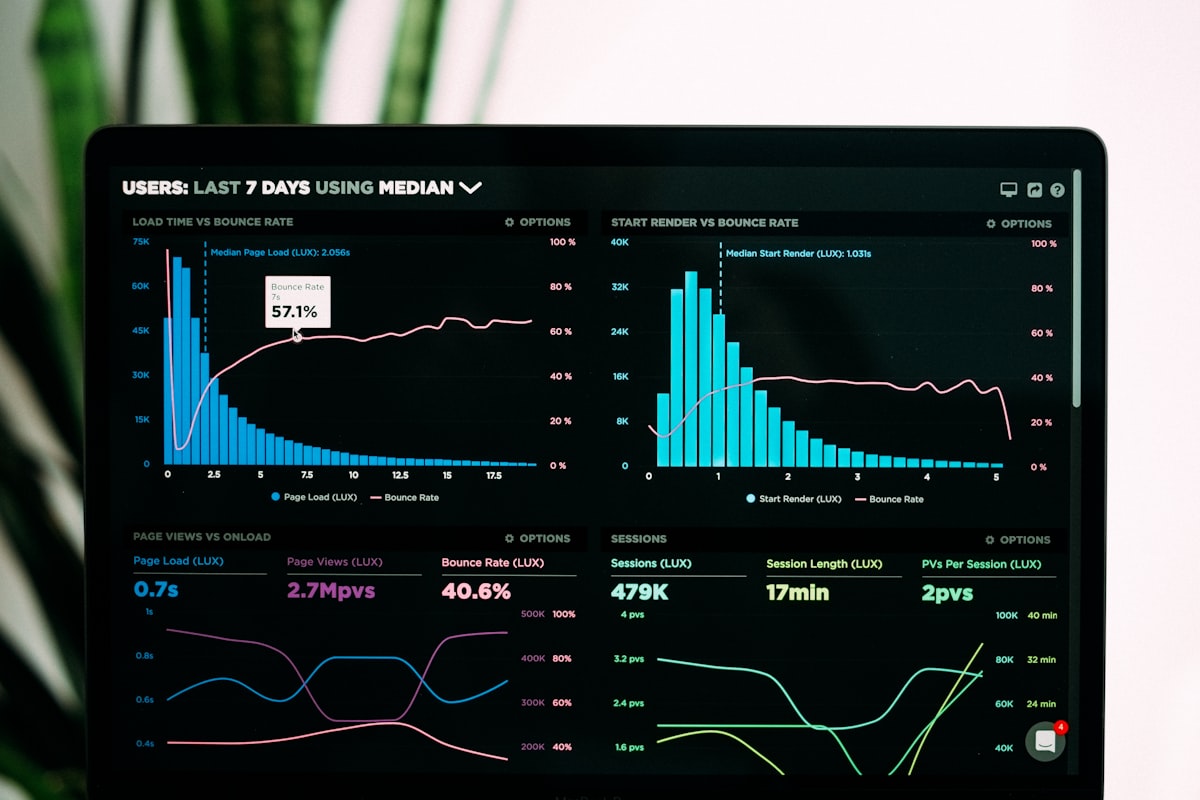
Image Source: Unsplash - Representative image of an energy management software dashboard.
Beyond Initial Cost: The Total Cost of Ownership Equation
Focusing solely on upfront $/kWh can be a costly mistake. The most critical metric for a BESS developer is the Levelized Cost of Storage (LCOS)—the net present cost of storing and discharging energy over the system's lifetime. A cheaper system with lower efficiency, poor thermal management, and basic software will degrade faster and miss revenue opportunities, leading to a higher LCOS.
Factors that improve your LCOS include:
- Round-Trip Efficiency (RTE): Highjoule systems achieve over 95% RTE, meaning more of the energy you pay for is sold back.
- Degradation Rate: Our systems are designed for minimal capacity fade, ensuring more revenue-generating cycles.
- Opaque vs. Open Software: A "black box" system locks you into a single vendor. Highjoule's Apex Platform offers transparent control and can integrate with third-party market bidding tools, giving you flexibility.
Your Next Step
The journey from "BESS developer how much?" to a profitable, operational asset is complex, but you don't have to navigate it alone. The landscape is evolving rapidly; for instance, how will new grid-forming inverter requirements in places like Australia and parts of Europe influence your technology selection and future-proofing strategy?
Instead of searching for a simple price, we invite you to start with a different question: What specific revenue streams and grid services is my target market demanding, and what system architecture will maximize my return over the next 15 years? Let's model that scenario together.
 Inquiry
 Online Chat