


Understanding Industrial Battery Price: A Smart Investment for Energy Resilience
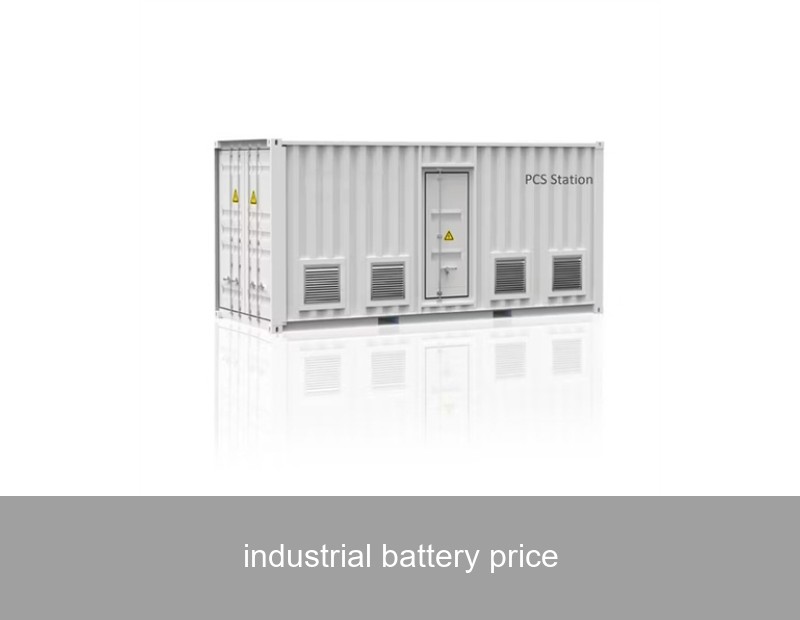
If you're managing a factory, a data center, or any large-scale operation, you've likely felt the pinch of volatile energy costs and the looming threat of grid instability. The conversation is rapidly shifting from *if* you need an energy storage system to *which one* and at what cost. The term **industrial battery price** is more than just a figure on a quote; it's a complex equation involving technology, lifetime value, and strategic energy independence. In this deep dive, we'll move beyond the sticker shock to understand what truly drives the cost of industrial battery storage and how leading companies are turning this capital expenditure into a powerful tool for savings and sustainability.
Table of Contents
- The Real Cost Behind the Industrial Battery Price Tag
- Key Factors Influencing Industrial Battery System Costs
- Case Study: How a German Manufacturer Slashed Costs
- Looking Beyond Price: The Highjoule Advantage
- Future Trends in Industrial Battery Pricing
- Is Your Business Ready to Decode Its Energy Future?
The Real Cost Behind the Industrial Battery Price Tag
Let's be clear: when we talk about **industrial battery price**, we're rarely discussing a single, simple item. You're investing in a complete Battery Energy Storage System (BESS). Think of it like buying a car. The battery cells are the engine, but you also need the chassis, transmission, cooling system, and onboard computer. The total system cost includes:
- Battery Cells & Modules: The core chemistry (like Lithium Iron Phosphate or LFP, known for safety and longevity) and its raw material costs.
- Power Conversion System (PCS): The bi-directional inverter that converts DC battery power to AC for your facility.
- Battery Management System (BMS): The "brain" that ensures safety, performance, and cell longevity.
- Thermal Management: Crucial cooling/heating systems to maintain optimal operating temperature.
- Integration, Software, & Controls: The hardware and intelligent software that enables the system to automate energy decisions.
- Installation & Balance of Plant: Site preparation, cabling, safety systems, and grid interconnection.
Therefore, the most critical metric isn't just the upfront price, but the Levelized Cost of Storage (LCOS). LCOS accounts for the total cost over the system's lifetime, divided by the total energy output. A system with a slightly higher initial **industrial battery price** but superior efficiency and a 15-year lifespan can have a far lower LCOS than a cheaper, less robust alternative.

Credit: A modern industrial battery storage installation requires careful planning and integration. (Image: Alexander Tsang / Unsplash)
Key Factors Influencing Industrial Battery System Costs
What makes one project's **industrial battery price** differ from another's? Here are the primary levers:
| Factor | Impact on Price | Consideration for Buyers |
|---|---|---|
| System Scale & Energy Capacity (kWh) | Larger systems typically have a lower cost per kWh due to economies of scale. | Right-size your system based on detailed load profiling, not just peak demand. |
| Power Rating (kW) | Determines how much power can be delivered at once. Higher power needs may increase PCS cost. | Match to your specific needs: demand charge reduction vs. long-duration backup. |
| Chemistry & Technology | LFP is now the dominant, cost-effective choice for stationary storage. Emerging chemistries may carry a premium. | Prioritize safety, cycle life (e.g., 6,000+ cycles), and degradation rates over novelty. |
| Software & Intelligence | Advanced AI-driven optimization platforms can add cost but dramatically increase ROI. | This is where true value is unlocked. Don't settle for a "dumb" battery. |
| Local Regulations & Grid Interconnection | Permitting, utility fees, and specific grid code requirements can vary significantly by region (e.g., EU vs. US). | Work with a provider experienced in your local market to navigate these complexities. |
According to a U.S. Department of Energy report, the cost of utility-scale battery storage fell by nearly 70% between 2015 and 2020. While supply chain fluctuations occur, the long-term trend for **industrial battery price** is downward, making the investment more accessible than ever.
Case Study: How a German Automotive Supplier Mastered Their Energy Costs
Let's look at a real-world example from Bavaria, Germany. A mid-tier automotive parts manufacturer faced two problems: skyrocketing strompreis (electricity prices) and stringent corporate sustainability targets. Their peak demand charges were a significant burden.
The Solution: They partnered with Highjoule to design and deploy a 1.2 MWh / 600 kW containerized battery storage system using Highjoule's H-Series Industrial BESS. The system's intelligent software was integrated with their building management system and local weather forecasts.
The Data-Driven Outcome (First 12 Months):
- Demand Charge Reduction: By strategically discharging the battery during short periods of peak consumption, they reduced their peak grid draw by 22%, saving over €45,000 annually.
- Solar Self-Consumption Optimization: The system stored excess energy from their existing rooftop PV for use later, increasing self-consumption from 35% to 78%.
- Grid Services Revenue: Participating in the local grid's frequency regulation program generated an additional €15,000 in annual revenue.
- Payback Period: The combined savings and revenue streams led to a calculated payback period of under 6 years on their **industrial battery price** investment, with a system warranty of 10+ years.
This case shows that the effective **industrial battery price** becomes a net positive when the system is deployed as a dynamic financial asset, not just backup power.
Looking Beyond Price: The Highjoule Advantage in Industrial Energy Storage
At Highjoule, we believe your investment should be judged by the value it delivers for decades, not just its initial cost. Our approach to the **industrial battery price** conversation is rooted in Total Cost of Ownership (TCO). Our H-Series and scalable MegaJoule platform products are engineered for this purpose.
What sets our systems apart isn't just the robust, UL/IEC-certified hardware, but the JouleMind AI operating system. This proprietary platform continuously analyzes energy prices, consumption patterns, and weather data to make autonomous, profit-maximizing decisions for your storage asset. It turns a complex piece of infrastructure into a "set-and-forget" revenue and savings generator.
Furthermore, our global service network provides proactive monitoring and support, ensuring system performance aligns with the financial model for the life of the project. We offer flexible commercial models, from direct purchase to Energy-as-a-Service (EaaS) arrangements, to help businesses of all sizes overcome capital hurdles and start benefiting from storage immediately.

Credit: Intelligent software dashboards are key to maximizing ROI on an industrial battery investment. (Image: Hockey Kid / Unsplash)
Future Trends: Where is Industrial Battery Price Heading?
The landscape is dynamic. While raw material costs will always influence the baseline **industrial battery price**, several trends are shaping the future:
- Technology Diversification: While LFP dominates, sodium-ion and other chemistries may offer cost advantages for specific applications, potentially putting downward pressure on prices. You can read about emerging storage technologies at the National Renewable Energy Laboratory (NREL).
- Second-Life EV Batteries: Repurposing electric vehicle batteries for stationary storage is an area of active exploration, which could create a new, lower-cost market segment for less demanding applications.
- Grid Policy as a Driver: In both the EU and US, new policies and incentives (like the Inflation Reduction Act's investment tax credits) are effectively lowering the net **industrial battery price** for qualifying projects, accelerating adoption.
The key takeaway? Delaying a storage decision in hopes of a lower future price often means forgoing years of significant savings and resilience benefits that far outweigh potential incremental cost declines.
Is Your Business Ready to Decode Its True Industrial Battery Price?
The question is no longer simply "What does a battery cost?" The real, more empowering questions are: "What can a smart energy storage system save me?" and "What is the cost of *inaction* in the face of unreliable power and volatile energy markets?"
We invite you to move beyond the generic **industrial battery price** search. Start with a detailed analysis of your facility's energy profile. What is your peak demand? How does your solar generation curve match your consumption? What are your specific resilience needs?
What would a 20% reduction in your next energy bill do for your operational margins, and are you willing to explore the precise path to get there?
 Inquiry
 Online Chat