


ESS Containers in Dallas, TX: Powering a Resilient and Sustainable Future
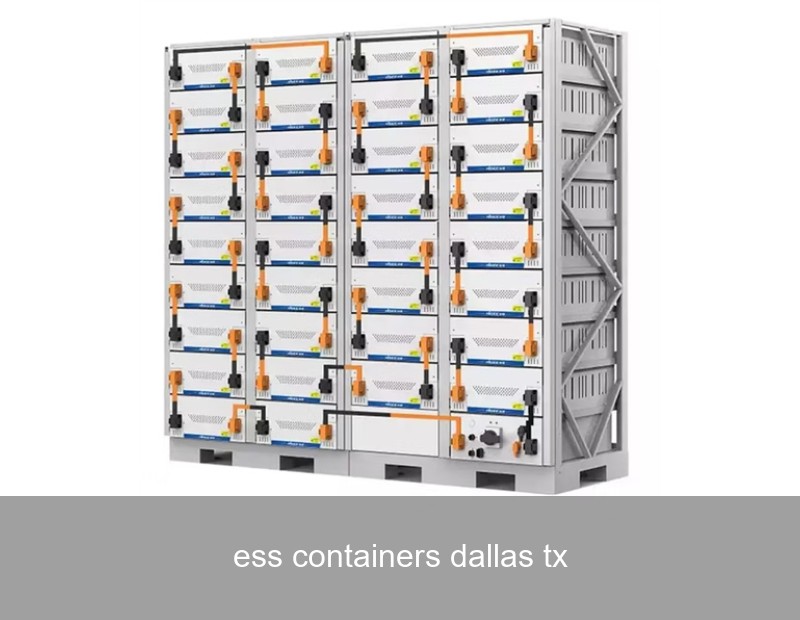
Have you ever wondered how a bustling metropolis like Dallas keeps the lights on during a severe weather event, or how a local factory manages its soaring energy costs? The answer increasingly lies in a powerful, scalable solution arriving on-site in a robust, standardized format: Energy Storage System (ESS) containers. For businesses and communities in Dallas, TX, and across the sunbelt, these containerized systems are not just backup power; they are the cornerstone of a modern, resilient, and cost-effective energy strategy. This article delves into why ESS containers are becoming essential in Dallas, explores real-world applications, and highlights how companies like Highjoule are leading the charge with intelligent, turnkey solutions.
What Are ESS Containers?
Think of an ESS container as a "power bank" for an entire facility or a segment of the grid, but on a massive, industrial scale. These are essentially shipping containers—rugged, weather-resistant, and easily transportable—that have been pre-fabricated with all the critical components of an energy storage system inside. This includes:
- Battery Racks: The heart of the system, using lithium-ion (like LFP) chemistry for safety and longevity.
- Battery Management System (BMS): The brain that monitors cell health, temperature, and performance.
- Power Conversion System (PCS): The muscle that converts DC battery power to AC power for your facility and vice-versa.
- Thermal Management: A dedicated HVAC system to keep batteries at their optimal operating temperature, crucial for Texas heat.
- Fire Suppression & Safety Systems: Integrated, multi-layer protection for ultimate peace of mind.
- Energy Management System (EMS): The intelligent software that decides when to charge, discharge, or hold, based on your economic and operational goals.
The beauty of the containerized approach is its plug-and-play nature. It significantly reduces on-site construction time and complexity, allowing for faster deployment and scalability. Need more capacity? You can often add another container in parallel.
Why Dallas, TX is a Prime Market for ESS Containers
The Dallas-Fort Worth metroplex presents a perfect storm of factors making ESS containers not just advantageous, but a strategic necessity.
The Grid Resilience Imperative
Texas operates on its own grid, ERCOT, which is known for its volatility. While this can mean lower prices at times, it also brings vulnerability to extreme weather, as witnessed during Winter Storm Uri in 2021. For a commercial or industrial facility, a single prolonged outage can mean millions in lost revenue and product. An ESS container provides critical backup power, bridging the gap until generators start or grid power is restored.
Economic Drivers: Demand Charges and Energy Arbitrage
For businesses, the electricity bill has two main parts: the energy you use (kWh) and the demand charge, a fee based on your highest 15-minute power draw (kW) in a billing cycle. In Dallas, demand charges can constitute 30-50% of a commercial bill. An intelligently managed ESS container acts like a "demand sponge," discharging power during peak usage periods to flatten that peak and slash demand charges. Furthermore, it can "buy low, sell high"—charging when wholesale electricity prices are low (often at night) and using or even selling that stored energy back when prices spike.
Renewables Integration
Texas is the national leader in wind power and is rapidly expanding solar. ESS containers are the perfect partner for on-site solar arrays. They store excess solar generation during the day for use at night, maximizing self-consumption and independence. This turns a variable renewable resource into a firm, dispatchable one.

Image: Texas leads in renewable energy, creating a strong need for storage solutions like ESS containers. (Source: Unsplash)
A Real-World Case: Manufacturing in Fort Worth
Let's look at a concrete example. A mid-sized precision metal fabrication plant in Fort Worth was facing monthly demand charges exceeding $45,000. Their operations involved large, intermittent loads from presses and welders, causing sharp, expensive power spikes. They also had a 500 kW rooftop solar array that was often curtailed in the middle of the day when production was lower.
The Solution: The company deployed a 1 MWh / 500 kW ESS container paired with an upgraded energy management system that integrated with their existing solar.
| Metric | Before ESS | After ESS | Change |
|---|---|---|---|
| Average Monthly Demand Charge | $45,200 | $28,500 | -37% |
| Solar Self-Consumption | 68% | 94% | +26% |
| Grid Energy Purchased (peak) | 85 MWh/month | 52 MWh/month | -39% |
| Estimated Payback Period | N/A | 4.2 years | N/A |
The system also provided seamless backup power for critical loads during two brief grid disturbances, preventing production line halts. This case illustrates the multi-faceted value proposition: direct cost savings, enhanced sustainability, and operational resilience.
The Highjoule Advantage: Smart, Integrated ESS Containers
As a global leader in advanced energy storage since 2005, Highjoule understands that an ESS container is more than just hardware; it's an intelligent energy asset. Our approach for clients in Dallas, TX, and beyond focuses on total system performance and lifetime value.
Our H-PowerCube series of containerized ESS is engineered for the demanding Texas climate and complex energy markets. What sets it apart?
- Proprietary Adaptive EMS: Our AI-driven Energy Management System doesn't just follow pre-set rules. It learns your facility's load patterns, integrates real-time weather and grid price forecasts (from sources like ERCOT), and optimizes dispatch to maximize savings and ROI automatically.
- Ultra-Safe LFP Chemistry & Multi-Zone Protection: We exclusively use Lithium Iron Phosphate batteries, known for superior thermal and chemical stability. Combined with a multi-zone gas and aerosol fire suppression system, safety is engineered into every inch.
- Grid-Forming Capability (Optional): For microgrid or critical backup applications, our systems can "black start" and form a stable grid independently, keeping your essential operations running indefinitely.
- Full Turnkey Service: From initial site assessment and financial modeling to interconnection approval, installation, and ongoing performance monitoring via our Highjoule Connect platform, we manage the entire process. We ensure your ESS container in Dallas is not just installed, but optimized for your specific goals.

Image: Professional maintenance and monitoring are key to long-term ESS performance. (Source: Unsplash)
Key Considerations for Deploying an ESS Container in Dallas
If you're exploring an ESS container for your Dallas-based operation, here are the critical questions to address:
- Site Suitability: Do you have adequate, level space for a 20ft or 40ft container? Is there clear access for delivery and crane placement?
- Interconnection: What is your utility provider's (e.g., Oncor) process and timeline for interconnecting a distributed energy resource? A good provider like Highjoule will handle this complex process for you.
- Use Case Prioritization: Is your primary goal demand charge reduction, backup power, solar optimization, or a combination? This determines the sizing and software strategy.
- Financial Modeling: A detailed analysis of your 12-24 months of utility bills is essential to project savings and ROI accurately.
- Operations & Maintenance: Ensure your provider offers a clear O&M plan to protect your investment over its 15+ year lifespan.
The Future of Energy in Texas
The Texan energy landscape is evolving from a centralized, one-way grid to a decentralized, interactive network of resources. ESS containers are the physical building blocks of this new grid. With the continued growth of renewables and the increasing frequency of climate-driven grid stress, the ability to store and control your own power is transitioning from a luxury to a core component of business continuity and financial planning.
For a facility manager or business owner in Dallas, the question is no longer "Can we afford an energy storage system?" but rather "What is the cost of not having control over our power reliability and costs?" How will you position your operations to thrive in the new energy economy?
 Inquiry
 Online Chat