


Why an Inverter with Lithium Phosphate Battery is the Smartest Choice for Modern Energy Storage
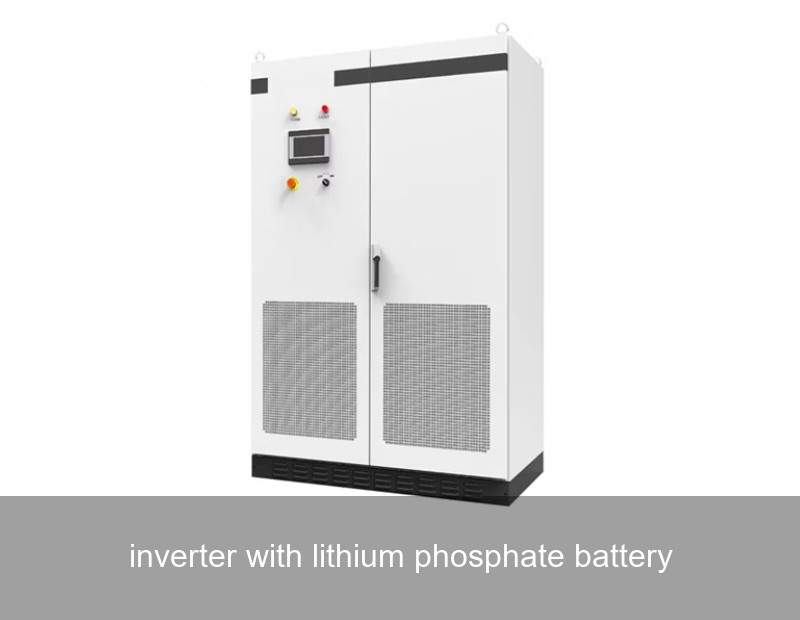
Have you ever wondered why some home and business solar systems seem to perform flawlessly for years, while others struggle with capacity fade and safety concerns? The secret often lies not just in the panels, but in the heart of the storage system: the pairing of the inverter with lithium phosphate battery technology. This combination is rapidly becoming the global standard for reliable, safe, and long-lasting energy independence. As grid instability rises and electricity costs soar across Europe and the US, understanding this critical duo is the first step toward a resilient energy future. At Highjoule, with nearly two decades of expertise, we've engineered our intelligent storage solutions around this very synergy to deliver unmatched performance for homes, businesses, and communities.
The Core Duo: More Than Just a Battery and a Box
Think of your energy storage system as a sophisticated orchestra. The solar panels are the musicians producing the raw sound (energy). The lithium phosphate battery (specifically, Lithium Iron Phosphate or LFP) is the high-fidelity recording studio that stores the performance. But without a world-class conductor, the music falls into chaos. That conductor is the inverter. A modern, hybrid inverter doesn't just convert DC to AC power; it meticulously conducts energy flow—from solar panels, to the battery, to your home appliances, and back to the grid—with precision and foresight. The seamless integration of these two components defines the system's efficiency, lifespan, and safety.

Image: A modern, integrated energy storage system with inverter and battery. Source: Unsplash (Representative image)
The LFP Advantage: Safety, Stability, and Longevity
Not all lithium batteries are created equal. While other chemistries made headlines for the wrong reasons, Lithium Iron Phosphate (LFP) has emerged as the cornerstone for stationary storage. Let's break down why:
- Unmatched Thermal & Chemical Stability: The LFP chemistry is inherently more stable, significantly reducing the risk of thermal runaway—a critical safety priority for homes and businesses. You can sleep soundly knowing your energy storage is built on a safer foundation.
- Legendary Cycle Life: Where a typical lithium-ion battery might offer 2,000-3,000 cycles, a quality LFP battery like those used in Highjoule systems can deliver 6,000+ cycles to 80% capacity. This translates to decades of daily use, not just years.
- Eco-Friendly & Durable: LFP batteries are cobalt-free, avoiding contentious mining practices, and perform well across a wider temperature range, making them ideal for diverse climates from Scandinavian winters to Mediterranean summers.
Inverter Intelligence: The Brain of Your Power System
Pairing this robust battery with a basic inverter is like putting a Formula 1 engine in a car with no steering wheel. The inverter's software is the true intelligence. A sophisticated inverter with lithium phosphate battery management will:
| Inverter Function | Benefit to You |
|---|---|
| Advanced Battery Management System (BMS) Communication | Optimizes charging/discharging to maximize battery lifespan, preventing stress that causes premature aging. |
| Peak Shaving & Load Shifting | Automatically uses stored solar energy during expensive peak-rate hours, slashing your utility bills. |
| Grid Services & Backup Power Readiness | Provides seamless backup power during outages (a key concern in the US) and can participate in grid-balancing programs (increasingly common in Europe). |
| Solar Self-Consumption Optimization | Dynamically routes solar energy where it's needed most—to your loads, to the battery, or to the grid—for maximum financial return. |
Real-World Proof: A Case Study from Germany
Data and theory are compelling, but real-world results are undeniable. Consider a medium-sized bakery in Bavaria, Germany. Facing rising energy costs and seeking sustainability goals, they installed a 50 kWh solar array paired with a 40 kWh lithium phosphate battery system and a Highjoule H4 Series Hybrid Inverter in 2021.
The Challenge: High daytime energy consumption for ovens and refrigeration, coupled with low solar feed-in tariffs, meant they weren't maximizing their solar investment.
The Solution & Results: The intelligent Highjoule inverter was programmed to prioritize using solar power directly for the bakery's operations, then store excess in the LFP battery for use during early morning baking hours and evening peak grid times. Within the first year:
- Grid Energy Independence: Achieved 82% self-consumption of solar energy, up from 35%.
- Cost Savings: Reduced their grid electricity purchases by 68%, translating to over €8,400 in annual savings.
- Reliability: The system provided backup power during two brief grid outages, preventing spoilage of perishable goods.
This case, documented in a Fraunhofer ISE study on energy costs (contextual link), exemplifies the tangible ROI of a correctly engineered system. The bakery's owner noted, "The system doesn't just save money; it gives us control. We've future-proofed our business against energy price shocks."
The Highjoule Solution: Engineered Synergy
Founded in 2005, Highjoule's mission has been to move beyond simply selling components. We deliver optimized power ecosystems. Our products are designed from the ground up for perfect harmony between the inverter and the battery.
Our flagship H-Series Integrated Storage Units are a prime example. They feature our proprietary HarmonyOS BMS firmware, which allows the inverter and the LFP battery bank to communicate on a deeper level than standard protocols allow. This means:
- Predictive Health Analytics: The system can predict and alert you to subtle performance deviations long before they become issues.
- Adaptive Cycling: It adjusts charge cycles based on your unique usage patterns and weather forecasts, gently extending battery life beyond standard ratings.
- Scalable Architecture: Whether for a large American residence with backup needs or a European industrial facility aiming for peak shaving, our modular battery design allows capacity to be expanded seamlessly as your needs grow.
For commercial and microgrid applications, our GridSynch Platform takes this further, enabling the aggregation of multiple storage units to act as a virtual power plant (VPP), providing grid stability and opening new revenue streams—a concept gaining massive traction on both sides of the Atlantic, as noted by the International Energy Agency (IEA).

Image: A technician monitors a commercial-scale battery storage control system. Source: Unsplash (Representative image)
Making the Choice for Your Energy Future
Choosing an energy storage system is a significant decision. The market is flooded with options, but focusing on the fundamental partnership between the inverter and lithium phosphate battery cuts through the noise. Ask your installer or supplier these key questions:
- Is the inverter software specifically optimized for LFP chemistry, or is it a generic setting?
- What is the expected cycle life of the battery under my specific usage patterns, not just in a lab?
- How does the system ensure safety at the cell, module, and system level?
- Can the system's capabilities (like backup power or VPP participation) be unlocked via software as my needs or local grid regulations evolve?
At Highjoule, we believe in empowering this informed decision-making. Our technical white papers and system design tools are publicly available because an educated customer is our best partner. The transition to renewable energy is not just about generation—it's about intelligent, resilient storage.
What specific energy resilience challenge—be it unpredictable bills, frequent outages, or sustainability targets—could a perfectly synchronized inverter with lithium phosphate battery system solve for you in the next year?
 Inquiry
 Online Chat