


BESS Portfolio: How Much Storage Do You Really Need?
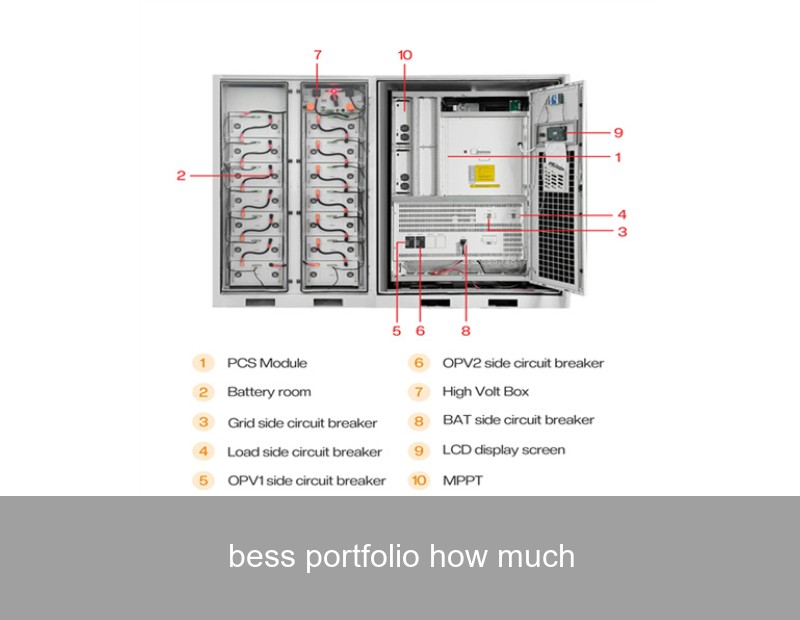
You're considering a Battery Energy Storage System (BESS) for your business, factory, or community energy project. The most common and crucial question that arises is: "BESS portfolio how much?" – as in, how much capacity, power, and overall storage do we need to invest in? It's not a one-size-fits-all answer. Getting the size of your BESS portfolio right is the single most important factor determining its financial return, operational efficiency, and long-term value. Let's break down this complex question into a clear, actionable guide.
Table of Contents
- The Sizing Challenge: Why "How Much?" Isn't Simple
- Key Dimensions of a BESS Portfolio: Capacity, Power, and Duration
- How Your Primary Use Case Drives the "How Much" Answer
- Real-World Case: Sizing for Peak Shaving in German Manufacturing
- The Highjoule Approach: Intelligent Sizing for Optimal Value
- Future-Proofing Your BESS Portfolio
The Sizing Challenge: Why "How Much?" Isn't Simple
Think of a BESS not just as a battery, but as a versatile energy asset. Its "size" is multi-dimensional. Asking "how much?" is like asking how big a factory should be—it depends on what you're making, your raw material flow, and your delivery schedule. For a BESS, the three core questions are: How much energy can it hold (in kWh or MWh)? How much power can it deliver at once (in kW or MW)? And for how long can it deliver that power (duration, in hours)? A portfolio sized perfectly for solar self-consumption would be underwhelming for frequency regulation and overkill for backup power alone.
Key Dimensions of a BESS Portfolio: Capacity, Power, and Duration
To understand "how much," you must first understand these interlinked components.
- Energy Capacity (kWh/MWh): This is the "gas tank" – the total amount of electrical energy the system can store. It directly answers "how much can I use?" This determines how long you can power loads or how much excess solar you can capture.
- Power Rating (kW/MW): This is the "pipe size" – the maximum rate at which energy can be charged or discharged. It defines how quickly you can absorb or deliver energy. High power is needed for fast grid services or sharply cutting peak demand.
- Duration (Hours): This is the ratio of Energy Capacity to Power Rating (e.g., a 4 MWh system with a 1 MW inverter has a 4-hour duration). It tells you how long the system can deliver its maximum power. Different applications require different durations: 15-30 minutes for frequency response, 2-4 hours for solar shifting, and 4+ hours for long-duration backup or wholesale market arbitrage.

As the U.S. Department of Energy's Energy Storage Grand Challenge outlines, the optimal mix of these dimensions is key to a cost-effective and functional portfolio (Source: U.S. DOE).
How Your Primary Use Case Drives the "How Much" Answer
The purpose of your BESS is the primary driver of its size. Here’s a breakdown across common applications:
| Primary Use Case | Focus Dimension | Typical Sizing Driver | Example "How Much?" |
|---|---|---|---|
| Commercial Peak Shaving | Power (kW) | Reduction needed in monthly demand charge peak | Enough power to shave the top 10-20% of your load profile; 2-4 hour duration. |
| Solar Self-Consumption | Energy (kWh) | Daily excess solar generation to be stored | Capacity to store 70-90% of your daily excess solar for use in the evening. |
| Frequency Regulation (Grid Services) | Power (MW), Fast Response | Market participation requirements; fast charge/discharge cycles | High power relative to energy; often 1-hour or 30-minute duration systems. |
| Backup Power / Resilience | Energy (kWh) | Critical load (kW) and required backup duration (hours) | Size energy capacity as: Critical Load (kW) x Required Backup Hours (h). |
| Energy Arbitrage | Energy (MWh), Duration | Spread between high and low electricity prices | Larger energy capacity and longer duration (4+ hours) to buy low, sell high over longer periods. |
Real-World Case: Sizing for Peak Shaving in German Manufacturing
Let's look at a concrete example from our work at Highjoule. A mid-sized automotive parts manufacturer in Bavaria, Germany, faced steep Netzentgelt (grid fee) and demand charges, which comprised nearly 40% of their electricity bill. Their peak demand was 1.2 MW, but it spiked to that level only 5-10 times a month.
The Problem: A naive approach might suggest a 1.2 MW system to cover the entire peak. However, our analysis of a full year of load data (15-minute intervals) revealed they could achieve 95% of the savings by shaving just 200 kW off their peak. The key was not the absolute peak, but the frequency and duration of high-demand events.
The Highjoule Solution: We designed a Highjoule IntelliBESS 500 portfolio with a 250 kW / 500 kWh configuration (2-hour duration). This intelligent system anticipates load increases using onboard AI and discharges precisely to cap the facility's draw from the grid at 1.0 MW. The result? A 22% reduction in monthly demand charges, yielding a payback period of under 5 years. The system also provides voltage support, improving power quality for sensitive machinery. This case shows that "how much" is answered not by the peak, but by detailed analytics of your unique load profile.
The Highjoule Approach: Intelligent Sizing for Optimal Value
At Highjoule, we believe the question "BESS portfolio how much?" is answered through a four-step consultative process, moving beyond simple calculators to dynamic modeling.
- Deep Energy Analysis: We analyze at least 12 months of your utility bills and interval load data (15-min or 1-hour) to understand your true consumption patterns, peak demand events, and tariff structures.
- Value Stack Modeling: We model multiple, often overlapping, use cases (e.g., solar shifting + peak shaving + contingency backup) to create a "value stack." This identifies the portfolio size that maximizes total economic return across all viable revenue or savings streams. Our IntelliBESS platform is specifically designed for such multi-mode operation.
- Technology Matching: Based on the required duty cycles, duration, and space constraints, we recommend the optimal battery chemistry. For high-cycle, daily-use applications like solar shifting, our LFP (Lithium Iron Phosphate)-based systems offer the best balance of longevity and safety. For high-power, short-duration needs, different configurations are prioritized.
- Financial Simulation & Risk Assessment: We provide clear projections on CAPEX, OPEX, savings, ROI, and payback period. We also model scenarios like changing energy prices or evolving tariff structures, as seen in markets like California or the UK (Source: National Grid ESO), to ensure your investment is resilient.

Future-Proofing Your BESS Portfolio
The energy landscape is shifting. When sizing your BESS today, consider tomorrow's needs. Will you add solar PV in two years? Are electric vehicle fleets in your future? Is your utility moving towards time-of-use rates or real-time pricing? A common mistake is sizing only for today's single use case. A slightly larger or more modular system might offer significantly more value down the line. Highjoule's systems are designed with modular scalability in mind. You can start with a core IntelliBESS unit and add more power or energy capacity as your needs evolve, protecting your initial investment and adapting to new market opportunities like participating in a Virtual Power Plant (VPP).
So, the next time you ask, "BESS portfolio how much?" remember that the most cost-effective answer comes from a partner who looks at your entire energy ecosystem. What single piece of your energy data—be it a demand spike, a solar curtailment event, or a grid reliability concern—is keeping you up at night and might hold the key to your ideal storage size?
 Inquiry
 Online Chat