


Unlocking Grid Stability: The Critical Role of the 1MW Solar Power Energy Storage Cabinet
Imagine a bright, sunny day at a large industrial facility. The solar panels are humming, generating more than enough power. But by late afternoon, clouds roll in, production plummets, and the facility is forced to draw expensive, carbon-intensive power from the grid. This is the fundamental challenge of solar energy: its intermittency. For commercial and industrial (C&I) players, this isn't just an inconvenience; it's a financial and operational vulnerability. The solution? Large-scale, on-site energy storage. Specifically, the solar power energy storage cabinet 1MW class system has emerged as the game-changer, transforming solar from a supplemental source into a reliable, primary power asset. This article delves into why this technology is pivotal for energy independence and how forward-thinking companies are deploying it.
Table of Contents
- The Intermittency Problem: More Than Just a Cloudy Day
- What is a 1MW Solar Power Energy Storage Cabinet?
- The Data Advantage: Quantifying the Value of Storage
- Case Study: A German Manufacturing Plant's Journey to Resilience
- Highjoule's Nexus Series: Engineered for C&I Demands
- The Future is a Dynamic Grid: Your Next Move
The Intermittency Problem: More Than Just a Cloudy Day
The phenomenon is well-known but often underestimated. Solar generation follows a predictable yet uncontrollable curve, peaking at midday and falling to zero at night. For grid operators, this creates the infamous "duck curve"—a deep dip in net demand during the day followed by a steep ramp-up as the sun sets. For a business, this mismatch means you're exporting cheap power when you don't need it and importing expensive power when you do. Relying solely on solar without storage is like having a world-class water pump with no reservoir; the resource flows, but you can't control when you use it. The consequence? Missed financial opportunities and continued exposure to volatile utility rates.
What is a 1MW Solar Power Energy Storage Cabinet?
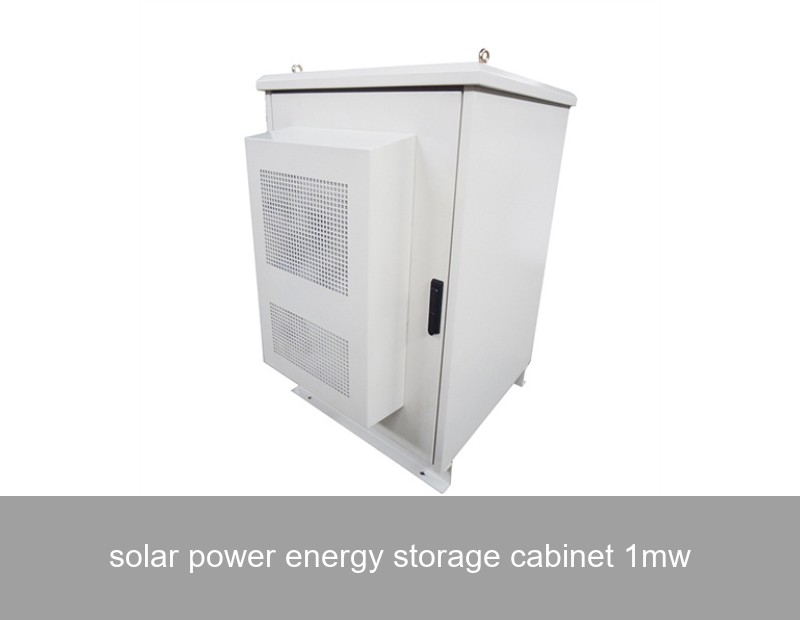
Let's demystify the term. A 1MW solar power energy storage cabinet refers to a containerized or cabinet-based battery energy storage system (BESS) with a power rating of one megawatt (MW). Think of it as the heart of your private energy microgrid. The "1MW" denotes its discharge capacity—it can deliver one megawatt of power instantaneously, enough to power hundreds of homes or a mid-sized factory's critical load. Crucially, it's paired with a megawatt-hour (MWh) capacity rating (e.g., 2MWh), which tells you how long it can sustain that output. This MW/MWh combination is key. A 1MW/2MWh system can deliver 1MW for 2 hours, providing substantial energy shifting and backup.
These systems are not just giant batteries. They are integrated powerhouses containing:
- Battery Racks: Using advanced Lithium Iron Phosphate (LFP) chemistry for safety and long life.
- Power Conversion System (PCS): The intelligent inverter that manages AC/DC conversion.
- Thermal Management: A critical cooling system to maintain optimal battery temperature.
- Energy Management System (EMS): The brain that controls charging/discharging based on weather, tariffs, and load.

Image Source: Unsplash - Representative image of modern energy storage cabinets.
The Data Advantage: Quantifying the Value of Storage
The business case is driven by hard numbers. According to the U.S. Department of Energy's Solar Futures Study, achieving high solar penetration is "heavily dependent" on affordable storage. Let's break down the value streams a 1MW cabinet unlocks:
| Value Stream | How it Works | Direct Impact |
|---|---|---|
| Arbitrage | Store solar/cheap grid power, discharge during expensive peak periods. | Reduces demand charges; lowers time-of-use rates. |
| Solar Self-Consumption | Increase the portion of your own solar energy used on-site from ~30-50% to over 80%. | Maximizes ROI on solar assets; reduces grid dependence. |
| Backup Power | Provides seamless transition to battery power during grid outages. | Prevents operational downtime and data loss. |
| Grid Services (in some markets) | Provide frequency regulation or capacity to the utility grid. | Creates a new revenue stream. |
For a typical C&I user in Europe or the U.S., demand charge management alone can justify the investment. These are fees based on your highest 15-30 minutes of power draw each month. A 1MW storage cabinet can strategically "peak shave," cutting those spikes and delivering immediate savings on every utility bill thereafter.
Case Study: A German Manufacturing Plant's Journey to Resilience
Let's look at a real-world application. A mid-sized automotive parts manufacturer in Bavaria, Germany, was facing rising energy costs and stringent sustainability targets from their parent company. They had a 1.5MW rooftop solar array but were only using 35% of its generation on-site, exporting the rest at low feed-in tariffs while still purchasing expensive evening power.
The Solution: In 2023, they deployed a 1MW/2.2MWh solar power energy storage cabinet system, specifically Highjoule's Nexus Commercial series, integrated with their existing solar infrastructure. The system's AI-driven EMS was programmed with local utility rates (EPEX SPOT) and production forecasts.
The Data-Driven Results (First 12 Months):
- Solar Self-Consumption Rate: Increased from 35% to 92%.
- Demand Charge Reduction: Peak grid draw reduced by 78%, saving approximately €18,000 monthly.
- Overall Energy Cost Savings: 41% reduction in net electricity costs.
- Carbon Footprint: Scope 2 emissions reduced by an additional 340 tonnes CO2e annually.
- ROI: Projected payback period of under 5 years, factoring in German subsidy programs.
The plant manager noted, "The storage cabinet doesn't just save money. It gives us control. We now manage our energy like we manage our production line—efficiently and predictably." This case underscores that the technology is not speculative; it's delivering tangible, high-impact results today.

Image Source: Unsplash - Engineer interacting with an energy management system.
Highjoule's Nexus Series: Engineered for C&I Demands
At Highjoule, with nearly two decades of experience since 2005, we've designed our flagship Nexus Commercial series to meet the exacting needs of the 1MW storage class market. Understanding that reliability is non-negotiable for industrial operations, the Nexus cabinet is built on three core pillars:
- Ultra-Safe LFP Architecture: Our proprietary cell-to-cabinet design prioritizes safety with built-in thermal runaway prevention and multi-layer protection, giving facility managers peace of mind.
- Intelligent Grid-Forming Inverters: Unlike simpler systems, our technology can "form" a grid. This means in the event of a blackout, it can restart your solar panels even without the main grid—a critical feature for true energy independence.
- Highjoule Horizon EMS Platform: This is where the magic happens. Our cloud-based platform uses predictive algorithms to optimize every kilowatt-hour. It doesn't just react; it forecasts weather, market prices, and your load patterns to create the most profitable and resilient energy schedule.
Our service model extends beyond hardware. We offer comprehensive Energy-as-a-Service (EaaS) options, where Highjoule finances, owns, and operates the storage system on your site, and you simply pay for the energy savings. This removes upfront capital barriers, making the transition to resilient, renewable power seamless.
The Integration Imperative
Deploying a storage cabinet is not a standalone project. Its success hinges on seamless integration with your existing solar PV, electrical distribution, and building management systems. This is where Highjoule's deep expertise comes in. Our project teams handle everything from interconnection studies and utility approvals to commissioning and ongoing performance monitoring, ensuring your 1MW solar power energy storage cabinet becomes a core, value-generating asset from day one.
The Future is a Dynamic Grid: Your Next Move
The energy landscape is shifting from a one-way grid to a dynamic network of prosumers—entities that both produce and consume. A 1MW solar power energy storage cabinet is your ticket to participating in this new economy actively. It's no longer just about saving money; it's about taking strategic control of your energy resilience, sustainability profile, and operational continuity.
As you look at your facility's energy bills, sustainability reports, and risk assessments, consider this: Is your current solar investment operating at its full potential, or is its value draining away every sunset? What would a guaranteed power reserve for your critical processes mean for your operational planning?
We invite you to explore what a tailored Highjoule Nexus system could do for your specific load profile and energy goals. The first step is a conversation about your site's unique potential. What's the one energy challenge you wish you could solve today?
 Inquiry
 Online Chat