


Finding the Best Inverters for Solar: Your Guide to Maximizing Energy Harvest
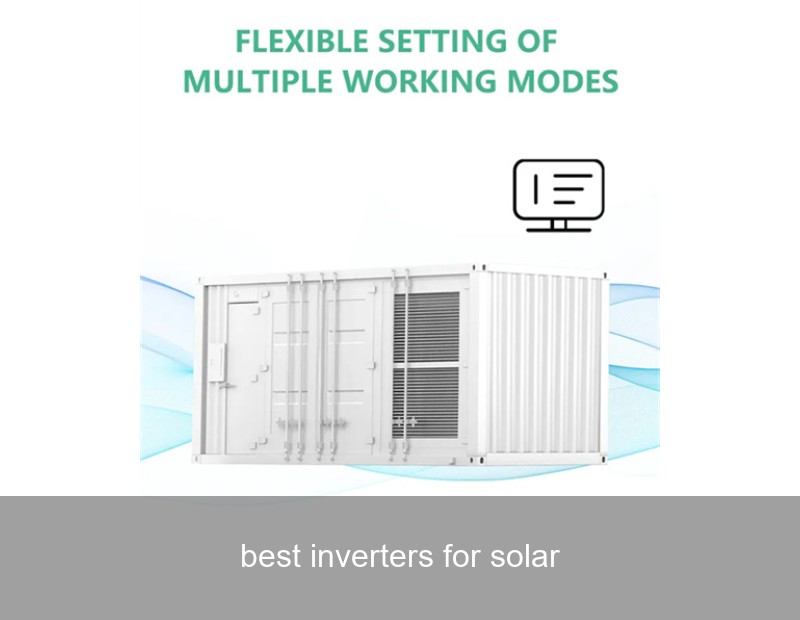
So, you've decided to go solar. You've researched panels, considered your roof space, and calculated potential savings. But here's a question that often gets less attention than it deserves: have you chosen the best inverter for your solar system? The inverter is the unsung hero, the brain of your solar installation, converting the direct current (DC) from your panels into the usable alternating current (AC) that powers your home or business. Choosing the right one isn't just a technical detail; it's the single most critical decision for your system's efficiency, reliability, and long-term return on investment. Let's explore how to identify the best inverters for solar energy systems, ensuring you get the most power and value from every ray of sunshine.
Understanding Your Options: The Main Types of Solar Inverters
The journey to the best inverter starts with understanding the three primary architectures available on the market today. Each has its strengths and ideal applications.
String Inverters: The Proven Workhorse
String inverters are the most common and cost-effective type. Here, panels are connected in series (a "string"), and the combined DC output is fed to a single, centralized inverter. They are reliable and simple to maintain. However, their performance can be limited by shading or panel mismatch; if one panel underperforms, it can drag down the output of the entire string.
Microinverters: The Module-Level Optimizers
Microinverters take a decentralized approach. A small inverter is installed on each individual solar panel. This allows every panel to operate independently at its maximum power point (MPPT), making the system highly resilient to shading, dirt, or panel degradation. They offer superior energy harvest, especially on complex roofs, and detailed panel-level monitoring.
Hybrid or Battery-Ready Inverters: The Gateway to Storage
This is where the future of energy management begins. Hybrid inverters, sometimes called multi-mode inverters, are designed to integrate seamlessly with battery storage systems. They can manage energy flow between solar panels, batteries, and the grid intelligently. If you're considering adding storage later for backup power or to maximize self-consumption, this type is essential. As a global leader, Highjoule's HPS Series Hybrid Power Systems are built around such intelligent inverters, providing an all-in-one solution for energy generation, storage, and management.
Beyond Basics: Key Features of the Best Solar Inverters
Once you know the type, dig into the specifications. The best inverters for solar share several critical features:
- High Efficiency (>97%): Look for peak and weighted efficiency (CEC efficiency in the U.S., European efficiency in EU). Every percentage point lost is money and energy wasted.
- Robust Warranty (10+ years): Inverter lifespan is a key financial factor. A longer warranty period signals manufacturer confidence.
- Advanced Monitoring & Connectivity: Real-time data on energy production and system health via user-friendly apps is non-negotiable for modern systems.
- Grid Services Compatibility: In markets like the U.S. and Europe, inverters that can provide frequency regulation or voltage support are becoming valuable grid assets.
- Durability & Weather Resistance: Especially for outdoor installations, a high Ingress Protection (IP) rating is crucial for long-term reliability.
Real-World Impact: A European Case Study in Commercial Solar
Let's move from theory to practice. Consider a mid-sized dairy processing plant in Northern Germany. They installed a 250 kW rooftop solar array in 2019. Initially, they opted for a standard string inverter solution. However, partial shading from ventilation units and varying soiling across the large roof led to significant energy losses—estimated at 8-12% annually.
In 2022, they upgraded to a system utilizing module-level power electronics (MLPE) combined with a central inverter optimized for commercial use. The results were compelling:
| Metric | Before Upgrade (String Inverter) | After Upgrade (Advanced MLPE System) | Improvement |
|---|---|---|---|
| Annual Energy Yield | 218,000 kWh | 245,000 kWh | +12.4% |
| System Availability | 96% | 99.5% | +3.5% |
| ROI Payback Period | Estimated 7 years | Revised to 5.8 years | Accelerated by 1.2 years |
This case, documented in a Fraunhofer ISE industry report, highlights that the "best" inverter isn't always the cheapest upfront. The increased harvest and operational insight provided by advanced inverter technology directly boosted profitability and sustainability goals.
Future-Proofing Your Investment: Inverters and Energy Independence
With rising electricity prices and increasing grid volatility, many homeowners and businesses aren't just thinking about solar—they're thinking about energy independence. This shifts the question from "what's the best inverter for solar?" to "what's the best inverter for a resilient, self-sufficient energy system?"
The answer lies in hybrid inverters integrated with smart battery storage. These systems allow you to:
- Store excess solar energy for use at night or during outages.
- Participate in demand response programs (where available).
- Create a personal microgrid that can island from the main grid during blackouts.
Image: A modern hybrid energy system combining inverter and storage. Source: Unsplash

This capability was crucial during recent winter storms in Texas and heatwaves in Southern Europe, where grid failures left those with traditional solar systems in the dark—their inverters, for safety reasons, shut down when the grid failed. A system with a hybrid inverter and battery kept the lights on.
How Highjoule Integrates Advanced Inverter Technology
At Highjoule, we view the inverter not as a standalone component, but as the intelligent core of a comprehensive energy ecosystem. Our approach ensures you don't have to be an expert to benefit from the best inverter technology.
For residential clients, our Home Energy Hub features a high-efficiency hybrid inverter that is pre-configured and tested with our modular lithium-ion batteries. This seamless integration eliminates compatibility guesswork and ensures optimal communication for safety and performance. For commercial and industrial (C&I) applications, our HPS Series scales this principle, using advanced, scalable inverter platforms that can manage multiple MPPT tracks and integrate with large-scale battery storage and existing energy infrastructure. Our systems are designed with the grid of the future in mind, supporting functionalities that can provide value back to the grid operator, as outlined in evolving standards from bodies like the U.S. Department of Energy.
Your Practical Guide to Choosing the Best Solar Inverter
Ready to make your decision? Walk through this simple checklist:
- Assess Your Site: Is your roof shaded, multi-angled, or prone to soiling? If yes, lean towards microinverters or power optimizers.
- Define Your Goals: Is pure cost-saving today your aim, or is resilience and future battery addition important? For the latter, only consider hybrid inverters.
- Check Local Regulations: Some utilities have approved inverter lists or specific requirements for grid interconnection. Your installer should know this.
- Prioritize Monitoring: Ensure the inverter's monitoring platform is accessible and provides the data granularity you want.
- Partner with an Expert: The best hardware is only as good as its design and installation. Work with a certified installer who can model different inverter options for your specific needs.
Image: Professional consultation is key to choosing the right system. Source: Unsplash

Ultimately, the quest for the best inverter is a quest for optimization—of energy, cost, and control. It's the component that transforms a static array of panels into a dynamic, intelligent energy asset.
Given your energy goals and local conditions, what would a truly optimized solar and storage system look like for your home or business, and how would the right inverter make that vision a daily reality?
 Inquiry
 Online Chat