


Solar Panel with Grid Tie Inverter: The Heart of a Modern Home Energy System
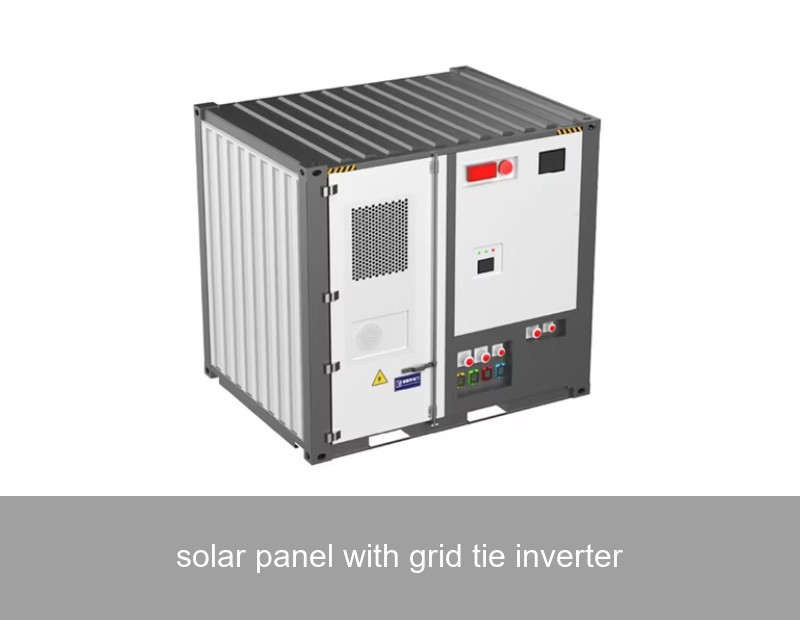
Have you ever watched your electricity meter spin and wondered, "What if my roof could make that stop?" For millions of homeowners across Europe and the US, that's no longer a daydream. The combination of a solar panel with grid tie inverter has become the cornerstone of residential energy independence, turning sunlight into a powerful financial and environmental asset. But how does this elegant partnership actually work, and what should you consider to ensure your system delivers peak performance for decades? As a product technology expert at Highjoule, I spend my days demystifying these systems. Let's explore the intelligent engineering behind this duo and how it seamlessly integrates with your life and the grid.
Table of Contents
- The Phenomenon: From Simple Panels to Smart Energy Hubs
- The Inverter as the Brain: More Than Just Conversion
- Why Data Matters: Efficiency, Reliability, and ROI
- A Real-World Case: The Smith Residence in Hamburg
- Future-Proofing Your Investment: The Storage & Smart Grid Advantage
- The Highjoule Approach: Integrated Intelligence
The Phenomenon: From Simple Solar Panels to Smart Energy Hubs
A decade ago, a residential solar installation was often seen as a simple add-on: panels on the roof, an inverter on the wall, and you're done. Today, the landscape has transformed dramatically. Homeowners aren't just looking to offset bills; they seek resilience during grid outages, desire full energy management, and want to contribute actively to a greener grid. This shift places immense importance on the grid-tie inverter—the device that manages the critical handshake between your private solar power plant and the public utility network. It's the component that ensures your system is safe, efficient, and intelligent.
The core function is straightforward: solar panels produce Direct Current (DC) electricity, but your home and the grid use Alternating Current (AC). The inverter's primary job is this DC-to-AC conversion. However, a modern inverter's role is vastly more sophisticated. It continuously hunts for the maximum power point (MPPT) of your panels to harvest every possible watt, especially on cloudy days. It monitors grid voltage and frequency, disconnecting safely if parameters stray outside strict limits—a vital safety feature. In essence, your choice of inverter dictates not just how much power you generate, but how smartly you can use it.
The Inverter as the System Brain: More Than Just Conversion
Think of your solar panel with grid tie inverter system as a symphony. The panels are the orchestra, producing the raw sound (power). The inverter is the conductor, ensuring harmony, tempo, and synchronization with the larger performance (the grid). Let's break down its key intelligent functions:
- Maximum Power Point Tracking (MPPT): Solar panel output varies with temperature and sunlight intensity. Advanced inverters like those in Highjoule's systems use sophisticated algorithms to constantly adjust electrical operating points, ensuring you capture up to 30% more energy compared to basic systems, particularly in sub-optimal conditions.
- Grid Management & Safety: The inverter is a vigilant guardian. It performs "anti-islanding," meaning it shuts down if the grid fails, preventing your system from energizing downed power lines and protecting utility workers. It also ensures the power quality of your exported electricity is pristine, meeting all local utility standards.
- Monitoring & Diagnostics: Modern inverters provide real-time and historical data on production. This allows homeowners to track their energy independence and quickly identify issues, such as a shaded panel or a drop in efficiency.
Why Data Matters: Efficiency, Reliability, and Your ROI
The numbers tell a compelling story. According to the National Renewable Energy Laboratory (NREL), inverter reliability and performance can impact the levelized cost of energy (LCOE) from a residential PV system by as much as 10-20% over its lifetime. Choosing a high-efficiency inverter (e.g., 98%+ vs. 95%) might seem like a small percentage, but over 25 years, that difference can translate to thousands of kilowatt-hours of additional clean energy—and significant savings.
Furthermore, the market is evolving. While string inverters are common, the rise of microinverters and DC power optimizers offers advantages for roofs with partial shading or complex layouts. These technologies perform MPPT at the individual panel level, mitigating the "weakest link" effect of traditional string systems. The right choice depends entirely on your specific property and goals.
A Real-World Case: The Smith Residence in Hamburg, Germany
Let's look at a concrete example from our European operations. The Smith family in Hamburg had a south-facing roof but with late-afternoon shading from a large tree. A standard string inverter system would have seen the entire array's output drop to the level of the shaded panels.
Highjoule's solution was a 8.2 kWp system using premium bifacial panels paired with module-level power electronics (MLPE)—specifically, power optimizers. These devices, coupled with a high-efficiency grid-tie inverter, allowed each panel to operate independently.
| Metric | Result | Impact |
|---|---|---|
| Annual Production | 7,850 kWh | Exceeded initial estimate by 12% |
| Self-Consumption Rate | 68% (with smart load control) | Maximized use of solar, reduced grid import |
| System Efficiency | 96.7% (at inverter) | Minimal conversion losses |
"The detailed monitoring showed us that even when part of the roof was in shade, the rest of the system was still producing at peak," Mr. Smith noted. "The system paid for itself in under 9 years, and we now have unprecedented visibility into our energy habits." This case highlights that the right grid-tie inverter technology, chosen for the site's specific challenges, is crucial for maximizing return.

Future-Proofing Your Investment: The Storage & Smart Grid Advantage
Today's most forward-thinking installations view the solar panel with grid tie inverter as the starting point, not the finish line. With evolving net metering policies in many US states and a desire for backup power, adding battery storage is a logical next step. This requires an inverter that can either integrate with a separate battery inverter or, more elegantly, be a hybrid inverter from the start.
Hybrid inverters, such as those in Highjoule's HPS Series, are designed with a dedicated connection for battery storage. They can manage bidirectional power flow: charging batteries with excess solar, powering your home from the batteries at night or during outages, and still maintaining that essential grid connection. This creates a true energy hub. Looking ahead, technologies like vehicle-to-grid (V2G) will see electric vehicles acting as mobile storage units. Preparing for this requires an inverter and overall system architecture built on open, smart standards, something Highjoule prioritizes in all our product designs.
The Highjoule Approach: Integrated Intelligence for Peace of Mind
At Highjoule, founded in 2005, we believe a solar energy system should be more than a sum of parts. Our philosophy is to provide integrated intelligence. This means our grid-tie and hybrid inverters are not standalone components but the central command units for our complete energy ecosystem.
For the homeowner, this translates to seamless operation. Our Highjoule Energy Gateway inverter platform comes with integrated energy monitoring and can automatically prioritize self-consumption, directing solar power to high-demand appliances first. It seamlessly integrates with our HJ BatteryStack storage solutions, allowing for scalable storage from 10 kWh upwards. For commercial or microgrid applications, our inverters feature advanced grid-support functions that can help stabilize local networks, a capability increasingly valued by utilities on both sides of the Atlantic.
We understand that specifications can be overwhelming. That's why our technical teams work with certified installers across Europe and North America to conduct detailed site analyses. We don't just sell an inverter; we model your home's energy profile, simulate production with tools backed by sources like Global Solar Atlas, and design a system where every component—from the solar panel to the grid tie inverter to the monitoring app—is optimized for your long-term satisfaction and performance.

So, as you contemplate harnessing the sun's power, ask yourself this: Is your goal merely to install solar panels, or is it to build a resilient, intelligent, and adaptable home energy system that will evolve with your needs for the next quarter-century?
 Inquiry
 Online Chat