


Equipo de Placas Solares para una Vivienda: Your Guide to a Smarter Home Energy System
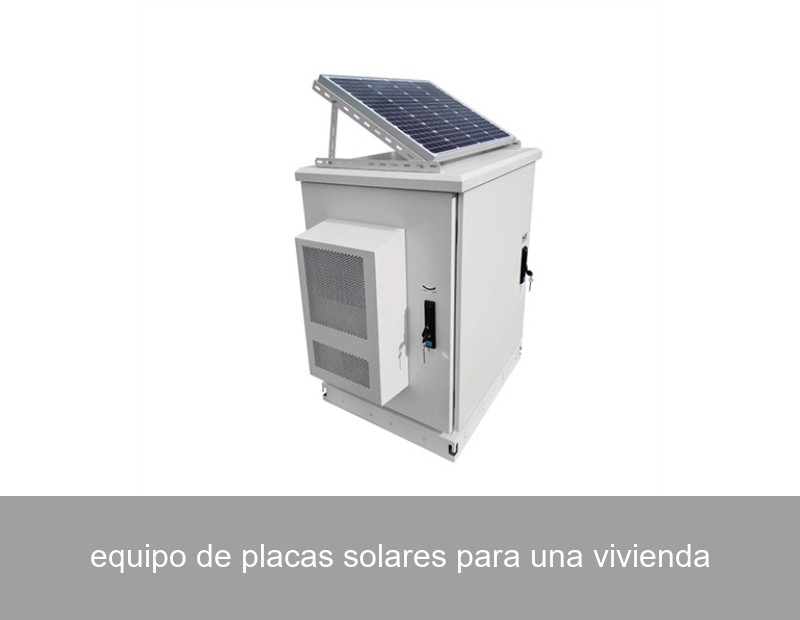
Let's talk about taking control of your energy. Across Europe and the US, a quiet revolution is happening on rooftops and in backyards. More homeowners are moving beyond just buying electricity to producing, managing, and storing it themselves. At the heart of this shift is the equipo de placas solares para una vivienda – the solar panel kit for a home. But today's most effective systems are far more than just panels. They are integrated, intelligent energy ecosystems designed for resilience, efficiency, and true energy independence.
The Phenomenon: The Global Shift to Home Energy Independence
You've likely seen the headlines about rising energy costs or felt the pinch on your own utility bill. Perhaps you're concerned about your carbon footprint or simply value the idea of self-reliance. This convergence of economic and environmental drivers is fueling a massive adoption of residential solar. But the narrative has evolved. It's no longer just about solar panels feeding the grid during the day. The modern goal is a 24/7 solar-powered home, which requires a complete system: generation, storage, and smart management.
Image: A modern home energy setup featuring solar panels and a wall-mounted battery storage unit. Source: Unsplash
The Data: Crunching the Numbers on Home Solar
The case for a home solar system is backed by compelling data. According to the International Energy Agency (IEA), renewables are set to contribute 80% of new power capacity to 2030 under current policies, with solar PV leading the charge. For homeowners, the financials are clear:
- Cost Reduction: The price of solar panels has fallen by over 80% in the last decade.
- Energy Bill Savings: A properly sized system can cover 70-100% of a home's electricity needs, drastically reducing or even eliminating the utility bill.
- Increased Home Value: Studies, including one from the U.S. Department of Energy, indicate homes with solar sell faster and at a premium.
- Return on Investment: With incentives like tax credits (e.g., the US ITC) and European subsidies, payback periods often range between 6-10 years, after which you benefit from nearly free electricity.
| Component | Role | Key Benefit |
|---|---|---|
| Solar Panels (e.g., 6 kWp) | Electricity Generation | Reduces grid consumption by 60-80% |
| Battery Storage (e.g., 10 kWh) | Energy Time-Shifting | Increases self-consumption to 80%+, provides backup power |
| Smart Energy Manager | System Optimization | Maximizes efficiency, enables smart load control, integrates with EVs |
The Case Study: A Bavarian Farmhouse's Year-Round Solution
Consider the Müller family in Bavaria, Germany. They installed a standard grid-tied equipo de placas solares in 2018. While they saw good savings in summer, they still imported 65% of their power in winter and had no power during occasional grid outages. In 2022, they upgraded to a complete solar-plus-storage system.
- System: They expanded their existing 8 kWp solar array and integrated a Highjoule HES-12 residential energy storage system (12 kWh capacity) with a hybrid inverter and Highjoule's EnergyOS monitoring platform.
- Results:
- Self-Consumption Rate: Increased from 35% to 92% annually.
- Grid Independence: They now run for days autonomously during winter storms.
- Financial: Their annual energy bill went from a residual €450 to near zero, with the system managing to sell excess power at optimal times to the grid.
"The game-changer wasn't just more panels," says Mr. Müller. "It was the intelligent battery and software that let us use our own solar power day and night, rain or shine."
Key Components of a Modern Home Solar Kit
Understanding the parts of a system empowers you to make the right choice. A true equipo de placas solares para una vivienda today includes:
1. Solar Panels (The Generators)
High-efficiency monocrystalline panels are the standard, converting sunlight into DC electricity.
2. Inverter (The Translator)
This critical component converts the DC electricity from your panels into AC electricity for your home. Modern hybrid inverters are essential, as they can also manage battery charging and discharging.
3. Battery Storage System (The Bank)
This is the cornerstone of energy independence. Lithium-ion phosphate (LFP) batteries, like those used by Highjoule, are favored for their safety, longevity (often over 6,000 cycles), and stable performance. They store excess solar energy for use at night or during outages.

Image: A modern, wall-mounted lithium-ion home battery storage system. Source: Unsplash
4. Energy Management System (The Brain)
Software like Highjoule's EnergyOS is what transforms hardware into a smart system. It learns your consumption patterns, optimizes when to charge/discharge the battery, and can integrate smart appliances or EV chargers.
5. Balance of System (BOS)
Mounting, wiring, circuit breakers, and safety equipment—the unsung heroes that ensure a safe, durable installation.
Beyond Basic Kits: Highjoule's Intelligent Energy Systems
As a global leader with nearly two decades of experience, Highjoule doesn't just sell components; we provide tailored, intelligent energy solutions. For the residential market, our approach ensures your equipo de placas solares is future-proof and maximally efficient.
Our Residential Energy Storage (HES Series) batteries are built with proprietary LFP cell technology and feature modular designs, allowing you to expand capacity as your needs grow. Paired with our hybrid inverters, they form a seamless DC-coupled system that is more efficient than simpler AC battery add-ons.
The true intelligence comes from Highjoule EnergyOS, our cloud-based platform. Via a simple app, you can monitor energy flows in real-time, set preferences (like "maximize self-consumption" or "prepare for storm backup"), and even participate in virtual power plant (VPP) programs where available, earning revenue by allowing the grid to use your stored power during peak demand.
For homeowners in Europe and the US, this means a system that doesn't just save money, but actively works to optimize your home's entire energy profile, integrating seamlessly with the modern electric lifestyle, including heat pumps and electric vehicles.
Making the Right Choice for Your Home
Choosing the right system involves a few key steps:
- Audit Your Consumption: Review your past year's electricity bills to understand your usage patterns.
- Assess Your Site: Roof orientation, shading, and local climate are crucial for solar yield.
- Define Your Goals: Is it pure bill reduction, backup power, or full carbon neutrality?
- Partner with Experts: Work with a certified installer who can model system performance and navigate local incentives.
Remember, the cheapest equipo de placas solares is rarely the best value over 20+ years. Investing in high-quality, integrated components with smart software ensures reliability, safety, and the ability to adapt to future energy needs.
Ready to see what a truly intelligent energy system could look like for your specific home? What's the first question you would ask an energy specialist about making the switch?
 Inquiry
 Online Chat