


Finding the Best Lithium Battery for Home Inverter: Your Guide to Reliable Power
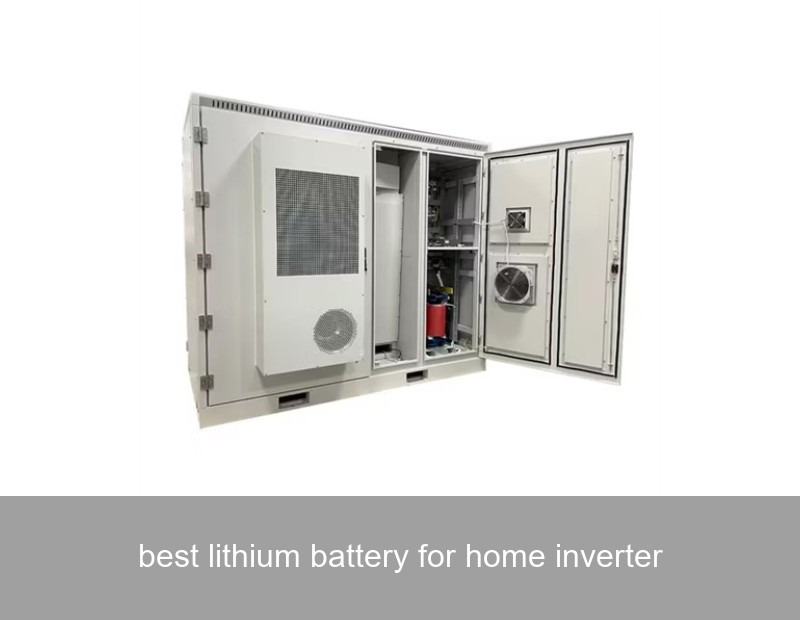
Have you ever watched the lights flicker during a storm and wondered, "What if the power goes out for good?" Or perhaps you've opened your electricity bill with a sense of dread, watching costs climb year after year. You're not alone. Across Europe and the U.S., homeowners are increasingly looking to take control of their energy. The heart of this solution lies in pairing a capable home inverter with the best lithium battery for home inverter systems. But with so many options, how do you choose? This guide will cut through the complexity, using real-world data and expert insights to help you understand what truly makes a home battery system efficient, safe, and a smart long-term investment.
Table of Contents
- The Modern Home's Power Problem: More Than Just Outages
- Why Lithium? The Data Behind the Dominance
- Key Criteria for the Best Lithium Battery for Your Inverter
- A Real-World Case: The Smith Family's Energy Transformation
- Thinking Beyond the Battery: The Importance of a Complete System
- The Highjoule Solution: Engineered for Peace of Mind
- What's Your Home's Energy Resilience Score?
The Modern Home's Power Problem: More Than Just Outages
The phenomenon is clear: our reliance on electricity is absolute, yet the grid is facing unprecedented strain. From extreme weather events in California and Texas to fluctuating energy prices across Europe, the need for energy independence is no longer a niche concern but a mainstream priority. A home inverter system with a battery is the definitive answer, turning your home into a personal microgrid.
But here's the critical insight: not all batteries are created equal. The performance, longevity, and safety of your entire system hinge on selecting the right battery technology. While lead-acid batteries were once the default, the shift to lithium-ion—specifically Lithium Iron Phosphate (LFP)—represents one of the most significant advancements in home energy storage. The question isn't just "which battery," but "which battery chemistry and system design will deliver value for decades?"
Why Lithium? The Data Behind the Dominance
Let's look at the numbers. Compared to traditional technologies, lithium batteries, particularly LFP, offer compelling advantages that directly impact your wallet and peace of mind.
| Feature | Lithium Iron Phosphate (LFP) | Traditional Lead-Acid |
|---|---|---|
| Cycle Life (to 80% capacity) | 6,000+ cycles | 300-500 cycles |
| Depth of Discharge (DoD) | 90-100% usable | ~50% usable |
| Round-Trip Efficiency | >95% | 70-85% |
| Lifespan | 15+ years | 3-5 years |
What does this data mean for you? A higher cycle life and depth of discharge mean you can use almost all of your battery's stored energy every day for many more years. The superior efficiency means less energy is wasted as heat when charging and discharging—more of your solar power or off-peak electricity goes directly to powering your home. Furthermore, LFP chemistry is inherently more stable and safer, with a much higher tolerance for heat and a lower risk of thermal runaway, a crucial factor for in-home installation. For a deeper dive into battery safety, the U.S. Department of Energy provides excellent resources.

Image source: Unsplash - A modern home lithium battery installation.
Key Criteria for the Best Lithium Battery for Your Inverter
Knowing lithium is superior is just step one. Here’s what to scrutinize when evaluating specific products:
- Chemistry is King: Insist on Lithium Iron Phosphate (LFP). It's the gold standard for safety and longevity in residential storage.
- Usable Capacity vs. Nameplate: Don't be fooled by the total kWh rating. Look for the usable capacity. A 10kWh LFP battery with 100% DoD gives you 10kWh. A similarly sized older-tech battery might only give you 5kWh.
- Scalability and Modularity: Your energy needs may grow. Can you easily add more battery modules later without replacing the entire system?
- Integrated Battery Management System (BMS): A sophisticated BMS is the brain of the battery. It ensures each cell is balanced, protects against over/under-voltage, and manages temperature, dramatically extending lifespan.
- Warranty and Degradation Guarantee: Look for a strong warranty (10+ years) that guarantees the battery will retain a certain percentage of its original capacity (e.g., 70% after 10 years).
A Real-World Case: The Smith Family's Energy Transformation
Let's make this concrete. The Smith family in Hamburg, Germany, installed a 8kW solar array in 2020. Initially, they exported excess power to the grid for a modest feed-in tariff. In 2022, they added a 12kWh lithium LFP home battery system to their existing inverter. The results after one year were telling:
- Self-Consumption of Solar Power: Increased from 35% to 82%. They now use most of the energy they produce.
- Grid Independence: Achieved 75% average daily energy autonomy, nearing 100% in sunnier months.
- Financial Impact: Reduced their annual electricity bill from the grid by €1,150. Combined with smart time-of-use charging (charging the battery with grid power during low-cost, off-peak hours), their projected payback period is under 8 years. With a system warranty of 15 years, that's over 7 years of essentially free energy storage benefits.
This case, mirrored by thousands in markets from California to Italy, shows the tangible value of the right battery-inverter pairing.
Thinking Beyond the Battery: The Importance of a Complete System
Choosing the best lithium battery for home inverter is about system harmony. The battery and inverter must communicate flawlessly. A mismatch can lead to reduced efficiency, safety issues, or even system failure. This is where choosing a solution from a single, experienced provider shines. They ensure seamless compatibility, offer a unified warranty, and provide a single point of contact for support.

Image source: Unsplash - Home energy monitoring dashboard.
The Highjoule Solution: Engineered for Peace of Mind
This is where Highjoule's expertise comes into play. Since 2005, we've been at the forefront of advanced energy storage, designing systems that meet the rigorous demands of global markets. For the residential homeowner, our HomePower Stack Series embodies the principles outlined above.
Built with premium Lithium Iron Phosphate (LFP) cells, each module offers a true, usable capacity. The modular design allows you to start with a 5kWh base unit and expand up to 30kWh as your needs evolve. Our proprietary Adaptive BMS constantly monitors over 15 parameters per cell, ensuring optimal performance and safety. Crucially, the HomePower Stack is engineered to integrate seamlessly with a wide range of high-quality inverters, or can be paired with our own optimized inverters for a turnkey solution.
We understand that a battery is a long-term commitment. That's why our systems are backed by a robust 12-year warranty, guaranteeing 70% capacity retention. For homeowners in Europe and the U.S., this translates to a decade-plus of reliable, safe, and efficient energy management, whether your goal is backup power, bill savings, or maximizing renewable investment.
What's Your Home's Energy Resilience Score?
Imagine a future where a grid outage is a minor inconvenience, not a crisis. Where you're shielded from the volatility of energy prices and empowered to use clean, self-generated power. The cornerstone of this future is selecting the best lithium battery for home inverter setup. It's a technical decision, but its impact is profoundly personal—on your comfort, your finances, and your environmental footprint.
So, we leave you with this question to ponder: What single appliance or system in your home would you most want to keep running during a 24-hour blackout, and what would it mean for your family's safety and well-being? Your answer might just be the first step toward your own energy independence journey.
 Inquiry
 Online Chat