


Finding the Best Standby Generator in Canada: A Modern Guide to Reliable Power
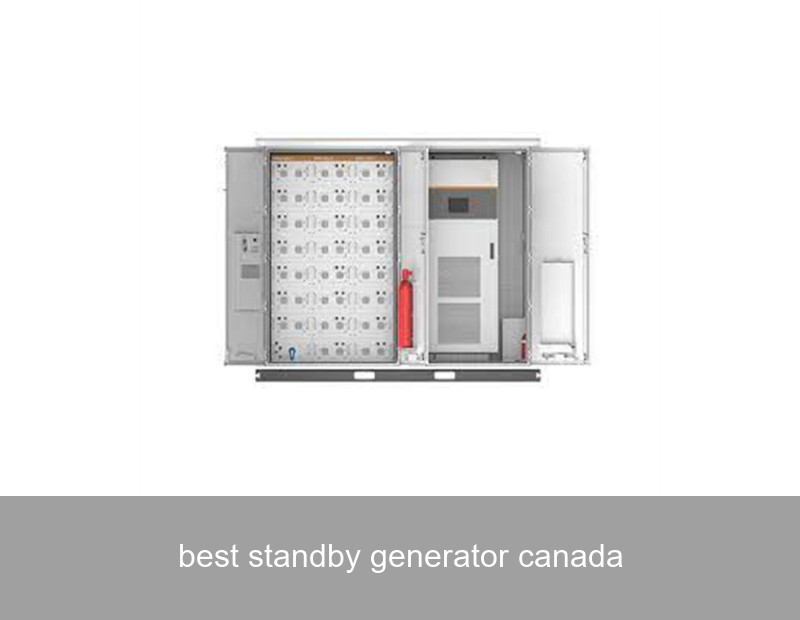
If you're searching for the best standby generator in Canada, you're likely thinking about more than just a loud machine in your backyard. You're thinking about protecting your family, your business, or your essential operations from the increasing frequency and severity of power outages. From ice storms in Ontario to wildfires in British Columbia, grid reliability is a growing concern. But the conversation around backup power is evolving. Today, the "best" solution isn't just about raw kilowatts; it's about intelligence, integration, and sustainability. This is where modern energy storage systems (ESS) are redefining what it means to have true power resilience.
Table of Contents
The New Reality: Why Standby Power is No Longer Optional
Let's face it: power outages are becoming a regular part of life across Canada. The phenomenon is backed by data. A report by Natural Resources Canada highlights that severe weather events, often exacerbated by climate change, are a primary cause of major grid disturbances. For homeowners, a prolonged outage means more than inconvenience—it can mean frozen pipes, spoiled food, and security risks. For businesses, it can mean lost revenue, data disruption, and operational shutdowns.
The traditional answer has been the fossil-fueled standby generator. While effective in providing power, they come with notable drawbacks: noise pollution, ongoing maintenance, fuel storage and sourcing issues, and of course, carbon emissions. As we seek more sustainable and intelligent solutions for our homes and communities, the definition of the best standby generator in Canada is shifting towards cleaner, smarter, and more integrated systems.
Redefining "Best": Key Criteria for Modern Standby Power
So, what should you look for beyond just power rating? We recommend a framework built on four pillars:
- Reliability & Speed: How quickly does the system kick in? Modern battery storage provides near-instantaneous transition (often less than 20 milliseconds), far faster than most traditional generators which can take seconds.
- Intelligence & Integration: Can it prioritize essential loads? Can it integrate with solar panels? The best systems are managed by sophisticated software that optimizes power flow based on your usage and grid conditions.
- Sustainability & Operation: Is it silent? Does it produce zero local emissions? This is a critical advantage of battery-based systems, making them ideal for urban and environmentally conscious settings.
- Total Cost of Ownership: Consider not just the purchase price, but fuel costs, maintenance, and potential savings through solar self-consumption and grid services.
| Feature | Traditional Standby Generator | Advanced Battery Energy Storage System (BESS) |
|---|---|---|
| Start-up Time | 10-30 seconds | <20 milliseconds |
| Noise Level | High (65-75 dBA) | Virtually Silent |
| Local Emissions | Yes (CO2, NOx) | Zero |
| Solar Integration | Limited/Complex | Seamless |
| Regular Maintenance | Required (oil, filters, fuel) | Minimal |
A Real-World Case: Commercial Reliability in Ontario
Consider the experience of a medium-sized dairy processing facility in Southern Ontario. Their operations are energy-intensive and critically dependent on refrigeration. A single extended outage could result in massive product loss. They initially considered a large 500 kW diesel generator. However, after analysis, they opted for a hybrid solution: a 300 kW natural gas generator coupled with a 250 kWh battery storage system from Highjoule.
The Results? The battery handles the instantaneous "bridge" power for the first 2-3 minutes until the generator smoothly comes online, reducing generator wear and fuel use. More importantly, during shorter grid dips (which are common), the battery handles the entire event, saving on fuel and maintenance. The system also manages their site's solar PV output, storing excess daytime energy for use during peak evening hours. In its first year, the system provided 47 seamless backup events, prevented an estimated $180,000 in potential spoilage, and reduced their peak demand charges by 22% through intelligent load management. This case illustrates that the best standby generator in Canada is often a smart, integrated system, not a single device.

Image Source: Unsplash (Representative image of a modern BESS installation)
The Highjoule Solution: Intelligent Power Resilience
At Highjoule, with nearly two decades of experience since 2005, we view backup power as a cornerstone of a broader, smarter energy ecosystem. Our approach goes beyond simply selling a generator. We provide intelligent, scalable storage solutions that act as the heart of your property's energy resilience.
For residential clients in Canada seeking the best standby generator experience, our HomePower ESS series offers silent, emission-free backup that integrates perfectly with existing or new solar installations. Our AI-driven energy management system learns your consumption patterns, ensuring your essential circuits—like heating, refrigeration, and medical equipment—are powered for hours or even days, depending on your configuration and solar input.
For commercial and industrial applications, our GridMax C&I systems are engineered for scale and intelligence. These modular systems can be configured to provide backup power for critical operations, reduce peak demand charges (a significant part of electricity bills in provinces like Ontario), and participate in grid-balancing programs. They can also be paired with existing generator sets to create a fuel-saving, maintenance-reducing hybrid system, much like the dairy facility case study.
Our global expertise in microgrids allows us to design systems for remote communities, industrial sites, or campuses that can "island" from the main grid, operating independently on a blend of solar, wind, battery storage, and existing generators for ultimate reliability.

Image Source: Unsplash (Representative image of a modern home with solar and storage)
Making Your Choice: Questions to Guide Your Decision
Choosing the right system is a significant decision. To move forward, ask yourself and potential providers these key questions:
- What are my truly critical loads (in watts or kilowatts) that I need to sustain during an outage?
- How long do outages typically last in my area, and what is my goal for backup duration?
- Do I have, or do I plan to install, solar photovoltaic (PV) panels?
- Am I interested in reducing my overall electricity bill, not just preparing for outages?
- How important are quiet operation and zero local emissions to my household or community?
Answering these will clarify whether a traditional generator, a modern battery system, or a hybrid of both is your optimal path. For a deeper dive into grid trends, the IEA's report on Electricity Grids offers valuable context on the pressures facing modern infrastructure.
Your Power, Your Future
The quest for the best standby generator in Canada has evolved into a conversation about energy independence and intelligent management. It's about choosing a system that protects you from outages while potentially lowering your energy costs and environmental footprint. The technology is here, proven, and ready to transform your relationship with electricity.
What single aspect of your current power reliability keeps you up at night, and how could a smarter system change that?
 Inquiry
 Online Chat