


Unlocking Energy Independence: The Essential Guide to a Big Battery for Your Inverter
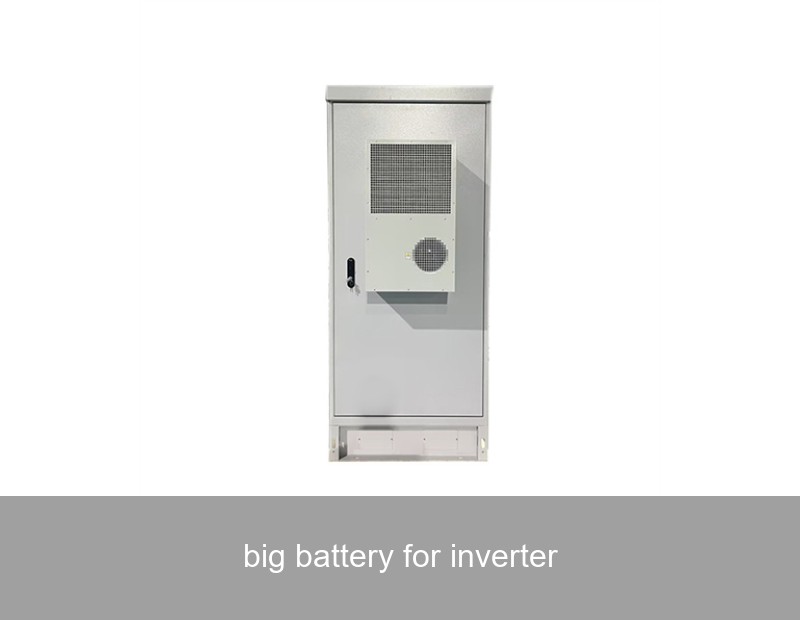
You've made the smart investment in solar panels. Your inverter is humming away, turning sunlight into clean electricity for your home or business. But what happens when the sun sets, or a storm cloud rolls in? This is where the conversation truly gets powerful. The missing piece for maximizing your renewable energy system isn't just more panels—it's a big battery for your inverter. Think of it not just as a backup, but as your personal energy command center, storing surplus solar power for when you need it most and fundamentally changing your relationship with the grid.
Why a Big Battery Matters: Beyond Just Powering the Night
The modern energy landscape is shifting from a one-way street to a dynamic, two-way grid. A large-scale battery storage system, seamlessly integrated with your inverter, is at the heart of this transition. Let's break down the tangible benefits.
1. True Energy Self-Consumption and Bill Savings
Without storage, excess solar energy you produce at midday often gets exported to the grid for a minimal feed-in tariff. With a big battery, you store that excess and use it during peak evening hours when utility rates are highest. This simple shift—using your own power instead of buying expensive grid power—is where significant savings are realized. For businesses with high daytime energy loads, this can smooth demand and avoid costly peak demand charges.
2. Enhanced Resilience and Reliability
Power outages are becoming more frequent due to extreme weather events and grid strain. A robust battery system paired with your inverter can keep critical loads running for hours, or even days, depending on its size and your consumption. This isn't just about convenience; for farms, medical facilities, or small businesses, it's about operational continuity and safety.
3. Supporting Grid Stability (and Getting Rewarded)
This is where the "big" in big battery truly shines. Aggregated residential and commercial battery systems can form "virtual power plants" (VPPs). By allowing a small amount of your stored energy to support the grid during times of extreme demand, you can participate in grid services programs. In markets like California, Texas, and parts of Europe, this translates to direct financial incentives on top of your savings. You're not just a consumer anymore; you're a prosumer, actively participating in a cleaner, more resilient energy network.

Image: A modern home energy system combining solar and storage. Source: Unsplash
Key Considerations for Your Big Battery System
Choosing the right system isn't just about picking the largest battery. It's about intelligent integration. Here are the critical factors:
- Capacity & Power (kWh vs. kW): Capacity (kWh) is your "energy tank" size—how much you can store. Power (kW) is how much energy you can draw at once. A system with high capacity but low power might not run all your appliances simultaneously. You need both.
- Inverter Compatibility & Integration: This is crucial. Your battery must communicate flawlessly with your existing or new inverter. Opt for AC-coupled systems (easier to retrofit) or DC-coupled systems (often more efficient for new installations).
- Battery Chemistry: Lithium Iron Phosphate (LFP) is now the dominant standard for stationary storage due to its long cycle life, superior safety profile, and stability, making it ideal for a long-lasting big battery for inverter systems.
- Scalability: Can you add more battery modules later as your needs grow? A modular design is a future-proof investment.
- Management Software: The brain of the operation. Intelligent software learns your usage patterns, optimizes charge/discharge cycles based on weather and tariff rates, and allows for remote monitoring and control.
| Feature | Basic System | Advanced "Big Battery" System |
|---|---|---|
| Primary Goal | Backup for essential loads | Maximize self-consumption, grid services, full-home backup |
| Software Intelligence | Basic control | AI-driven optimization, VPP-ready |
| Scalability | Limited or fixed | Fully modular, easily expandable |
| Grid Interaction | Off-grid or simple backup | Bidirectional, revenue-generating potential |
A Real-World Case: The California Challenge
Let's look at a concrete example. In California, the grid faces immense pressure during "Net Energy Metering 3.0" and "Flex Alerts" – events where residents are asked to conserve power to avoid blackouts. A 2023 study by the U.S. Department of Energy highlighted how distributed storage is becoming a critical resource.
Consider a mid-sized winery in Napa Valley. They have a 200 kW solar array but their energy-intensive refrigeration and production processes run into the evening. By installing a big battery for inverter system—a 500 kWh LFP battery bank—they achieved:
- 85% increase in solar self-consumption.
- Elimination of monthly peak demand charges, saving over $2,500 per month.
- Enrollment in a VPP program, where during the 10 highest-stress grid events of the year, the utility can draw up to 400 kW from their battery fleet for 1-2 hours. This generated an additional $15,000 in annual revenue.
- Full operational continuity during planned public safety power shutoffs (PSPS).
This case shows the multi-faceted value proposition: savings, earnings, and resilience.

Image: A containerized large-scale battery energy storage system (BESS). Source: Unsplash
Highjoule's Intelligent Solutions for Big Battery Systems
At Highjoule, we've been engineering advanced energy storage solutions since 2005, precisely for scenarios like the one above. We understand that a big battery for inverter applications is more than hardware; it's an integrated energy ecosystem.
Our H-Series Commercial & Industrial (C&I)储能系统 are designed from the ground up for scalability and intelligence. Built with UL-certified LFP cells, these modular systems can scale from 100 kWh to multi-megawatt-hour installations. The key is our EnergyOS platform. This proprietary software acts as the intelligent conductor, ensuring seamless communication between your existing solar inverters, the battery system, and the grid. It automatically chooses the most economical and efficient mode of operation every minute of the day—whether that's peak shaving, arbitrage, or providing grid frequency response.
For larger microgrid and utility-scale applications, our containerized MegaJoule BESS solutions offer a plug-and-play approach, drastically reducing installation time and complexity. Every Highjoule system is backed by our global network of energy partners, providing local support, commissioning, and long-term performance monitoring.
The Future Outlook for Big Battery Storage
The trajectory is clear. As renewable penetration increases globally, storage is no longer optional; it's imperative. Policies are evolving to incentivize storage, and technology costs continue to fall. The next frontier is the deepening integration of artificial intelligence for predictive energy management and the standardization of VPP protocols, making it easier for every prosumer to contribute.
The question is no longer if you need a battery, but how large and intelligent your system should be to meet your financial, operational, and resilience goals. Your inverter gave you the ability to generate power. Adding the right big battery gives you the power to control it.
Is your current energy setup ready to handle the next grid event, and are you positioned to benefit from the evolving energy economy? What would a 20% reduction in your annual energy costs—or a new revenue stream from your stored power—mean for your home or business?
 Inquiry
 Online Chat