


Unlocking the Full Potential of Your Solar Panels: A Guide to the Energy Storage Cabinet
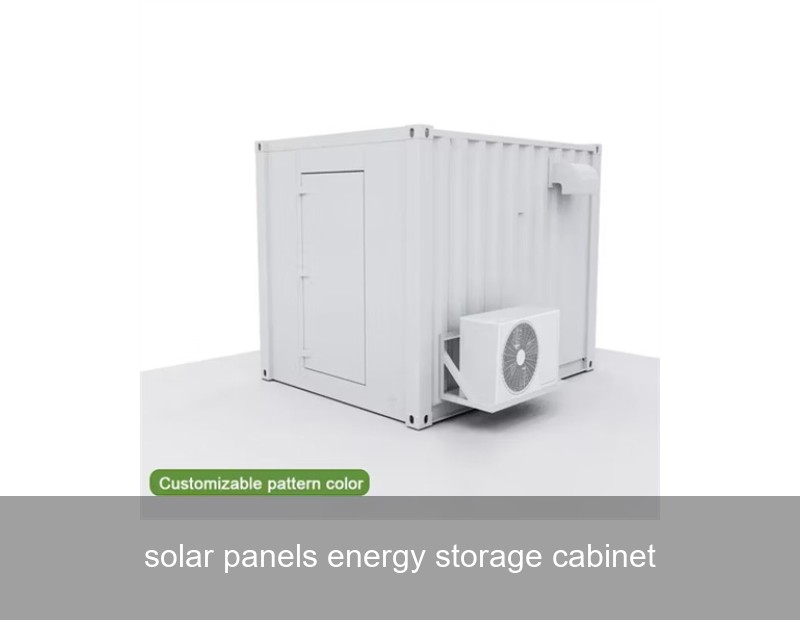
You've made the smart investment in solar panels. They're on your roof, silently converting sunlight into clean electricity and slashing your energy bills. But have you ever watched the sun set and wondered where all that excess power you generated during the day went? Or felt a pang of worry during a grid outage, realizing your solar system shuts off too? This is the universal challenge for solar owners, and the solution lies in one pivotal piece of technology: the solar panels energy storage cabinet. Let's explore how this system transforms your solar array from a daytime saver into a 24/7 power station.
Table of Contents
- The Solar Dilemma: Excess Energy with No Home
- What is a Solar Panels Energy Storage Cabinet?
- The Benefits Unlocked: More Than Just Backup
- A Real-World Case: The German Bakery Story
- Choosing the Right System: Key Considerations
- The Highjoule Solution: Engineered for Intelligence and Durability
- Your Next Step Towards Energy Independence
The Solar Dilemma: Excess Energy with No Home
Here's the phenomenon many discover after their solar installation: energy production and consumption are rarely in sync. Your panels peak at noon, but your home's peak demand is often in the early morning and evening. In many regions, excess solar energy is fed back to the grid for a credit—a process called net metering. However, grid policies are changing, with feed-in tariffs decreasing. Essentially, you're selling your premium, self-generated power cheaply only to buy it back at a higher rate later. An energy storage cabinet solves this mismatch by providing a personal "energy bank" on your property.
What is a Solar Panels Energy Storage Cabinet?
Think of it as the heart of your advanced power system. A solar panels energy storage cabinet is an integrated unit that houses high-capacity batteries, a battery management system (BMS), thermal controls, and safety mechanisms. It's the secure, all-in-one enclosure that stores the DC electricity from your solar panels, converts it to usable AC power for your home, and manages the entire flow intelligently. Unlike a simple battery, it's a complete, UL-certified system designed for safety, longevity, and seamless integration.

Key components inside a typical cabinet include:
- Lithium-Ion Battery Modules: Usually Lithium Iron Phosphate (LFP) for their safety and long cycle life.
- Integrated Inverter/Charger: Manages conversion between DC (battery/solar) and AC (home).
- Smart Battery Management System (BMS): The brain that monitors cell voltage, temperature, and health.
- Thermal Management System: Ensures optimal operating temperature for efficiency and safety.
- Safety Enclosure: Fire-resistant, secure casing with proper ventilation.
The Benefits Unlocked: More Than Just Backup
Adding storage fundamentally changes your relationship with energy. The benefits cascade:
- Maximize Self-Consumption: Use 70-80% more of your own solar energy, drastically reducing grid reliance.
- Protection from Outages: Keep your lights on, refrigerator running, and critical devices powered during grid failures.
- Financial Savings & Peak Shaving: Avoid drawing power during expensive peak-rate hours. In some commercial settings, this can offset demand charges that constitute up to 50% of an electricity bill.
- Grid Support & Sustainability: Contribute to community grid stability and further reduce your carbon footprint.
A Real-World Case: The German Bakery Story
Let's move from theory to data with a concrete example. A medium-sized artisanal bakery in Bavaria, Germany, faced a critical problem. Their existing 50 kW rooftop solar system generated ample energy during the day, but their highest energy consumption—and highest utility costs—came during the early morning baking hours (4 AM - 8 AM) and after sunset for cleaning. They were reliant on the grid during these expensive periods.
The Solution: In 2023, they installed a 40 kWh solar panels energy storage cabinet system. The cabinet was chosen for its compact footprint, high cycling capability, and integrated energy management software.
The Data-Driven Outcome (12-month post-installation):
| Metric | Before Storage | After Storage | Change |
|---|---|---|---|
| Solar Self-Consumption | 35% | 92% | +163% |
| Grid Energy Import (peak hours) | 1,200 kWh/month | 150 kWh/month | -87.5% |
| Monthly Energy Cost Savings | Baseline | €680/month | ~65% reduction |
| CO2 Footprint Reduction | Baseline | Additional 8.2 tons/year | +42% |
The bakery now uses its own solar energy to power the pre-dawn ovens, achieving true energy independence and turning an operational cost into a competitive advantage. This case illustrates the transformative economic and operational impact of pairing solar with intelligent storage.
Choosing the Right System: Key Considerations
Not all storage cabinets are created equal. For homeowners and businesses in Europe and the U.S., here’s what to evaluate:
- Capacity & Power: Capacity (kWh) is your "energy tank size." Power (kW) is how much energy can flow out at once. Ensure your system can run critical loads.
- Battery Chemistry: LFP is the preferred choice for its safety profile (thermal runaway resistance) and 6,000+ cycle life.
- Depth of Discharge (DoD): A higher usable DoD (e.g., 90%) means more of the battery's capacity is available to you.
- Scalability: Can you easily add more battery modules later if your needs grow?
- Software & Grid Services: Intelligent software that can optimize for time-of-use rates or even participate in virtual power plants (VPPs) adds future-proof value.
The Highjoule Solution: Engineered for Intelligence and Durability
At Highjoule, with nearly two decades of expertise since 2005, we've engineered our HeliosGrid energy storage cabinets to meet these exacting standards for residential, commercial, and microgrid applications. Our systems are built on three core principles:
1. Uncompromising Safety & Durability: The HeliosGrid cabinet features a UL 9540A tested LFP battery system housed in a robust, IP65-rated enclosure suitable for both indoor and outdoor installation. Its multi-layer BMS and active liquid cooling ensure stable performance from -20°C to 50°C.

2. Adaptive Intelligence: Our EnergyOS platform learns your consumption patterns and weather forecasts. It automatically optimizes charging/discharging to maximize savings, whether you're on a complex time-of-use tariff in California or aiming for off-grid resilience in a European countryside home.
3. Seamless Integration & Scalability: Designed as a true AC-coupled solution, the HeliosGrid can be retrofitted to existing solar installations or included in new builds. Starting from a compact 10 kWh unit, it can be scaled modularly up to hundreds of kWh for commercial needs, all managed from a single, intuitive dashboard.
For businesses, our Industrial HeliosGrid Mega series offers containerized solutions that provide critical backup power and peak shaving, directly impacting the bottom line.
Your Next Step Towards Energy Independence
The journey from a simple solar producer to a proactive energy manager begins with a question. What is your primary goal: total outage protection, maximum financial return, or achieving a net-zero energy status? Understanding this will shape the ideal configuration of your solar panels energy storage cabinet system.
We invite you to reflect: If your next grid outage happened tomorrow, what would you wish your solar system could do? How much of your self-generated energy are you truly in control of today?
 Inquiry
 Online Chat