


Duralast Solar Batteries: Understanding Their Role in Modern Energy Storage
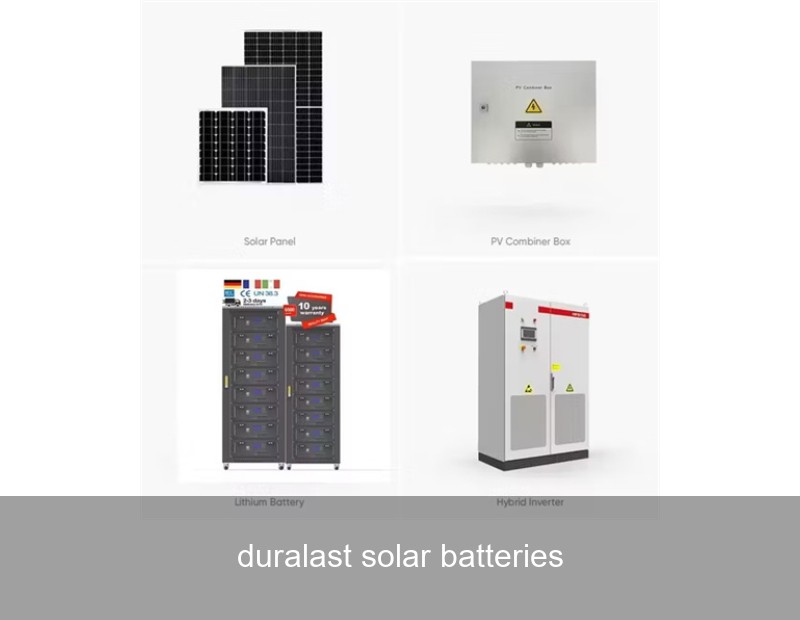
You've probably heard the buzz about solar panels and home energy storage. But when it comes to the battery itself—the heart of the system—names like Duralast solar batteries might pop up. While Duralast is a recognized brand in the automotive battery sector, the world of residential and commercial solar energy storage is a different landscape, demanding specialized technology for daily, deep cycling. This article will demystify what to look for in a solar battery, using the concept of durability and longevity (key ideas behind the "Duralast" name) as our guide. We'll explore the critical features that truly define a high-performance solar battery system for your home or business, and how choosing the right advanced technology partner makes all the difference.
Table of Contents
The Solar & Storage Surge: More Than Just Panels
Across Europe and the U.S., homeowners and businesses are installing solar panels at a record pace. But there's a growing realization: generating clean energy is only half the battle. The sun doesn't shine at night, and grid outages are an increasing concern. This is where solar batteries become non-negotiable. They capture excess solar energy produced during the day for use anytime, providing energy independence and resilience. The market is shifting from just "solar-ready" to "solar-storage-essential." According to the International Energy Agency (IEA), global energy storage capacity is set to multiply exponentially this decade, with behind-the-meter (like home and business) systems leading a significant portion of that growth.

Image: A modern home integrating solar generation with wall-mounted battery storage. Source: Unsplash
What Makes a Solar Battery "Durable"? Key Metrics Beyond the Name
When we think of "Duralast," we think of a product built to last. Translating this to solar batteries, durability isn't just about a tough casing. It's about the internal chemistry and intelligence that determine a system's operational life and value. Here’s what truly matters:
1. Cycle Life & Depth of Discharge (DoD)
Imagine charging and discharging your smartphone battery completely every single day. How long would it last? Solar batteries face this reality. Cycle life is the number of complete charge/discharge cycles a battery can undergo before its capacity significantly degrades. A quality solar battery is designed for thousands of cycles. Closely related is Depth of Discharge (DoD). Using 100% of a battery's stored energy every time stresses it. Advanced systems allow a high DoD (e.g., 90-95%) while managing cell health to maximize usable energy without sacrificing longevity.
2. Chemistry: The Foundation of Performance
Not all batteries are created equal. While lead-acid (like many automotive batteries) is cost-effective for occasional use, solar storage demands lithium-ion variants for daily cycling.
- Lithium Iron Phosphate (LFP): This is the champion for safety and cycle life. LFP chemistry, used in Highjoule's Residential PowerCore series, is inherently stable, offers a exceptionally long cycle life (often over 6,000 cycles), and performs well across a wide temperature range. It's the go-to for "set-and-forget" home energy security.
- Other Lithium Chemistries: Some variants may offer slightly higher energy density but often trade-off in terms of thermal stability and cycle life compared to LFP.
3. Integrated Energy Management System (EMS)
A battery without a brain is just a cell. True durability comes from smart software that protects the hardware. A sophisticated EMS monitors each cell's voltage and temperature, manages charge/discharge rates to prevent stress, and seamlessly integrates with solar inverters and the grid. This software is what transforms raw battery cells into an intelligent, durable energy storage system.
| Feature | Basic/Entry-Level | Advanced/High-Performance (e.g., Highjoule Systems) |
|---|---|---|
| Core Chemistry | Lead-Acid, Basic NMC Lithium | Lithium Iron Phosphate (LFP) |
| Typical Cycle Life | 1,000 - 3,000 cycles | 6,000+ cycles |
| Management System | Basic BMS (Battery Management) | Full Energy Management System (EMS) with AI learning |
| Warranty | 5-7 years | 10+ years, often with guaranteed end-of-warranty capacity |
A Real-World Case Study: Beyond Theory
Let's move from specs to reality. Consider a medium-sized dairy farm in Bavaria, Germany. The farm installed a 50 kW solar array but faced two problems: high evening energy costs and unreliable grid power during storms, which risked spoiling milk in refrigeration.
The Solution: They partnered with Highjoule to deploy a commercial-scale battery system based on LFP technology, with a capacity of 120 kWh. The system was integrated with their existing solar and configured for peak shaving (storing solar to use during expensive peak tariff periods) and backup power for critical loads.
The Data-Driven Outcome (After 18 Months):
- Energy Bill Savings: Reduced grid peak consumption by 85%, saving over €8,000 annually.
- Reliability: Provided seamless backup during 4 grid outages, preventing an estimated €15,000 in potential product loss.
- System Health: The integrated Highjoule EMS reported less than 1.5% capacity degradation, tracking perfectly for a projected lifespan beyond 15 years. This real-world performance, monitored through Highjoule's JouleGrid AI platform, underscores how the right technology delivers tangible durability and ROI.
Highjoule's Approach: Engineering for Real-Life Longevity
At Highjoule, we've focused on building advanced储能系统 that embody the principles of true durability since 2005. Our philosophy is that a solar battery should be the most reliable component of your energy system. For our residential clients across the U.S. and Europe, our PowerCore Home series leverages LFP chemistry and a proprietary adaptive EMS. This system doesn't just react; it learns your household's energy patterns, optimizing self-consumption of solar energy and proactively managing battery health to extend its service life far beyond warranty periods.

Image: A modular, industrial-scale battery energy storage system (BESS) installation. Source: Unsplash
For commercial and industrial applications, our GridMax solutions are modular and scalable. A manufacturing plant in Ohio, for instance, uses a 1 MWh Highjoule GridMax system for demand charge management. The system's robust design and sophisticated controls handle high-power discharges daily, a task that would rapidly degrade less capable batteries. Our services extend beyond hardware—we provide comprehensive energy storage solutions including feasibility analysis, system design, and ongoing performance monitoring via our cloud-based JouleGrid platform, ensuring your investment is protected and optimized for the long haul.
Navigating Your Energy Storage Journey
So, when you're evaluating options for your home or business, look beyond brand names associated with other fields. Focus on the core specifications that guarantee performance: cycle life, chemistry (we strongly advocate for LFP), depth of discharge, and the intelligence of the energy management system. Ask potential providers about their real-world case studies and the data behind their longevity claims.
The right solar battery system should give you peace of mind for a decade or more. It should quietly and efficiently power your life, through blackouts and sunny days alike, becoming a cornerstone of your financial and environmental sustainability strategy.
What energy resilience goal is most critical for you—is it eliminating peak utility charges, ensuring backup power for your home office, or achieving net-zero status for your business? Defining this will point you toward the perfect storage solution.
 Inquiry
 Online Chat