


Decoding the BNEF Energy Storage Outlook 2024: What It Means for Your Energy Future
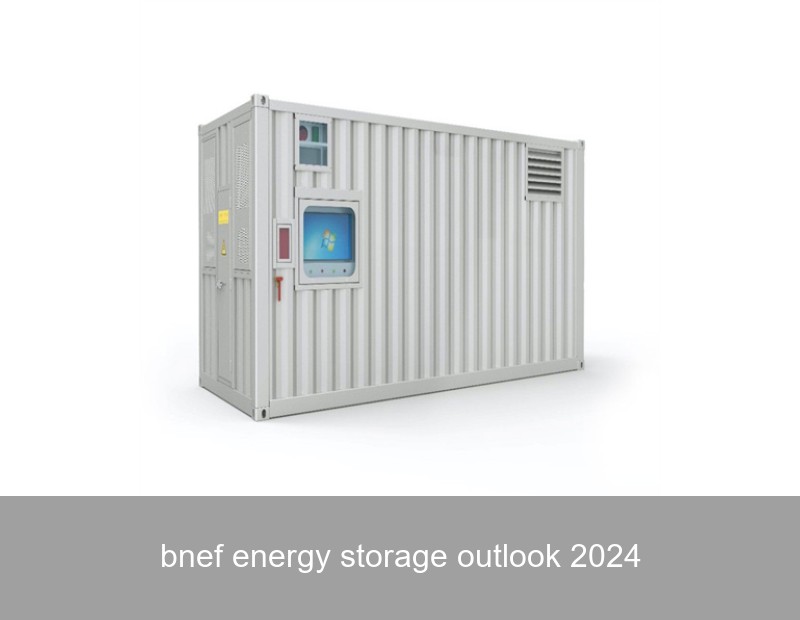
If you're involved in the energy sector, whether you're a business owner, a facility manager, or simply an engaged citizen, you've likely heard the buzz around the latest BNEF Energy Storage Outlook 2024. This influential report from BloombergNEF isn't just a collection of charts and predictions; it's a roadmap for our global energy transition. But what does its forecast of exponential growth truly mean for you on the ground? More importantly, how do you translate this macro trend into tangible resilience and savings for your home, business, or community? Let's break down the key insights and explore the practical steps you can take today.
Table of Contents
The Phenomenon: Storage is No Longer a Niche Player
Remember when battery storage was something you only found in your remote cabin or as a curious pilot project? Those days are gone. The BNEF Energy Storage Outlook 2024 crystallizes a reality that industry insiders have felt for years: energy storage has moved from the sidelines to the core of electricity system planning. We're witnessing a fundamental shift from "generation-follows-demand" to a more flexible, resilient model where storage acts as the crucial buffer, smoothing out the intermittency of renewables like solar and wind. This isn't just about backup power anymore; it's about actively shaping and stabilizing the grid, enabling a cleaner, more reliable energy supply for everyone.

Image: Utility-scale storage is key to grid stability. Source: Unsplash
The Data: A Trillion-Dollar Investment Wave
Let's talk numbers, because the BNEF report delivers some staggering figures. It projects that the global energy storage market will attract over $1 trillion in cumulative investment by 2030. Furthermore, annual energy storage deployments are expected to hit a massive 1,095 gigawatt-hours (GWh) by 2030, a more than tenfold increase from 2023 levels. The United States and Europe are poised to be leaders in this charge, driven by ambitious climate targets and supportive legislation like the U.S. Inflation Reduction Act (IRA) and the EU's Green Deal.
But here's a critical nuance from the outlook: while utility-scale projects dominate in terms of capacity volume, the fastest-growing segment is actually behind-the-meter (BTM) storage – that is, systems installed at homes, businesses, and industrial facilities. This signals a democratization of energy control. It's no longer just the domain of large utilities; now, a manufacturing plant in Germany or a supermarket chain in Texas can directly manage their energy costs and carbon footprint.
Key Drivers: Why Storage is Skyrocketing
Policy & Economics: The Invisible Hand Pushes Green
Policy is creating powerful economic tailwinds. The U.S. IRA, with its direct investment tax credits (ITCs) for standalone storage, has fundamentally changed the project finance calculus. In Europe, the push for energy independence and security, amplified by recent geopolitical events, has accelerated national storage targets. On the economics side, the levelized cost of electricity (LCOE) from solar PV or wind coupled with storage is now competitive with, and often beats, fossil fuel generation in most markets. Simply put, renewables-plus-storage is the cheapest new build option in many parts of the U.S. and Europe.
Technology & Innovation: Smarter, Cheaper, More Durable
Behind the policy is relentless technological progress. Lithium-ion battery pack prices, which fell 90% between 2010 and 2020, continue to decline as manufacturing scales up. But it's not just about cost. Innovation is about intelligence and longevity. Modern Battery Energy Storage Systems (BESS) are not simple battery racks; they are integrated, software-driven platforms. This is where companies with deep technical expertise, like Highjoule, make a decisive difference. Our systems feature advanced battery management systems (BMS) and AI-driven energy management software (EMS) that optimize every charge-discharge cycle. This maximizes throughput, extends system lifespan beyond standard warranties, and ensures safety – turning a capital investment into a high-return asset.
From Outlook to Reality: A California Case Study
Let's ground the BNEF forecast in a real-world example. Consider a mid-sized winery in California's Napa Valley. Their challenge was threefold: skyrocketing time-of-use electricity rates, an unreliable grid prone to public safety power shutoffs (PSPS) during fire season, and a corporate commitment to 100% renewable energy.
- Phenomenon: Grid instability and high costs threatened operations and product quality.
- Solution: A customized Highjoule industrial BESS (500 kWh / 750 kVA) integrated with their existing rooftop solar.
- Data & Outcome: The system was programmed for intelligent peak shaving and backup. In the first year:
- Avoided $72,000 in demand charges by discharging the battery during grid peak periods.
- Provided over 150 hours of critical backup power during grid outages, preventing spoilage of inventory.
- Increased on-site renewable consumption by 40%, slashing their carbon footprint.
This case mirrors the BNEF outlook's emphasis on behind-the-meter commercial storage. The winery didn't just buy a battery; they invested in an energy resilience and cost-management strategy, with a payback period of under 5 years. This is the future the report predicts, already happening today.

Image: Commercial and Industrial BESS installations are growing rapidly. Source: Unsplash
Highjoule's Role: Turning Forecasts into Reliable Power
At Highjoule, with nearly two decades of experience since 2005, we've evolved alongside the storage market predicted by BNEF. We don't just supply hardware; we provide intelligent, integrated solutions that make the report's macro trends a practical reality for our clients.
Our product suite is designed to meet the diverse needs highlighted in the outlook:
- For Residential & Small Commercial: Our HelioHome series offers scalable, all-in-one storage systems with seamless solar integration, giving homeowners and small businesses energy independence and control over rising bills.
- For Commercial & Industrial (C&I): The VoltStack modular BESS platform is our workhorse. Its containerized or skid-mounted design allows for rapid deployment and easy scaling. Coupled with our GridMind AI software, it performs automated peak shaving, energy arbitrage, and backup, delivering a compelling ROI.
- For Utilities and Microgrids: Our MegaJoule utility-scale solutions provide grid services like frequency regulation and renewable firming. We also design and implement turnkey microgrids that combine solar, storage, and generators for communities or industrial parks seeking complete energy security.
Our expertise lies in tailoring these systems to the specific regulatory and market conditions of Europe and the U.S., ensuring our clients capture the full value of incentives and market opportunities.
The Road Ahead: Integration and Intelligence
The BNEF Energy Storage Outlook 2024 is overwhelmingly positive, but it also hints at challenges. As deployments explode, grid integration and system interoperability become paramount. The next frontier is the creation of virtual power plants (VPPs) – networks of thousands of distributed storage systems (like home batteries) aggregated to act as a single, dispatchable power plant. This requires a new level of digital intelligence and grid communication.
Highjoule is actively pioneering in this space. Our systems are designed with VPP readiness, featuring secure, bidirectional communication protocols. We believe the true potential of storage is unlocked not in isolation, but as a connected node in a smarter, more flexible grid ecosystem. As battery chemistry continues to evolve with alternatives like sodium-ion, our focus on adaptive, software-defined platforms ensures our customers' investments are future-proof.
For those looking to dive deeper into the data, the full BloombergNEF New Energy Outlook reports are an authoritative resource. Additionally, insights from the International Renewable Energy Agency (IRENA) and market data from the Energy Storage News portal provide valuable context.
The BNEF Energy Storage Outlook 2024 paints a clear picture of an unstoppable trend. The question is no longer if energy storage will become mainstream, but how quickly and how effectively we can adopt it. So, we leave you with this: As you look at your own energy bills, sustainability goals, or operational risks, what is the first step you could take this quarter to explore how storage could redefine your energy equation?
 Inquiry
 Online Chat