


Branchement Panneau Solaire avec Batterie: Your Guide to Energy Independence
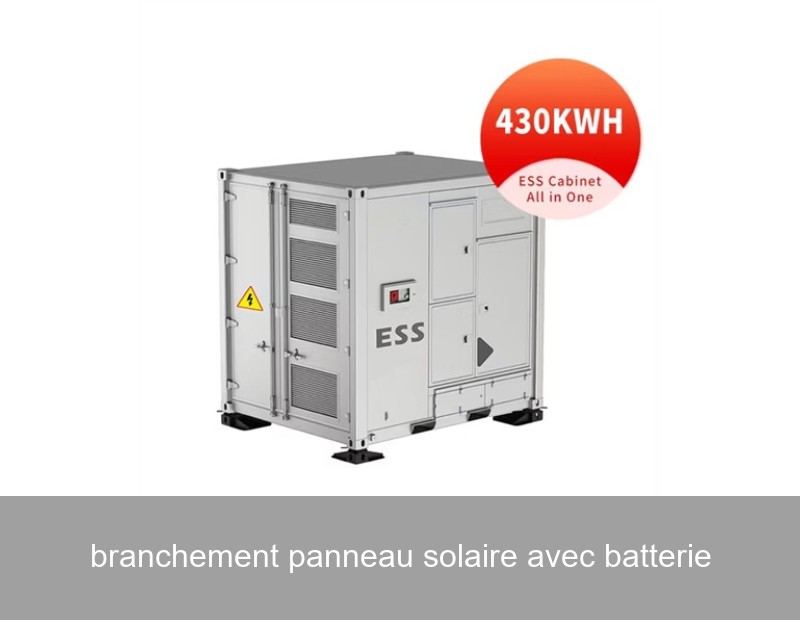
You've made a smart decision. Installing solar panels is a fantastic step towards lower bills and a greener footprint. But have you ever watched your meter spin backwards on a sunny day, sending power to the grid, only to buy it back at night? That's the puzzle piece a branchement panneau solaire avec batterie—connecting solar panels with a battery—solves. It's the upgrade that transforms your solar array from a daytime helper into a 24/7 power station. For homeowners and businesses across Europe and the US, this connection isn't just about technology; it's about truly harnessing the sun's potential, maximizing self-consumption, and building resilience against both power outages and rising energy costs.
What Exactly is a "Branchement Panneau Solaire avec Batterie"?
In simple terms, it's an integrated energy system. Your solar panels capture DC (Direct Current) electricity. An inverter converts it to AC (Alternating Current) for your home's use. When you add a battery, the system gains a brain and a bank account. The energy management system (the brain) decides whether to send solar power to your appliances, to charge the battery (the bank account), or to export to the grid. At night or during a blackout, it seamlessly draws from your stored reserves. This isn't just an add-on; it's a rethinking of how a home interacts with the energy grid.

Credit: Photo by Andreas Gücklhorn on Unsplash. A modern home energy setup with roof-mounted solar panels and a wall-mounted battery storage unit.
Why Connect a Battery Now? The Compelling Data
The phenomenon is clear: energy volatility is the new normal. From California to Cologne, grids are facing unprecedented strain, leading to more frequent outages and volatile pricing. Let's look at the data. According to the International Energy Agency (IEA), global solar PV capacity is set to dominate power capacity expansions. Yet, without storage, a significant portion of this potential is wasted.
Here’s where the logic ladder climbs:
- Phenomenon: High solar production midday, low in evening when demand peaks.
- Data Point: In some regions, the value of solar exported to the grid has dropped by over 70% in certain hours due to oversupply.
- Insight: Self-consuming your solar energy via a battery is 2-3 times more valuable than exporting it in many markets. You're avoiding retail electricity rates, which are consistently rising.
For businesses, this isn't just savings; it's continuity. A single multi-hour outage can cost thousands in lost revenue and spoiled inventory.
Key Components of Your Solar and Battery System
Understanding the core parts demystifies the installation. Think of it as a team where each player has a role.
| Component | Role | What to Look For |
|---|---|---|
| Solar Panels | Generate DC electricity from sunlight. | High efficiency, reliable warranty, suited to your climate. |
| Inverter(s) | Converts DC to usable AC power. | Hybrid inverters (for battery systems) or separate battery inverters. High conversion efficiency. |
| Battery Storage | Stores excess solar energy for later use. | Usable capacity (kWh), depth of discharge, cycle life, and warranty. Lithium-ion phosphate (LFP) is now the safety and longevity standard. |
| Energy Management System (EMS) | The system's brain. Optimizes energy flow. | Smart, user-friendly software that allows for mode setting (e.g., backup priority, cost-saving). |
| Safety & Grid Equipment | Isolators, breakers, and (often) a critical loads panel. | Must comply with all local grid codes (like VDE-AR-N 4105 in Germany or UL 9540 in the US). |
This is where a provider's expertise is critical. At Highjoule, we've engineered the HeliosHome ESS to simplify this complexity. It's an all-in-one AC-coupled system featuring our proprietary LFP battery modules and an intelligent inverter with integrated EMS. Designed for the European and North American markets, it comes pre-configured and tested, reducing installation time and ensuring seamless compatibility between all components—a major advantage for a flawless branchement panneau solaire avec batterie.
The Installation Process: A Step-by-Step Overview
A professional installation is non-negotiable for safety and performance. Here’s what a typical project with a certified installer looks like:
- Site Assessment & Design: An expert evaluates your roof, electrical panel, energy consumption, and goals. They design a system size (solar + battery) tailored to your needs.
- Permitting & Paperwork: Your installer handles local building permits, grid interconnection agreements, and any incentive applications (like the EU's various national schemes or the US Investment Tax Credit).
- Physical Installation: This includes mounting hardware, electrical wiring, setting up the battery unit (like the wall-mounted HeliosHome ESS), and installing the critical loads sub-panel if required.
- Commissioning & Connection: The system is powered on, tested, and synced with the grid. The installer will configure the EMS app on your phone, showing real-time energy flow.
- Inspection & Permission to Operate (PTO): A final inspection by the utility grants official permission to turn the system on.
A Real-World Case Study: Müller Bakery, Munich, Germany
Let's move from theory to a tangible example. The Müller family bakery, a medium-sized business with high refrigeration and oven loads, faced crippling energy costs and concerns over power quality affecting their sensitive proving equipment.
- Challenge: Reduce peak demand charges, ensure voltage stability, and gain backup power for critical refrigeration.
- Solution: A 50 kWp solar array paired with a 120 kWh Highjoule HeliosCommercial battery storage system. The system was AC-coupled to their existing infrastructure.
- Results (12-month data):
- 85% increase in solar self-consumption.
- 40% reduction
- The system provided seamless backup during two grid outages (totaling 4 hours), preventing over €15,000 in potential lost inventory.
- Payback period projected under 7 years, factoring in German BAFA incentives.
This case highlights how a strategic branchement goes beyond residential savings, delivering operational resilience for commercial entities.

Credit: Photo by American Public Power Association on Unsplash. A commercial-scale battery energy storage system installation.
Choosing the Right Technology and Partner
Not all battery systems are created equal. When evaluating options for your branchement panneau solaire avec batterie, consider these factors aligned with EEAT (Experience, Expertise, Authoritativeness, Trustworthiness):
- Provider's Track Record: How long have they been in the energy storage business? Highjoule, founded in 2005, has deployed solutions across 3 continents, giving us deep insights into the specific grid codes and climate challenges of markets like Europe and the US.
- Product Safety & Chemistry: Insist on Lithium Iron Phosphate (LFP) chemistry. It's inherently more stable and longer-lasting than older NMC variants. All Highjoule systems use LFP technology.
- System Intelligence: Can the system adapt? Our Helios software includes AI-driven forecasting modes that can, for example, pre-charge the battery based on a weather forecast of cloudy days or optimize for time-of-use tariffs automatically.
- Warranty & Support: Look for a strong warranty (e.g., 10 years, 70% residual capacity) and a provider with local technical support channels. Your energy security depends on it.
For complex projects like microgrids or large industrial applications, Highjoule's Engineered Solutions team works directly with developers to design and commission turnkey systems that can integrate multiple generation sources, ensuring reliability at the highest level.
Is Your Home or Business Ready to Make the Connection?
The journey to true energy independence starts with a question. What is the real cost of your current energy vulnerability—not just in bills, but in peace of mind? The technology for a robust, intelligent branchement panneau solaire avec batterie is here, proven, and more accessible than ever. It's no longer a futuristic concept; it's a practical upgrade to any solar investment.
What would you power first during an outage, and what could that certainty be worth to you and your family or business?
 Inquiry
 Online Chat