


Unlocking Energy Independence: The Smart Synergy of Carmaer Solar Power and BESS
Imagine your solar panels producing a surge of clean energy at noon, only for a significant portion to be sent back to the grid because you can't use it all. Then, as the sun sets and your energy needs peak, you're forced to buy expensive power from the utility. This frustrating cycle is a common experience for many solar adopters. The solution? Integrating a Battery Energy Storage System (BESS). This article explores the powerful combination of Carmaer solar power generation with a sophisticated BESS, transforming how homes and businesses manage and consume renewable energy. We'll delve into why this pairing is no longer a luxury but a cornerstone of a resilient, efficient, and cost-effective energy strategy.
Table of Contents
- The Solar Dilemma: Generation vs. Consumption
- What is a BESS? Your Energy Bank, Redefined
- Carmaer Solar Power & BESS: The Perfect Synergy
- Real-World Impact: A Case Study from California
- Choosing the Right BESS for Your Solar Array
- Beyond the Meter: Contributing to a Smarter Grid

A modern home energy setup: solar panels paired with a wall-mounted battery storage unit.
The Solar Dilemma: Generation vs. Consumption
Solar power is wonderfully predictable in its daily pattern, but notoriously misaligned with most people's energy habits. Your Carmaer solar power system hits its peak output in the middle of the day, often when homes are empty and businesses are in a lower-power operational mode. According to the U.S. Department of Energy, this "duck curve" phenomenon—where net demand plummets during sunny days and spikes sharply at dusk—poses a real challenge for grid stability.
Without storage, excess solar energy is fed back to the grid, often through net metering programs. While beneficial, these programs are evolving, with compensation rates decreasing in many regions like California, Germany, and parts of the UK. The true value of your self-generated power lies in using it yourself, on your terms.
What is a BESS? Your Energy Bank, Redefined
A Battery Energy Storage System (BESS) is far more than just a battery. It's an integrated, intelligent system that stores electrical energy for later use. Think of it as a high-tech energy bank for your home or business. A modern BESS typically includes:
- Battery Cells: Usually lithium-ion (like LiFePO4 for safety and longevity) that store the DC electricity.
- Battery Management System (BMS): The brain that protects the battery, ensuring safety, monitoring health, and maximizing lifespan.
- Power Conversion System (PCS): The inverter/charger that converts DC from the batteries or solar panels to AC for your home, and vice-versa.
- Energy Management System (EMS): The smart software that decides when to charge, discharge, or hold based on your habits, electricity rates, and solar production.
This intelligent core is what separates a true BESS from a simple battery pack, enabling advanced functionalities that deliver real value.
Carmaer Solar Power & BESS: The Perfect Synergy
When you pair your Carmaer solar power installation with a high-performance BESS, you create a self-sufficient energy ecosystem. The synergy happens in three key areas:
- Maximized Self-Consumption: The BESS stores your daytime solar surplus. In the evening, it powers your home, drastically reducing your reliance on the grid and slashing your electricity bills.
- Uninterruptible Power Supply (UPS): During a grid outage, the system can automatically island your home, keeping critical loads running seamlessly. No more food spoilage or work interruptions.
- Intelligent Energy Arbitrage: In areas with time-of-use (TOU) rates, your system's EMS can be programmed to store solar or cheap off-peak grid power and discharge it during expensive peak hours, optimizing every cent.
This is where a provider with deep system integration expertise becomes critical. At Highjoule, we specialize in designing and deploying such intelligent systems. Our Helios Home ESS and Atlas Commercial ESS product lines are engineered specifically to integrate flawlessly with leading solar inverters, including those commonly used with Carmaer systems. We focus on creating a cohesive unit where communication between the solar inverter, battery management, and home energy controller is seamless, ensuring you get the full economic and reliability benefits without the technical headaches.
Real-World Impact: A Case Study from California
Let's look at concrete data. A medium-sized winery in Sonoma County, California, faced high demand charges and unreliable grid power affecting its temperature-controlled fermentation tanks. They had a 250 kW Carmaer solar power array but were still exposed to evening peak rates and outages.
The Solution: Highjoule deployed a 500 kWh Atlas Commercial ESS alongside their existing solar. The system was configured for peak shaving and backup power for critical cooling loads.
The Results (12-month period):
| Metric | Before BESS | After BESS Integration | Change |
|---|---|---|---|
| Grid Energy Purchased | ~45% of total need | ~15% of total need | -67% |
| Peak Demand Charges | $3,200/month (avg.) | $900/month (avg.) | -72% |
| Grid Outage Impact | Production halt, potential spoilage | Zero impact on critical processes for up to 8 hours | 100% resilience |
| Solar Self-Consumption | ~55% | ~92% | +37% points |
This case, documented in a NREL report on commercial storage value, illustrates the multi-faceted ROI: dramatic cost savings, enhanced sustainability, and operational resilience. The winery now operates as a true microgrid, a model for agricultural businesses worldwide.

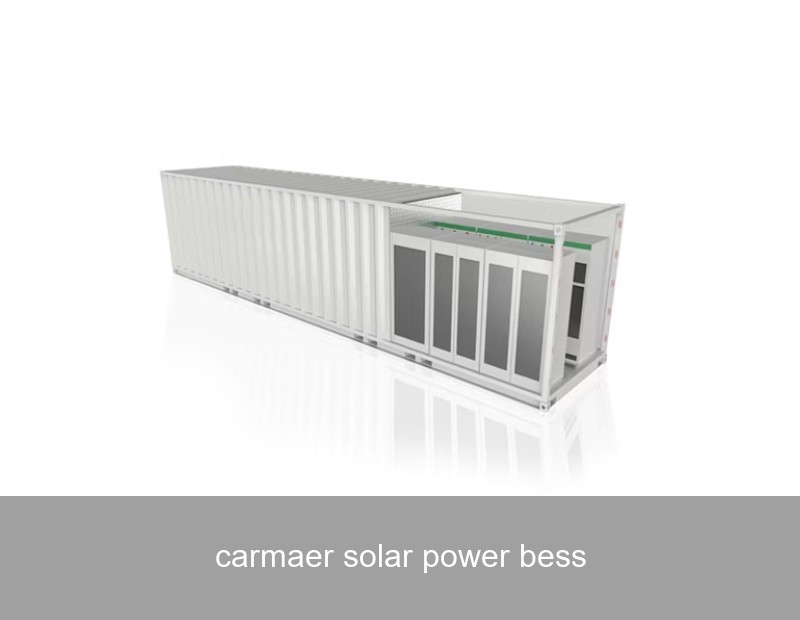
A containerized BESS unit, like Highjoule's Atlas series, providing large-scale storage for commercial applications.
Choosing the Right BESS for Your Solar Array
Not all storage systems are created equal. When selecting a BESS to complement your Carmaer solar power setup, consider these factors guided by Highjoule's design philosophy:
- Usable Capacity & Power: How much energy (kWh) can it store, and what is the continuous power output (kW)? Ensure it matches your nightly consumption and peak load requirements.
- Depth of Discharge & Cycle Life: Can you safely use 90%+ of the capacity? A high-quality LiFePO4 battery, like those in Highjoule systems, offers 6,000+ cycles with minimal degradation, guaranteeing performance for decades.
- Integration & Smart Features: Does it communicate natively with your solar inverter? Can its EMS leverage weather forecasts and real-time tariff data? Our Highjoule Energy OS provides this intelligence, learning and adapting to your lifestyle.
- Safety & Warranty: Look for UL 9540 certified systems (a must in the US) with robust safety architecture. A 10+ year warranty with guaranteed end-of-term capacity is industry standard for premium providers.
Beyond the Meter: Contributing to a Smarter Grid
The benefits of a Carmaer solar power plus BESS system extend beyond your property line. Aggregated virtual power plants (VPPs) are emerging where, with your consent, your storage system can provide grid services like frequency regulation. This not only stabilizes the community grid but can also generate additional revenue streams for you. It's a step towards a decentralized, democratized energy future.
Highjoule is actively partnering with utilities and aggregators in Europe and North America to bring these VPP opportunities to our customers, turning your energy asset into a participant in the wider clean energy transition.

The future grid: decentralized, renewable, and reliant on distributed storage for stability.
So, as you consider maximizing your investment in solar, the question isn't just about generating clean power—it's about controlling it. How much more value could you unlock if your solar energy was available precisely when and where you need it most?
 Inquiry
 Online Chat