


Canadian Power Solutions: Navigating the Future of Resilient and Sustainable Energy
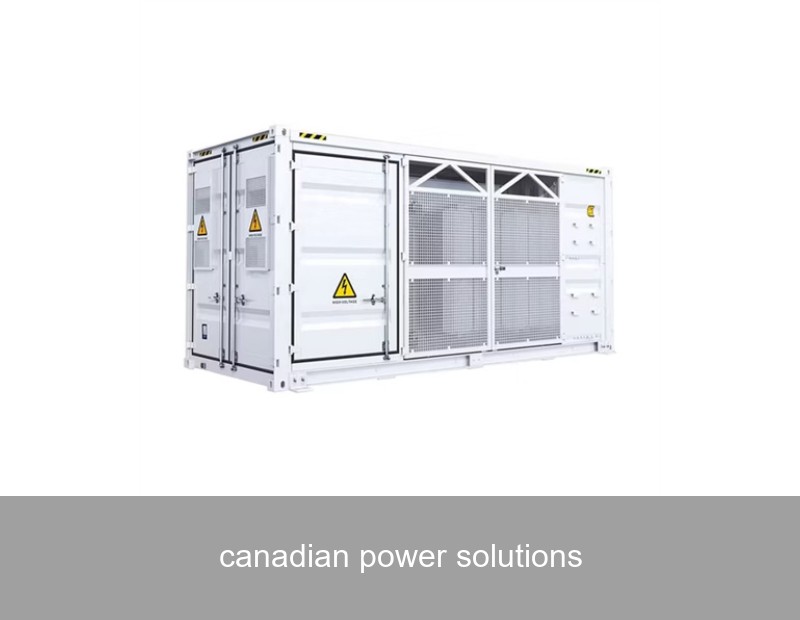
When you think of Canada, you might envision vast landscapes, but for energy professionals, it represents a unique and complex power ecosystem. From the remote communities of the Northwest Territories to the bustling industrial hubs of Ontario, the quest for reliable, clean, and cost-effective electricity is universal. This is where modern Canadian power solutions come into play, moving beyond traditional grids to embrace solar, storage, and smart management. For businesses and communities alike, the challenge isn't just about generating power—it's about ensuring it's there when needed, managing costs, and reducing environmental impact. Let's explore how innovative energy storage and management are answering these critical needs.
Table of Contents
- The Canadian Energy Landscape: A Puzzle of Distance and Demand
- The Pivotal Role of Storage in Modern Canadian Power Solutions
- Case Study: A Northern Community's Journey to Energy Independence
- The Highjoule Approach: Intelligent Systems for Canadian Challenges
- Future-Proofing: Trends Shaping Canada's Energy Future
The Canadian Energy Landscape: A Puzzle of Distance and Demand
Canada's energy story is one of contrasts. While the country is a global leader in hydropower, its sheer size creates distinct challenges. Natural Resources Canada reports that over 200 communities, primarily Indigenous and remote, are not connected to the main North American power grids. These locales often rely on expensive and polluting diesel generators. Meanwhile, in connected urban and industrial centers, issues like peak demand charges, grid congestion, and the need for backup power during extreme weather events are pressing concerns.
The data tells a compelling story. According to the Canada Energy Regulator, while electricity prices vary widely by province, commercial and industrial users often face significant "global adjustment" fees and demand charges in markets like Ontario. This financial pressure, combined with a national commitment to net-zero emissions by 2050, is driving a fundamental shift. The solution isn't a one-size-fits-all power plant; it's a decentralized, intelligent network of Canadian power solutions that integrate generation, storage, and smart controls.

Image: Remote areas in Canada present unique energy challenges. Credit: Unsplash
The Pivotal Role of Storage in Modern Canadian Power Solutions
Think of the energy grid as a highway. During rush hour (peak demand), it's congested and costly. At night, it's underutilized. Battery Energy Storage Systems (BESS) act like a fleet of off-ramps and on-ramps, smoothing out this traffic. For Canadian applications, this functionality is transformative:
- Demand Charge Management: By discharging stored energy during short periods of peak usage, businesses can dramatically reduce the highest points of their consumption, slashing a major portion of their electricity bills.
- Renewable Integration: Solar power is intermittent. Storage captures excess solar generation during the day for use at night, maximizing self-consumption and reducing reliance on the grid.
- Resilience and Backup: In the face of storms, wildfires, or grid outages, a storage system paired with generation can keep critical operations running. This is not just a convenience; for remote clinics or data centers, it's essential.
- Grid Services: Advanced systems can even provide services back to the grid, like frequency regulation, creating a potential revenue stream for the system owner.
This is where companies with deep expertise in storage technology become indispensable partners. Highjoule, with nearly two decades of experience since 2005, designs Canadian power solutions that are precisely engineered for these diverse scenarios. Our commercial and industrial (C&I) battery storage systems are built for harsh climates, featuring advanced liquid cooling for optimal performance in both frigid winters and hot summers, and sophisticated energy management software that makes automated, cost-saving decisions.
Case Study: A Northern Community's Journey to Energy Independence
Let's move from theory to a real-world example. The remote community of Whatì in the Northwest Territories, accessible only by winter road or air, historically depended on diesel for 100% of its electricity. The cost was enormous—both financially and environmentally.
The Project: The community embarked on a hybrid microgrid project, integrating a 1-MW solar PV array with a 1.1-MWh battery energy storage system. The goal was to reduce diesel consumption and stabilize energy costs.
The Results (Post-Implementation Data):
| Metric | Result |
|---|---|
| Diesel Fuel Reduction | Approximately 380,000 liters per year |
| Greenhouse Gas Reduction | ~1,000 tonnes of CO2e annually |
| Renewable Penetration | Solar now provides up to 25% of the community's annual electricity |
The battery storage was the linchpin. It stores excess solar energy, ensures grid stability by smoothing the variable solar output, and allows the diesel generators to operate at their most efficient levels or be shut off entirely for periods. This project exemplifies the core of effective Canadian power solutions: leveraging technology to create tangible economic, environmental, and social benefits. While Highjoule was not directly involved in this specific project, our microgrid solutions are engineered for exactly this type of transformative outcome, providing scalable and resilient power for communities and industrial sites off the beaten path.
The Highjoule Approach: Intelligent Systems for Canadian Challenges
Understanding the challenge is one thing; providing a reliable, bankable solution is another. At Highjoule, our Canadian power solutions are built on three pillars:
- Adaptive Hardware: Our C&I and microgrid battery systems use lithium iron phosphate (LFP) chemistry, known for its safety, long cycle life, and performance across a wide temperature range. Our modular design allows for scalable power and energy capacity, from a few hundred kWh to multi-MWh installations.
- Proprietary Intelligence: Hardware is just the vessel. Our AI-driven energy management system (EMS) is the brain. It continuously analyzes weather forecasts, utility rate schedules, load patterns, and market signals to optimize every kilowatt-hour—for maximum savings, resilience, or renewable self-consumption.
- Full-Spectrum Service: We provide more than just equipment. From initial feasibility studies and financial modeling to system design, installation support, and long-term performance monitoring, Highjoule acts as a single point of accountability for our clients' energy transition.

Image: Intelligent control systems are key to modern energy storage. Credit: Unsplash
Whether it's a manufacturing plant in Southern Ontario looking to cap peak demand charges, a winery in British Columbia seeking to pair solar with backup power, or a remote mining camp needing a diesel-hybrid solution, our systems are configured to deliver a clear return on investment and operational peace of mind.
Future-Proofing: Trends Shaping Canada's Energy Future
The evolution of Canadian power solutions is accelerating. Key trends to watch include:
- Vehicle-to-Grid (V2G) Integration: As electric fleets grow, their batteries could become a distributed grid resource. Highjoule's systems are being designed with this future interoperability in mind.
- AI and Predictive Analytics: The next generation of EMS will not just react but predict—anticipating equipment maintenance needs, extreme weather events, and market price spikes with even greater accuracy.
- Standardization and Stacked Value Streams: The future belongs to systems that can seamlessly combine multiple revenue or savings streams, from energy arbitrage and demand charge reduction to providing grid services, all within one platform.
The question for any business or community leader in Canada is no longer if they should explore advanced energy solutions, but how and with whom. Partnering with a technology provider that has a proven global track record and a deep understanding of local market structures, incentives, and physical challenges is the critical first step.
Your Energy, Your Future
What does your ideal energy profile look like? Is it a lower, more predictable utility bill, a guaranteed backup for your critical operations, a tangible step toward your sustainability goals, or all of the above? The technology to make this a reality is here today. What specific energy challenge is your organization looking to solve in the next 18 months?
 Inquiry
 Online Chat