


EV Battery Storage Container: The Game-Changer for Modern Energy Resilience
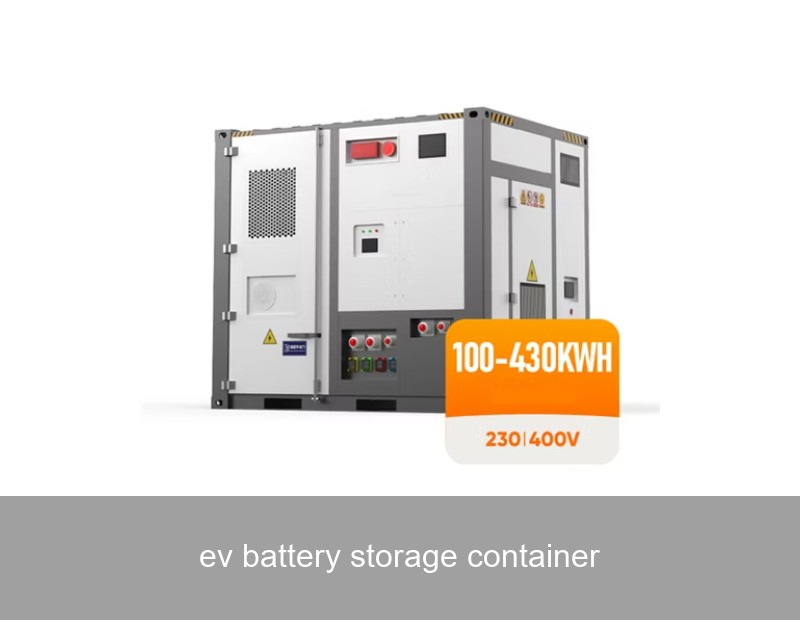
Imagine a power solution so versatile it can be charged by the sun, store massive amounts of energy, and then deploy it to power anything from a fleet of electric vehicles to an entire factory floor. This isn't science fiction; it's the reality enabled by the EV battery storage container. As grids face strain and the demand for clean, reliable power soars, these containerized systems are emerging as a critical backbone for businesses and communities. In this article, we'll explore how repurposing the power of electric vehicle batteries into stationary storage is revolutionizing energy management, and how companies like Highjoule are leading this charge with intelligent, sustainable solutions.
Table of Contents
- The Phenomenon: From Rolling Stock to Rock-Solid Storage
- The Data: Why Second-Life and Purpose-Built EV Batteries Make Sense
- Case Study: Powering a German Logistics Hub
- The Highjoule Insight: Intelligence is Everything
- Key Components of a Modern EV Battery Storage Container
- Primary Applications and Benefits
- The Road Ahead: What's Next for Containerized Storage?
The Phenomenon: From Rolling Stock to Rock-Solid Storage
The global surge in electric vehicle adoption presents a unique opportunity and a looming challenge. The opportunity? EV batteries, even after their automotive life, often retain 70-80% of their original capacity. The challenge? Responsibly managing the coming wave of retired batteries. Enter the EV battery storage container: a brilliant convergence of circular economy and grid innovation. These systems can utilize either purpose-built new batteries or expertly integrated "second-life" EV battery packs, housed in standardized, weatherproof shipping containers. This makes them rapidly deployable, scalable, and perfect for a variety of settings—from bolstering a renewable microgrid to providing backup power for a critical facility.

Image Source: Unsplash - Representative image of a battery storage container interior.
The Data: Why Second-Life and Purpose-Built EV Batteries Make Sense
The numbers behind this trend are compelling. According to a report by BloombergNEF, the global stationary energy storage market is set to attract over $1 trillion in investment by 2050. A significant portion of this will be for large-scale battery systems. Furthermore, research indicates that giving EV batteries a second life in storage applications can reduce their overall carbon footprint by nearly 15-20%. For businesses, the calculus is clear: these containerized solutions offer predictable power costs, protection from volatility, and a tangible sustainability credential. They turn energy from a mere utility into a strategic asset.
Case Study: Powering Sustainability at a German Logistics Hub
Let's look at a real-world application in Europe. A major logistics company in North Rhine-Westphalia, Germany, faced two issues: high peak-demand charges from their grid operator and a desire to utilize their vast warehouse roof space for solar. Their goal was to achieve greater energy autonomy and reduce operational costs.
The solution was a turnkey system centered on a 1.2 MWh EV battery storage container, integrated with a new 800 kWp rooftop solar array. Here's how it works:
- Solar Harvesting: During the day, the PV system generates electricity, powering the facility's operations.
- Intelligent Storage: Excess solar energy is stored in the Highjoule containerized battery system, rather than being fed back to the grid at a lower rate.
- Peak Shaving: In the evening, when grid prices spike and solar generation drops, the stored energy is discharged to power the logistics hub's sorting and lighting systems, avoiding expensive peak tariffs.
| Metric | Result (Annual) |
|---|---|
| Grid Energy Consumption Reduction | ~40% |
| Peak Demand Charge Savings | €28,000 |
| CO2 Emissions Avoided | Approx. 220 metric tons |
| Return on Investment (ROI) Period | Estimated under 7 years |
This case demonstrates the powerful synergy between solar generation and containerized EV battery storage, creating a resilient, cost-effective energy ecosystem for commercial operations.
The Highjoule Insight: Intelligence is Everything
At Highjoule, we understand that a container is more than just a box for batteries. It's an integrated energy management platform. Our EnerHub™ Containerized BESS is designed with this philosophy. While many talk about hardware, our true differentiation lies in software. Our proprietary AI-driven energy management system (EMS) is the brain of the operation. It doesn't just store and release energy; it forecasts energy generation (from solar or wind), analyzes consumption patterns, and even responds to real-time grid signals to optimize for cost or carbon savings automatically.
For clients considering an EV battery storage container, whether using second-life or new Li-ion cells, we provide full lifecycle support—from feasibility studies and system design to grid integration, commissioning, and remote monitoring. Our systems are built to the highest safety standards, featuring advanced thermal management and multi-layer protection systems, ensuring reliable operation in diverse climates across Europe and North America.

Image Source: Unsplash - A battery storage container deployed in a renewable energy setting.
Key Components of a Modern EV Battery Storage Container
To appreciate the sophistication, let's break down what's inside a best-in-class system like Highjoule's EnerHub™:
- Battery Racks: Modular racks housing either high-density new lithium-ion cells or rigorously tested and reconditioned second-life EV battery modules.
- Power Conversion System (PCS): The bidirectional inverter that converts DC battery power to AC for the facility and vice-versa.
- Thermal Management: A liquid or air-based cooling/heating system to maintain optimal battery temperature, crucial for performance, safety, and longevity.
- Energy Management System (EMS): The software intelligence that controls charging/discharging, optimizes for financial returns, and ensures grid compliance.
- Safety Enclosures & Fire Suppression: Robust physical isolation of battery packs and integrated, early detection fire suppression systems.
- Grid Connection Interface: All necessary switchgear and controls for safe interconnection with the local electrical distribution network.
Primary Applications and Benefits
The versatility of containerized storage unlocks value across sectors. Here are the key applications:
For Commercial & Industrial (C&I) Sites:
- Demand Charge Management: The #1 financial driver. Slash peak demand charges by discharging the battery during short periods of highest power draw.
- Solar Self-Consumption Optimization: Increase the usage of your own solar generation from ~30-40% to over 70%.
- Backup Power: Provide critical backup for essential loads during grid outages, ensuring business continuity.
For Utilities & Microgrids:
- Grid Services: Provide frequency regulation, voltage support, and defer costly grid infrastructure upgrades.
- Renewable Integration: Smooth out the intermittent generation from large-scale solar or wind farms, making renewables more dispatchable.
- Community Resilience: Form the core of a community microgrid, powering critical services during natural disasters. The U.S. Department of Energy highlights this role in their grid modernization initiatives.
For EV Charging Depots:
This is a perfect synergy. A dedicated EV battery storage container can be used to:
- Prevent expensive grid upgrades when installing high-power charging stations.
- Buffer power demand, allowing multiple chargers to operate simultaneously without hitting peak demand limits.
- Charge the storage container with low-cost overnight power or solar, then use that to charge vehicles anytime, reducing operating costs.
The Road Ahead: What's Next for Containerized Storage?
The technology continues to evolve. We're seeing advancements in battery chemistry, like LFP (Lithium Iron Phosphate) becoming the standard for its safety and long cycle life. Software and AI are becoming even more predictive, moving from simple control to full autonomous energy portfolio optimization. Furthermore, standards for second-life batteries are maturing, with projects like those outlined by the International Energy Agency providing valuable data on performance and economics.
For a business leader, city planner, or energy manager, the question is no longer if battery storage is relevant, but how to integrate it effectively. The modular, scalable nature of the EV battery storage container makes it an ideal starting point.

Image Source: Unsplash - Remote monitoring and management of energy systems.
So, as you look at your energy bills, sustainability goals, or plans for new EV infrastructure, consider this: What could your organization achieve with a self-contained powerhouse that turns energy volatility into predictability and cost savings? What would be the first load you would want to make more resilient and sustainable with your own on-site energy storage?
 Inquiry
 Online Chat