


Finding the Right Supplier of VRB Power for Your Energy Storage Needs
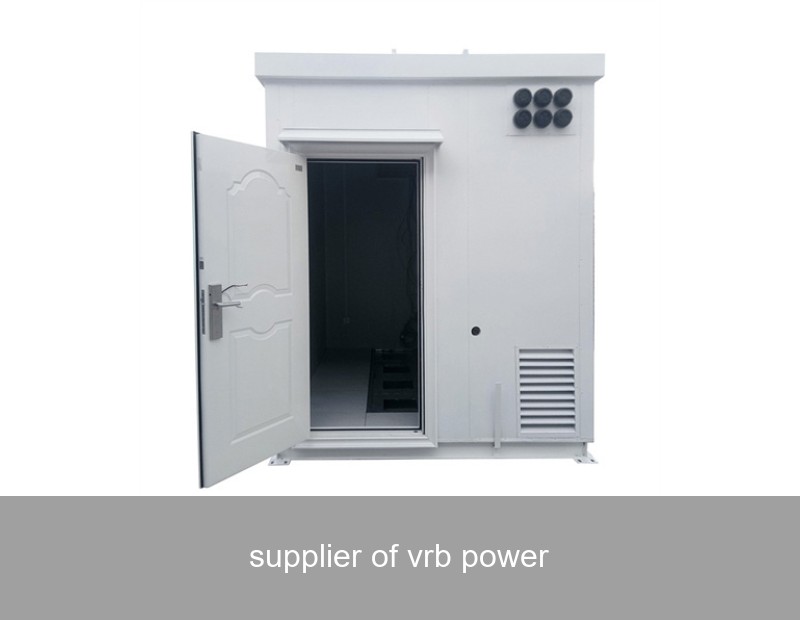
As the global energy landscape shifts decisively towards renewables, a critical challenge emerges: how do we store the intermittent power from the sun and wind for use anytime? While lithium-ion batteries often grab headlines, a powerful and enduring technology is making a major comeback for large-scale applications – the Vanadium Redox Flow Battery (VRB). For businesses, utilities, and communities seeking reliable, long-duration energy storage, choosing the right supplier of VRB power is not just a procurement decision; it's a strategic investment in energy resilience and sustainability.
Table of Contents
What is a Vanadium Redox Flow Battery (VRB)?
Let's break it down simply. Unlike conventional batteries that store energy in solid electrode materials, a VRB stores energy in liquid electrolyte solutions contained in external tanks. These solutions contain vanadium ions in different oxidation states. When the battery charges or discharges, the electrolytes are pumped through a cell stack where an electrochemical reaction occurs, converting chemical energy to electrical energy and back again.
This unique architecture offers inherent advantages. The energy capacity (how many kilowatt-hours you can store) is determined by the volume of the electrolyte tanks, which can be scaled up independently of the power rating (the kilowatts you can deliver at once). It's like having an engine (the cell stack) and a separate, easily expandable fuel tank (the electrolyte).
Why Choose VRB Technology for Large-Scale Storage?
The phenomenon is clear: solar and wind farms are growing, but the sun sets, and the wind calms. This creates volatility on the grid. Lithium-ion batteries are excellent for short-duration, high-power applications (like frequency regulation or peaking power for 2-4 hours). However, for true energy shifting—storing solar power from midday to power the evening peak, or providing backup power for a factory through a prolonged lull—you need duration measured in hours, with exceptional cycle life.
Here’s where the data on VRBs shines:
- Unmatched Cycle Life & Durability: VRBs can undergo 15,000-20,000+ charge/discharge cycles with minimal degradation. They can last 20+ years, far outlasting many other battery chemistries.
- Deep Discharge Capability: You can safely use 100% of the stored energy without damaging the battery, unlike lithium-ion, which is often limited to 80-90% Depth of Discharge (DoD) for longevity.
- Inherent Safety: The electrolyte is non-flammable and the systems pose an extremely low fire risk, a crucial factor for industrial or densely populated areas.
- Sustainability Edge: The vanadium electrolyte can be reused almost indefinitely at end-of-life, offering a compelling circular economy story.
So, who needs this? Think of a manufacturing plant aiming for 24/7 carbon-free operations, a remote microgrid dependent on solar, or a utility company needing to firm up a growing portfolio of renewable generation.

Credit: Image by American Public Power Association on Unsplash. Large-scale storage requires robust, safe, and long-lasting technology like VRB systems.
Key Considerations When Choosing a Supplier of VRB Power
Selecting a supplier of VRB power goes beyond comparing price per kilowatt-hour. You are entering a decades-long partnership. Here are the critical factors to evaluate:
| Consideration | Why It Matters |
|---|---|
| System Integration & Engineering Expertise | Can the supplier design a complete Balance of Plant (BOP) solution, integrating power conversion (PCS), controls, and thermal management seamlessly? |
| Performance Guarantees & Warranty | Look for clear warranties on cycle life, round-trip efficiency, and capacity retention over 10+ years. |
| Financial Stability & Long-Term Support | Will the company be there in 15 years to honor warranties and provide service? A strong track record is essential. |
| Intelligence of the Software Platform | The hardware stores energy, but the software unlocks its value. Can it optimize for energy arbitrage, peak shaving, and grid services automatically? |
The Highjoule Approach: More Than Just a VRB Supplier
This is where Highjoule distinguishes itself. Since 2005, we have evolved from a component provider to a trusted partner for comprehensive energy storage solutions. We understand that our role as a leading supplier of VRB power is to deliver certainty, performance, and long-term value.
Our H-Joule V-Flow series embodies this philosophy. We don't just supply the battery stack and electrolyte; we deliver a fully integrated, containerized solution. Each system is pre-assembled and tested in our facility, featuring:
- High-Efficiency Cell Stack: Proprietary design for lower internal resistance and higher energy efficiency.
- Advanced Electrolyte Management: Ensures consistent performance and longevity across thousands of cycles.
- Unified Control Platform: Our H-Joule Neuron AI-driven software is the brain of the system. It doesn't just monitor; it learns your load patterns, weather forecasts, and electricity tariffs to autonomously optimize the system's operation for maximum financial return and grid support.
- Global Service Network: Our team provides lifecycle support, from initial feasibility studies to remote monitoring and on-site maintenance, ensuring your investment performs for decades.
For a commercial facility, this means predictable energy costs and enhanced sustainability reporting. For a utility, it means a reliable grid asset that can defer costly infrastructure upgrades.
Case Study: Grid Stability in Northern Europe
Let's look at a real-world application. A regional grid operator in Northern Europe faced a growing challenge. Their network, rich with wind power, experienced significant frequency deviations during periods of low demand and high wind generation. They needed a storage resource that could provide fast frequency response (FFR) but also had the stamina for longer-duration energy time-shifting to absorb excess wind.
A lithium-ion system could handle the FFR, but its cycle life would be severely impacted by the constant, deep cycling required for energy shifting. They turned to a supplier of VRB power for a solution that could do both, reliably, for years.
The Project: Highjoule was selected to deploy a 5 MW / 20 MWh H-Joule V-Flow system. This configuration provided 4 hours of storage duration.
The Results (Data after 18 months of operation):
- Grid Services: The system successfully provides automatic FFR, stabilizing grid frequency within milliseconds of an anomaly.
- Renewable Integration: It has absorbed over 8,500 MWh of otherwise curtailed wind energy, shifting it to higher-demand periods.
- Performance: The system has maintained 99.8% availability and shows no measurable capacity degradation, operating as predicted by our models.
- Economic & Environmental Impact: The operator has generated significant new revenue from grid services while reducing CO2 emissions by enabling more wind power utilization. You can read more about the importance of long-duration storage for grid decarbonization in this IEA report on energy storage.
This case exemplifies the dual-value proposition of VRB technology when deployed by an experienced partner.

Credit: Image by Šimon Grada on Unsplash. Integrating large amounts of wind power requires storage solutions that can handle long durations and frequent cycling.
The Future of VRB and Long-Duration Storage
The market direction is clear. As stated by the U.S. Department of Energy, achieving a net-zero grid will require a vast expansion of energy storage that can discharge for 10+ hours. VRB technology is uniquely positioned to meet this "long-duration" need. Innovations in vanadium electrolyte production and stack design are steadily reducing levelized cost of storage (LCOS), making VRBs increasingly competitive for an expanding range of applications.
Furthermore, the rise of green hydrogen and other sector-coupling strategies opens new opportunities for hybrid systems where VRBs provide the perfect short-to-medium duration buffer. The expertise of your chosen supplier of VRB power will be critical in navigating these future energy ecosystems.
Is your organization evaluating energy storage to achieve resilience, sustainability, or economic goals? Have you considered how the unique benefits of flow battery technology could provide a more future-proof solution for your specific load profile and operational horizon?
 Inquiry
 Online Chat