


Understanding Solar Panel Characteristics: A Guide to Smarter Energy Choices
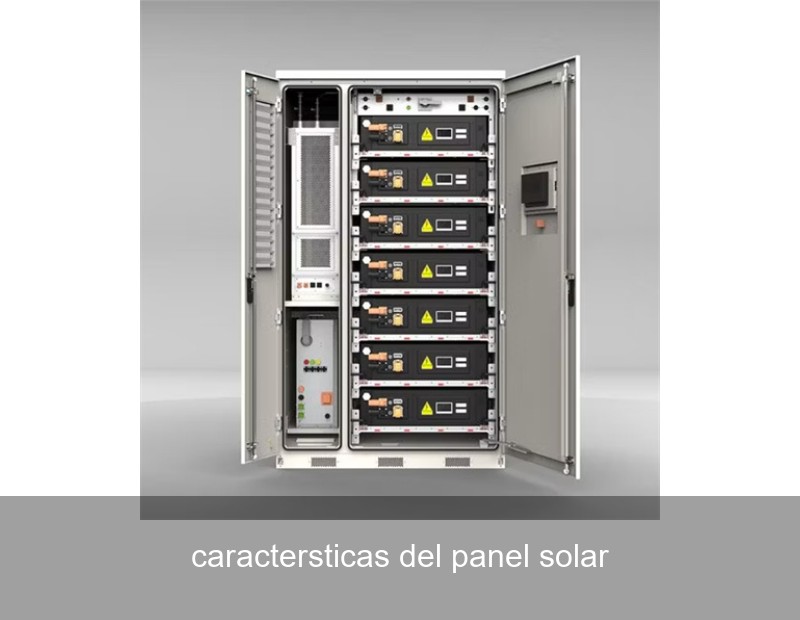
Have you ever stood in front of a solar panel display, or scrolled through an online catalog, feeling overwhelmed by the sheer number of technical terms? You're not alone. The características del panel solar—or solar panel characteristics—are the essential DNA of any photovoltaic system. Getting to know them isn't just for engineers; it's the key for homeowners and businesses across Europe and the US to unlock maximum energy independence, savings, and sustainability. In this guide, we'll demystify these specs, show you why they matter in the real world, and explain how pairing them with the right storage solution, like those from Highjoule, creates a truly resilient energy ecosystem.
Key Solar Panel Characteristics Explained
Let's break down the most critical características del panel solar you'll encounter. Think of these as the panel's resume.
1. Power Rating & Efficiency
The power rating, measured in watts (W), tells you the panel's output under ideal lab conditions (Standard Test Conditions, or STC). A 400W panel produces more power than a 300W panel of the same size. Directly linked to this is efficiency—the percentage of sunlight hitting the panel that gets converted into electricity. Higher efficiency means more power from your precious roof space.
2. Temperature Coefficient
This is a crucial but often overlooked spec. Solar panels don't like extreme heat. The temperature coefficient (expressed as %/°C) tells you how much the panel's power output decreases for every degree Celsius above 25°C. A lower (closer to zero) coefficient is better, especially in sun-drenched regions like Southern Europe or California.
3. Durability & Degradation Rate
Panels are long-term investments. Key durability indicators include:
- Degradation Rate: The annual percentage by which a panel's output decreases. Premium panels now offer degradation rates as low as 0.3% per year.
- Warranty: Look for a strong performance warranty (e.g., 90% output after 25 years) and a product warranty against defects.
- Mechanical Ratings: Resistance to hail, wind load, and snow load.
4. Technology & Cell Type
The underlying technology defines performance profiles. The main types are:
| Type | Efficiency Range | Key Characteristics |
|---|---|---|
| Monocrystalline | 18-24% | High efficiency, space-efficient, longer lifespan, higher cost. |
| Polycrystalline | 15-20% | Good value, slightly lower efficiency and heat tolerance. |
| Thin-Film | 10-13% | Lightweight, flexible, less affected by high heat, lower space efficiency. |
The Data: Why Panel Characteristics Are Just the Beginning
Choosing a high-efficiency panel is a fantastic start, but it's only part of the energy independence equation. The sun isn't constant, and your energy consumption rarely aligns perfectly with peak production. This is where the raw características del panel solar meet system-level intelligence.
Consider this: According to the U.S. Department of Energy, solar power's variability can challenge grid stability without proper management. For the system owner, this "duck curve" phenomenon—where solar production peaks midday but demand peaks in the evening—means a significant portion of your self-generated, clean energy could be exported to the grid at low rates, only for you to buy back expensive power later. This mismatch is the core challenge modern storage systems are designed to solve.

Image: A complete home energy system combining solar panels and battery storage. Source: Unsplash
A Real-World Case: From Spec Sheet to Savings in Bavaria
Let's look at a project in southern Germany, a region with strong solar incentives but also notable weather fluctuations. A medium-sized manufacturing workshop installed a 50 kW rooftop array using high-efficiency monocrystalline panels with a low temperature coefficient—perfect for capturing the maximum possible yield.
The Initial Data: The system generated an impressive 52,000 kWh in its first year. However, an energy audit revealed that over 40% of this production was being fed into the grid during the day, while the facility was still drawing 30% of its evening and early morning power from the grid at higher commercial tariffs.
The Storage Solution: To capture this wasted potential, the facility integrated a Highjoule HES-30 commercial battery energy storage system (BESS). This wasn't just a simple battery bank. The Highjoule system's intelligent energy management software was programmed to:
- Store excess solar production midday.
- Automatically discharge during high-price evening peaks, maximizing self-consumption.
- Provide backup power during brief grid outages, protecting sensitive machinery.
The Outcome: In the first full year post-integration, the facility's grid dependence fell by 65%, and its overall energy costs were reduced by 48%. The superior características del panel solar provided the high-quality raw energy, but it was the intelligent storage that transformed that energy into true economic and operational resilience. This synergy is what defines a modern energy asset.
The Highjoule Advantage: Where Solar Characteristics Meet Intelligent Storage
At Highjoule, with nearly two decades of experience, we view solar panels as the first—and brilliant—stage of energy harvesting. Our role is to complete the cycle. Our advanced storage systems are engineered to be the perfect partner to high-performance solar arrays, regardless of their specific características del panel solar.
Our product suite, from residential HomePower units to industrial-scale GridMax solutions, is built on a few core principles:
- Adaptive Charging: Our systems dynamically adjust charging parameters based on real-time solar input and weather forecasts, ensuring optimal battery health and maximum capture of variable solar yield.
- AI-Powered Energy Management: The brain of the system. It doesn't just store and release; it learns consumption patterns, considers time-of-use tariffs (common in Europe and the US), and makes decisions that maximize your financial return.
- Scalability & Integration: Whether you're starting with a modest array or planning a massive microgrid, Highjoule systems are modular. They seamlessly integrate with new and existing solar installations, protecting your initial investment and future-proofing your energy setup.
For a deeper dive into how battery chemistry and system architecture impact longevity, resources like the ScienceDirect topic on BESS offer valuable technical background.

Image: The interior of an advanced battery energy storage system. Source: Unsplash
What's Next? The Evolving Landscape of Solar Tech
The innovation in características del panel solar continues at a rapid pace. We're seeing the commercial rise of perovskite-silicon tandem cells, pushing laboratory efficiencies beyond 33%. Bifacial panels, which capture light from both sides, are increasing yields in installations with reflective surfaces. These advancements promise even greater energy density from the same footprint.
But this progress makes the storage component more critical, not less. As panels generate more power in narrower, more intense windows, the need to intelligently buffer and time-shift that energy grows exponentially. The future isn't just about better panels or bigger batteries; it's about orchestration. This is where Highjoule's focus on software-defined energy management becomes the linchpin, ensuring that every kilowatt-hour generated by tomorrow's ultra-efficient panels is utilized to its fullest potential.
So, as you evaluate the perfect solar panel for your home or business, we leave you with this question: How will you design not just your energy production, but your entire energy workflow, to be as resilient and intelligent as the technology on your roof?
 Inquiry
 Online Chat