


The Expandable Container Home (Casa Contenedor Extensible): A Sustainable Energy Blueprint
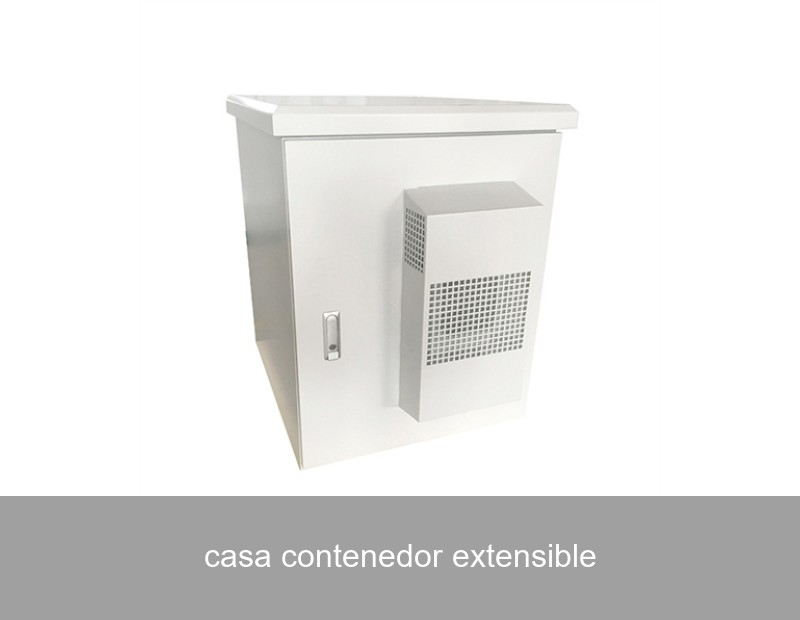
Imagine your home growing with your family's needs, or your remote business expanding without a disruptive construction project. This is the promise of the casa contenedor extensible – the expandable container home. These modular marvels are revolutionizing affordable and flexible living. But as we push the boundaries of design and modularity, a critical question emerges: how do we power these dynamic spaces reliably and sustainably? The answer lies not just in innovative architecture, but in an equally intelligent and scalable approach to energy.
Table of Contents
- The Modular Trend: More Than Just a Shipping Container
- The Hidden Challenge: Energy Demands of an Expanding Home
- The Solution: Scalable Energy Systems for Scalable Spaces
- Case Study: Off-Grid Resilience in the Spanish Highlands
- Designing Your System: Key Components
- What's Your Energy Expansion Plan?
The Modular Trend: More Than Just a Shipping Container
The concept of using shipping containers for housing isn't new. Their structural integrity, mobility, and cost-effectiveness have long been attractive. The real innovation, however, is in the "extensible" aspect. Modern casa contenedor extensible designs feature sophisticated sliding mechanisms, pop-out sections, or stackable modules that can literally transform the footprint of the dwelling in a matter of hours.
This isn't just about adding a room. It's about a home that can adapt: a compact one-bedroom for a couple that unfolds into a three-bedroom family home, or a seasonal tourist cabin that expands during peak summer months. The architectural flexibility is truly impressive.
The Hidden Challenge: Energy Demands of an Expanding Home
Here's where many enthusiasts and builders face a reality check. A home that physically expands also sees a significant increase in its energy consumption. Let's break it down:
- Increased Space: More square meters means more space to heat, cool, and light.
- Additional Appliances: An extra bedroom often means another HVAC unit, more lighting circuits, and potentially additional kitchen or laundry facilities.
- Variable Load Profile: The energy demand isn't static; it changes dramatically between the home's "compact" and "expanded" states.
Relying solely on a traditional grid connection can be limiting, expensive, and, in remote locations, simply impossible. A fossil-fuel generator is noisy, polluting, and costly to run. This creates a paradox: a modern, sustainable modular home hampered by an outdated, inflexible energy system.
The Solution: Scalable Energy Systems for Scalable Spaces
The most elegant solution mirrors the philosophy of the home itself: modularity. A truly future-proof casa contenedor extensible requires a scalable energy storage system. Think of it as an energy foundation that grows in capacity alongside your physical space.
This is where companies with deep expertise in integrated energy systems become essential partners. At Highjoule, for instance, we've spent nearly two decades designing systems for precisely this kind of challenge. Our approach for modular homes centers on a core, high-density battery unit—like our H-Joule CoreCell series—that can be installed during the initial build phase. The genius is in the design: when the home expands, you don't rip out the old system. Instead, you simply add additional battery modules in parallel, seamlessly increasing your energy storage capacity by 50%, 100%, or more.

This is paired with an appropriately sized solar PV array, often installed on the large, flat roof of the container structure. The system is managed by an intelligent inverter and energy management system (EMS) that acts as the brain, deciding when to store solar energy, power the home, or draw from the grid if available.
Why This Works So Well
- Cost-Effective Growth: You invest in energy infrastructure as you need it, not all upfront for future potential.
- Maximized Self-Consumption: You store excess solar power generated during the day to use at night, dramatically reducing bills.
- Resilience: You gain protection from grid outages. Whether you're in a California wildfire zone or a rural European village, your power stays on.
Case Study: Off-Grid Resilience in the Spanish Highlands
Let's look at a real-world application. A client in the rugged Sierra Nevada region of Spain built a casa contenedor extensible as a year-round residence and eco-tourism retreat. The initial phase was a 40-foot container. The challenge: no grid connection, and a plan to add a second 20-foot pop-out module within two years for guest quarters.
The Problem: A standard off-grid system sized for the initial unit would be overwhelmed after expansion, leading to generator dependency.
The Highjoule Solution: We installed a scalable foundation system from the start:
- A 15kW solar canopy mounted above the container.
- One H-Joule CoreCell 10 battery cabinet (10kWh capacity).
- A hybrid inverter capable of managing multiple battery units.
When the expansion module was added 18 months later, the process was straightforward. The construction crew added more solar panels to the new roof section. Our technician then integrated a second CoreCell 10 battery module into the existing cabinet stack in under half a day. The system's EMS automatically recognized the new capacity.
The Data: Before expansion, the home met 98% of its energy needs from solar+storage. In the first full year after expansion, with 50% more living space and occupancy, the system met 94% of the total energy demand. The backup generator runtime fell by over 80% compared to what a conventional system would have required. The client achieved their sustainability goals without compromising on comfort or future growth.
Designing Your System: Key Components
If you're planning a casa contenedor extensible, consider your energy system as part of the architectural blueprint. Here’s a simple framework:
| Component | Role | Scalability Consideration |
|---|---|---|
| Solar PV Array | Primary energy generation | Design roof/land for future panel addition; oversize wiring conduits. |
| Battery Storage | Stores excess energy for use anytime | Choose a modular system like Highjoule's CoreCell that allows capacity addition via plug-and-play modules. |
| Hybrid Inverter | Manages energy flow between solar, battery, home, and grid | Select a unit rated for your ultimate solar and battery capacity, even if installed in phases. |
| Energy Management System (EMS) | The intelligent brain for optimization | Software-based; should adapt to new hardware automatically. |
For deeper insights into battery technologies, resources like the U.S. DOE Battery Testing Manual provide valuable technical background.
Future-Forward: Smart Management and Integration
The final piece is intelligence. A modern system doesn't just store energy; it optimizes it. Imagine your EMS knowing your expansion schedule. On days when the guest module is unoccupied, it could power it down to an eco-mode and divert all energy to the main living area or back to storage. It can integrate with weather forecasts, anticipating a cloudy week and conserving energy preemptively.

Highjoule's H-Sync EMS platform offers this level of control through a simple app, giving owners of a casa contenedor extensible real-time insight and control over their energy ecosystem, whether they're on-site or miles away. This smart management is what transforms a collection of hardware into a truly resilient and efficient power plant for your adaptive home.
Understanding broader energy storage trends can be helpful, as discussed in reports from the International Energy Agency (IEA).
What's Your Energy Expansion Plan?
Your expandable container home represents a vision of adaptability and intelligent design. Shouldn't the energy that brings it to life be just as visionary and prepared for the future? As you sketch your floor plans and select your sliding mechanisms, we invite you to consider this: What capacity will your energy foundation need on day one, and what will it need to grow into?
 Inquiry
 Online Chat