


BLUETTI EB3A Portable Power Station: Your Compact Powerhouse for Modern Adventures
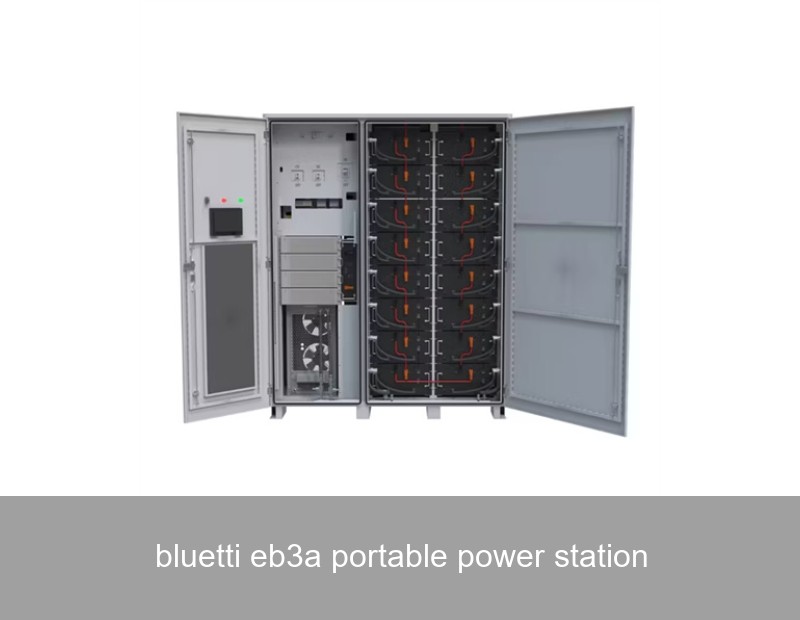
Have you ever been minutes away from capturing the perfect sunset shot, only to have your drone battery die? Or perhaps you've nervously watched your phone's charge plummet during a critical work call at a remote cabin. For outdoor enthusiasts, remote workers, and proactive homeowners, reliable power is no longer a luxury—it's a necessity. This is where portable power stations, like the popular BLUETTI EB3A Portable Power Station, come into play, revolutionizing how we access energy on the go. But while compact units are perfect for individual adventures, the growing demand for resilient, large-scale energy storage is shaping a much bigger story. As a global leader in advanced energy storage systems, Highjoule understands this spectrum of need—from personal power to powering entire businesses sustainably.
Table of Contents
- The Rise of Portable Power: More Than a Gadget
- BLUETTI EB3A Deep Dive: Capabilities and Considerations
- Scaling Up the Power: When Portable Isn't Enough
- Case Study: A California Winery's Journey to Energy Resilience
- Choosing the Right System for Your Energy Needs
- The Future of Energy Storage is Integrated
The Rise of Portable Power: More Than a Gadget
The market for portable power stations has exploded. Driven by a combination of more frequent extreme weather events, the rise of van life and remote work, and a general desire for energy independence, these devices have moved from niche to mainstream. They represent the democratization of energy storage. A report from Grand View Research highlights the market's rapid growth, projecting a compound annual growth rate (CAGR) of over 8% from 2023 to 2030. The appeal is clear: silent, fume-free, and solar-ready power that fits in your car trunk.

Image Source: Unsplash - Portable power enables work and leisure anywhere.
BLUETTI EB3A Deep Dive: Capabilities and Considerations
The BLUETTI EB3A is a standout in the compact category. Weighing just about 10 pounds, it packs a 268Wh capacity (LiFePO4 battery) and a 600W pure sine wave inverter (1200W surge). Its key selling points are rapid recharging (0-80% in under 30 minutes via AC) and versatile output ports (AC, DC, USB-C PD). It's an excellent solution for:
- Weekend camping trips to power lights, a mini-fridge, and cameras.
- Powering essential devices during short-duration power outages.
- Providing a mobile workstation for digital nomads.
However, understanding its limitations is crucial. The 268Wh capacity means it can run a 60W laptop for about 4 hours, but it won't power a standard home refrigerator (500-800W) for long. This is the critical juncture where personal portable power ends and stationary, whole-property energy storage begins.
Battery Chemistry Matters: LFP vs. NMC
It's worth noting the BLUETTI EB3A uses LiFePO4 (LFP) batteries, a safer, longer-lasting chemistry compared to traditional NMC. This reflects a broader industry shift towards LFP for its stability and cycle life—a principle Highjoule has championed for years in our commercial and residential storage systems, where safety and longevity are non-negotiable.
Scaling Up the Power: When Portable Isn't Enough
What happens when your power needs extend beyond charging gadgets to running critical business equipment, medical devices, or an entire household? This is the domain of Highjoule. Since 2005, we've been engineering robust Battery Energy Storage Systems (BESS) that provide intelligent, efficient, and sustainable power solutions.
While a BLUETTI EB3A is your reliable travel companion, Highjoule systems are the permanent energy backbone. Our solutions, ranging from high-capacity residential units to containerized megawatt-scale systems for industry, are designed for:
- Energy Independence: Store solar energy for use day and night, drastically reducing grid reliance.
- Resilience & Backup: Provide seamless, whole-home or critical-load backup during extended outages.
- Commercial Savings: Manage demand charges and participate in grid services (where available).
- Microgrid Integration: Creating self-sustaining energy communities.
Case Study: A California Winery's Journey to Energy Resilience
Let's look at a real-world example from Sonoma County, California—a region prone to wildfires and Public Safety Power Shutoffs (PSPS). A mid-sized winery faced crippling financial and operational risks from multi-day grid outages. Spoiled refrigeration could ruin an entire vintage, and lost production days meant significant revenue loss.
The Problem: A portable power station, even a dozen of them, could not hope to power the winery's 25-ton refrigeration compressors, pumps, and lighting. They needed a robust, integrated solution.
The Highjoule Solution: We deployed a 250kW / 500kWh containerized BESS, integrated with their existing rooftop solar array. The system was programmed for intelligent peak shaving and provided seamless backup power.
| Metric | Before Highjoule BESS | After Highjoule BESS |
|---|---|---|
| Backup Runtime for Critical Loads | ~2 hours (diesel generator) | > 10 hours (silent, zero-emission) |
| Annual Demand Charge Savings | $0 | ~$18,000 |
| Grid Energy Consumption During Peak | 100% | Reduced by ~40% |
| CO2e Emissions Reduction | Baseline | Estimated 12 tonnes/year |
This case, documented in part with data from the California Air Resources Board on clean energy incentives, shows the transformative impact of scaling storage correctly. The winery secured its operations, improved its sustainability profile, and achieved a strong return on investment.

Image Source: Unsplash - Solar and storage for agricultural business resilience.
Choosing the Right System for Your Energy Needs
How do you navigate the choice between a portable power station and a full-scale system? It boils down to your power requirements, duration needs, and scalability goals.
- For Mobile, Short-Duration Needs (Camping, Tailgating): A BLUETTI EB3A-class device is ideal. It's affordable, portable, and perfect for low-wattage essentials.
- For Whole-Home Backup & Solar Self-Consumption: This requires a stationary system like Highjoule's Residential H-Series. With capacities from 10kWh to 30kWh+, these systems integrate with your home's electrical panel and solar, powering everything from refrigerators to HVAC systems for days, not just hours.
- For Commercial & Industrial Applications: Highjoule's C&I Modular Systems offer scalable, turnkey solutions. They manage complex loads, provide black start capability, and can be configured for both backup and ongoing financial optimization through energy arbitrage.
The Future of Energy Storage is Integrated
The evolution from a portable power station to a grid-interactive home or business system represents a broader trend: the move towards integrated, smart energy ecosystems. Devices like the BLUETTI EB3A are the gateway, raising awareness about the freedom of stored energy. The next logical step is applying that principle at a larger scale to create true energy resilience.
Innovation in software is key. Highjoule's Energy Management System (EMS) acts as the brain of our installations, using AI and weather data to optimize when to store, use, or even sell energy back to the grid, maximizing economic and environmental benefits. This level of intelligence is what transforms a battery from a simple backup into a strategic asset.
As noted by the International Energy Agency, energy storage is a cornerstone of the clean energy transition. It's about having the right tool for the job, whether it's a 10-pound box for your campsite or a multi-megawatt system for your community.
 Inquiry
 Online Chat