


Unlocking Sustainable Power: A Deep Dive into Modern EcoSolar Energy Solutions
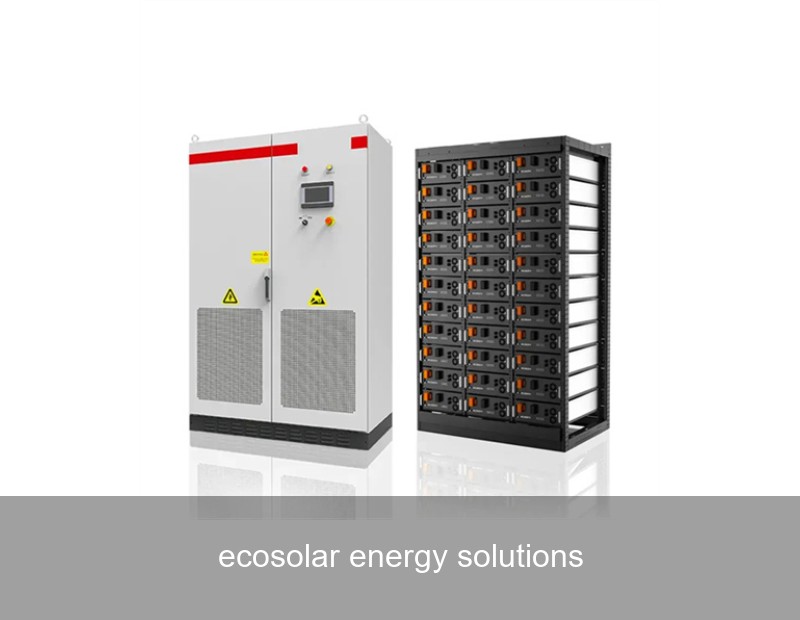
Table of Contents
- The Rise of the EcoSolar Imperative
- Beyond Panels: What Truly Defines EcoSolar Energy Solutions?
- The Data Behind the Shift: Why EcoSolar Makes Economic Sense
- Case Study: A Real-World Industrial Transformation
- The Highjoule Approach: Intelligent Integration for Maximum Impact
- Future Horizons for EcoSolar Systems
The Rise of the EcoSolar Imperative
Let's face it: the conversation around energy has fundamentally changed. It's no longer just about keeping the lights on; it's about how we do it responsibly, reliably, and affordably. This is where the concept of EcoSolar energy solutions takes center stage. But what exactly does this term mean today? If you're picturing just rooftop solar panels, think bigger. Modern EcoSolar represents a holistic, integrated system that combines solar generation with advanced energy storage and smart management to create truly self-sufficient and sustainable power ecosystems. For homeowners, businesses, and entire communities, it's the key to unlocking energy independence while making a tangible positive impact on our planet.
Beyond Panels: What Truly Defines EcoSolar Energy Solutions?
An effective EcoSolar energy solution is like a well-conducted orchestra. Each component must perform flawlessly and in harmony with the others. The core pillars include:
- High-Efficiency Photovoltaic (PV) Generation: The starting point—modern solar panels that convert sunlight into electricity with remarkable efficiency, even in less-than-ideal light conditions.
- Advanced Battery Energy Storage Systems (BESS): This is the game-changer. Storage captures excess solar energy produced during the day for use at night, during peak tariff periods, or when the grid is down. It transforms solar from an intermittent source into a 24/7 power solution.
- Intelligent Energy Management Systems (EMS): The "brain" of the operation. This software dynamically monitors, controls, and optimizes energy flow—deciding when to store, when to consume, and when to potentially sell back to the grid based on weather forecasts, usage patterns, and electricity prices.
- Seamless Grid Integration: True solutions offer grid-supportive features, allowing for safe operation and providing services that can actually stabilize the local electricity network.
When these elements are engineered to work together from the ground up, you achieve more than just savings; you achieve resilience and true sustainability.

Image Source: Unsplash - A modern home EcoSolar setup with solar generation and battery storage.
The Data Behind the Shift: Why EcoSolar Makes Economic Sense
The momentum behind EcoSolar energy solutions isn't driven by ideology alone; the numbers tell a compelling story. According to the International Energy Agency (IEA), renewables are set to contribute 80% of new power capacity to 2030 under current policies, with solar PV alone accounting for more than half of that expansion. But why the rush?
- Falling Costs: The levelized cost of solar PV electricity has plummeted by over 80% in the last decade.
- Rising Grid Prices: Volatility in fossil fuel markets has led to increased and unpredictable electricity bills for consumers and businesses across Europe and North America.
- Incentives: Policies like the U.S. Investment Tax Credit (ITC) and various European Union Green Deal initiatives significantly improve the return on investment.
For a commercial entity, this isn't just an "environmental play." It's a strategic financial decision that locks in lower, predictable energy costs for 25+ years, protects against outage-related losses, and enhances corporate sustainability credentials.
Case Study: A Real-World Industrial Transformation
Consider the case of a mid-sized food processing plant in Bavaria, Germany. Facing rising energy costs and stringent sustainability targets from its parent company, the plant needed a reliable way to decarbonize its operations.
- Challenge: High daytime energy demand, expensive peak-time tariffs, and a need for uninterrupted cooling processes.
- Solution: A 1.2 MW rooftop solar array was integrated with a 500 kWh containerized battery storage system and a sophisticated energy management platform.
- Results (12-month post-installation):
Metric Outcome Grid Electricity Consumption Reduced by 68% Peak Demand Charges Reduced by 92% Carbon Footprint Reduced by over 580 tons CO2e annually Payback Period Estimated at 5.2 years
This tangible example shows how a tailored EcoSolar energy solution directly addresses both economic and environmental bottom lines.
The Highjoule Approach: Intelligent Integration for Maximum Impact
This is where Highjoule's expertise becomes critical. Since 2005, we've moved beyond simply supplying components to designing fully integrated, intelligent power ecosystems. Our philosophy is that the synergy between components is as important as the components themselves.
For a residential client, our Highjoule HomePower solution might feature high-density lithium-ion batteries paired with a hybrid inverter that seamlessly manages solar, storage, and grid power. Our AI-driven platform learns the household's habits, weather patterns, and utility rate structures to autonomously optimize for cost and comfort.
For commercial and industrial applications, like the plant in Bavaria, our Highjoule GridMax series offers scalable, containerized BESS solutions. These systems are engineered for durability and come with our proprietary Orchestrator EMS, which can perform complex tasks like peak shaving, load shifting, and even participating in grid-balancing programs for additional revenue streams. We don't just install hardware; we deliver a guaranteed performance outcome.

Image Source: Unsplash - An engineer inspecting a commercial-scale battery storage unit.
Future Horizons for EcoSolar Systems
The evolution of EcoSolar energy solutions is accelerating. We're looking at the integration of vehicle-to-grid (V2G) technology, where electric vehicles become mobile storage units. Community-based virtual power plants (VPPs), aggregating thousands of distributed home systems to act as a single power plant, are already being piloted in places like California and Australia, as noted in research from the National Renewable Energy Laboratory (NREL). The future is decentralized, digital, and democratized.
So, as you evaluate your path to energy resilience, ask yourself this: Is your current energy strategy a collection of disparate parts, or a unified, intelligent system designed for the challenges and opportunities of the 21st century? What would energy independence look like for your home or business?
 Inquiry
 Online Chat