


Your Guide to Building a Reliable Celda Fotovoltaica Casera (Home Solar Cell System)
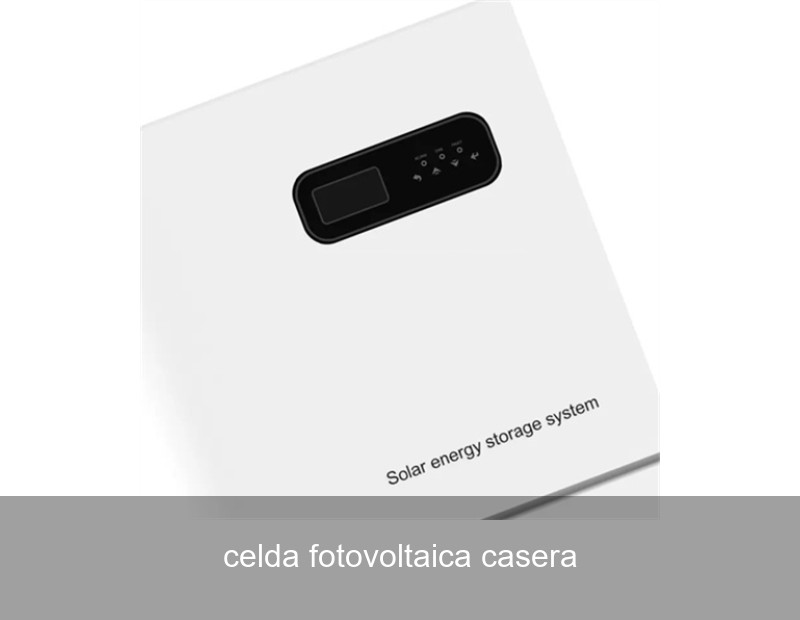
Have you ever looked at your rising electricity bill and wondered if the sun shining on your roof could be the answer? You're not alone. The concept of a celda fotovoltaica casera—a home solar cell system—has moved from a niche DIY project to a mainstream solution for energy independence. But moving from a few panels to a fully functional, safe, and efficient home energy system is a significant undertaking. This guide will walk you through the key considerations, from the initial spark of an idea to a robust system that powers your home, with a focus on the critical role of modern energy storage.
Table of Contents
- The DIY Reality: More Than Just Panels on a Roof
- The Missing Piece: Why Storage is Non-Negotiable
- From Concept to Reality: A Case Study in Energy Resilience
- Building Your System: Components Beyond the Cell
- Why Professional Integration Makes the Difference
- Is Your Home Ready for an Energy Transformation?
The DIY Reality: More Than Just Panels on a Roof
The idea of a "homebrew" solar system is appealing. The basic principle seems straightforward: photovoltaic cells convert sunlight into direct current (DC) electricity, an inverter changes it to alternating current (AC) for your home, and you save money. However, the modern celda fotovoltaica casera is a sophisticated energy ecosystem. The real challenge isn't just generation; it's management. Without intelligent control, you might be exporting precious energy to the grid for minimal compensation during the day only to buy it back at a high price at night.
Image Source: Unsplash - A professional solar installation is the foundation of a safe system.
The Data: Understanding Your Energy Curve
Let's look at the typical energy production and consumption mismatch. A standard home solar array peaks production around midday. Yet, for many households, energy demand peaks in the early morning and evening—when the sun is low or down. According to the U.S. Department of Energy, this mismatch can mean that without storage, a household might only directly consume 30-50% of the solar energy it produces, relying heavily on the grid the rest of the time.
The Missing Piece: Why Storage is Non-Negotiable
This is where the conversation about a true celda fotovoltaica casera evolves. The cornerstone of modern energy independence is the battery storage system. It's the component that transforms your solar array from a grid-supplement tool into a personal power plant.
- Energy Time-Shifting: Store excess solar energy from the afternoon to use during the high-rate evening hours.
- Backup Power: Provide critical electricity during grid outages, keeping lights, refrigeration, and communication devices on.
- Grid Services: In some regions, advanced systems can even provide grid support, though this requires professional-grade equipment.
This is precisely where a company like Highjoule adds immense value. As a leader in advanced energy storage since 2005, Highjoule doesn't just sell batteries. We provide integrated, smart storage solutions designed to seamlessly connect with your solar panels. Our EverSafe Home Battery Series is built with safety and longevity in mind, using stable lithium iron phosphate (LiFePO4) chemistry and featuring an intelligent energy management system that learns your usage patterns to optimize self-consumption.
From Concept to Reality: A Case Study in Energy Resilience
Let's make this tangible with a real-world example. Consider a family home in Freiburg, Germany—a region committed to renewables but not immune to grid fluctuations.
| Challenge | Solution | Result (First Year) |
|---|---|---|
| High grid dependency, volatile energy costs, desire for outage protection. | Installation of an 8 kWp solar array integrated with a Highjoule EverSafe 10 kWh battery system and our Harmony Energy Manager. |
|
This case, documented through our partner network, shows that a well-integrated system is more than the sum of its parts. The intelligence of the energy manager, which prioritizes solar charging and load shifting, was key to these results.
Building Your System: Components Beyond the Cell
So, what does a complete, reliable celda fotovoltaica casera entail? Here’s a breakdown:
- Photovoltaic Panels: The "cells" themselves. Monocrystalline panels are the efficiency leaders for space-constrained roofs.
- Inverter(s): The heart of the system. For storage systems, a hybrid inverter or a separate battery inverter is needed to manage DC-AC conversion for both solar and battery.
- Battery Storage: The energy reservoir. Capacity (kWh) and power rating (kW) must be sized to your consumption and backup needs.
- Energy Management System (EMS): The brain. This software controls energy flow, deciding when to charge, discharge, or export.
- Safety & Grid Interface: Includes isolators, circuit breakers, and, crucially, a grid-interactive switch that safely isolates your system during a blackout if configured for backup.

Image Source: Unsplash - Professional installation ensures safety and performance.
The Professional Edge in System Integration
Connecting these components isn't like assembling furniture. High-voltage DC from solar panels and the complex software handshake between inverter, battery, and grid require expertise. Poor integration can lead to inefficiency, safety hazards, and voided warranties. This is a key reason to work with certified partners who use proven, compatible components.
Why Professional Integration Makes the Difference
At Highjoule, we've spent nearly two decades refining not just hardware, but the integration philosophy. Our approach for residential clients focuses on simplicity, safety, and scalability.
Our Harmony Energy Manager is a prime example. It acts as the unifying intelligence for your celda fotovoltaica casera, integrating with leading solar inverter brands and our own EverSafe batteries. You get a single, intuitive app to monitor production, consumption, and storage, while the system automatically chooses the most economical and resilient operating mode. For larger needs, such as industrial or microgrid applications, Highjoule's GridMax series offers containerized, utility-scale storage solutions that provide stability and renewable energy integration for communities and businesses.
Furthermore, standards and regulations are crucial. In the US, systems must comply with the National Electrical Code (NEC), particularly Article 690 for Solar and 706 for Energy Storage. In Europe, IEC standards and local grid codes apply. Reputable providers ensure full compliance, which a DIY approach risks missing. The Solar Energy Industries Association (SEIA) provides extensive resources on why professional installation matters.
Is Your Home Ready for an Energy Transformation?
The journey to a functional and empowering celda fotovoltaica casera is an exciting one. It starts with a clear understanding of your goals: Is it pure bill savings, backup power, or reducing your carbon footprint? The next step is a professional energy assessment to analyze your consumption patterns and roof suitability.
We believe the future of energy is decentralized, intelligent, and sustainable. The technology to make your home an active part of this future is here. What specific energy goal—be it never worrying about a blackout, locking in your energy rate, or simply maximizing your use of clean power—would motivate you to take the next step in exploring a truly integrated home solar and storage system?
 Inquiry
 Online Chat