


Home Energy Generation Ideas: Powering Your Independence
Feeling the pinch of rising electricity bills? You're not alone. Across Europe and the US, homeowners are increasingly looking beyond the grid, exploring home energy generation ideas to take control of their power, costs, and carbon footprint. This isn't just about saving money—it's about building resilience and participating in the energy transition. From solar panels to battery storage, the technology for energy independence is more accessible and efficient than ever. Let's explore the practical pathways to generating your own clean power at home.
Table of Contents
The Rise of the Prosumer: A New Energy Reality
Gone are the days when homeowners were merely consumers of electricity. Today, you can be a "prosumer"—both producing and consuming energy. This shift is driven by a powerful combination: volatile fossil fuel prices, advancing renewable technology, and supportive policies like tax credits and feed-in tariffs. The International Energy Agency (IEA) notes that renewable capacity additions soared by almost 50% in 2023, with distributed solar PV on homes and businesses being a major contributor. This trend underscores a fundamental move towards decentralized, resilient power systems.
Core Home Energy Generation Ideas
So, what are your options? Let's break down the most viable and popular home energy generation ideas available today.
Solar Photovoltaic (PV) Systems
The undisputed champion of residential renewable energy. Rooftop solar panels convert sunlight directly into electricity. Modern systems are highly efficient, even in less-sunny climates like Northern Europe. The key is a well-designed system tailored to your roof's orientation, angle, and local weather patterns.
- Pros: Low operating costs, abundant fuel (sunlight), increases property value.
- Considerations: Upfront investment, dependent on daylight hours, requires space.

Image Source: Unsplash - A modern home with a rooftop solar PV installation.
Small-Scale Wind Turbines
For properties with sufficient land and good wind resources (typically average speeds above 5 m/s), a small wind turbine can be an excellent complement or alternative to solar.
- Pros: Can generate power day and night, effective in windy regions.
- Considerations: Highly site-specific, may require planning permission, visual and noise impact.
The Game Changer: Energy Storage Systems
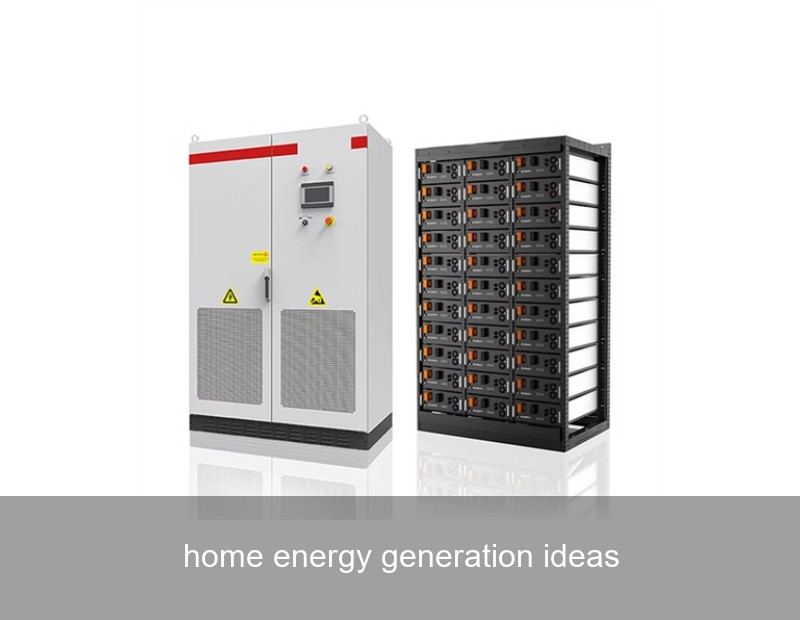
This is where the true potential of home energy generation ideas is unlocked. A battery storage system, like those developed by Highjoule, allows you to store the excess solar or wind energy you produce during the day for use at night or during peak tariff periods. It turns intermittent generation into a reliable, 24/7 power source.
| Without Storage | With Highjoule Storage |
|---|---|
| Excess solar energy exported to grid at low rates. | Excess energy stored for personal use, maximizing self-consumption. |
| Powerless during grid outages, even with solar panels. | Backup power capability keeps essential loads running during blackouts. |
| Vulnerable to evening peak electricity prices. | Use stored cheap energy to avoid buying expensive grid power. |
Case Study: From Bill Shock to Energy Security in Bavaria
Let's look at a real-world example. The Schmidt family in Bavaria, Germany, installed a 9.8 kWp solar PV system in 2020. While their daytime electricity costs plummeted, they still relied heavily on the grid in the evenings, especially in winter. Their annual electricity bill remained around €1,200 after solar.
In early 2023, they integrated a Highjoule HES-10 home energy storage system (10 kWh capacity). The results after one year were striking:
- Self-consumption rate increased from 35% to 82%.
- Annual grid electricity purchase reduced by an additional 70%.
- Projected bill savings increased to over €1,800 per year.
- Energy security: The system provided uninterrupted power during two minor grid outages.
"The battery wasn't just an add-on; it completed our system," says Mr. Schmidt. "We now think of our home as a personal power station. The Highjoule system's intuitive app lets us optimize every kilowatt-hour, and knowing we have backup power gives us immense peace of mind."
Beyond Technology: Incentives and Integration
A successful home energy project isn't just about hardware. Smart integration and leveraging financial incentives are crucial. In the US, the federal Investment Tax Credit (ITC) now covers 30% of the cost of a solar-plus-storage installation. Many European countries offer feed-in premiums or VAT reductions. Furthermore, virtual power plant (VPP) programs allow aggregated home batteries to support the grid and earn revenue for homeowners—a concept Highjoule actively enables through its grid-service-ready systems.
How Highjoule Empowers Your Energy Independence
As a global leader in advanced energy storage since 2005, Highjoule is more than just a product provider; we are your partner in designing a resilient and intelligent home energy ecosystem. Our solutions are engineered to seamlessly integrate with your generation assets, whether solar, wind, or both.
Our flagship HES Series for residential use features:
- Scalable Capacity: Modular designs from 5 kWh to 30+ kWh to match any household's needs.
- High Efficiency & Longevity: Advanced lithium-iron-phosphate (LFP) chemistry ensures safety, over 6,000 deep-cycle life, and 95%+ round-trip efficiency.
- Smart Energy Management: Our AI-driven Highjoule EnergyOS platform learns your consumption patterns, weather forecasts, and tariff schedules to autonomously optimize energy flow, maximizing savings and comfort.
- Grid Services Ready: Prepared for participation in VPPs and demand response programs, turning your storage into a potential revenue stream.

Image Source: Unsplash - A clean, wall-mounted home battery storage unit being installed.
For homeowners, this translates to a system that works tirelessly in the background, not just storing energy, but intelligently managing it to deliver the highest possible value from your home energy generation ideas.
Ready to Explore Your Home's Potential?
The journey to energy independence starts with a clear understanding of your home's unique profile—your roof space, energy consumption, local climate, and goals. Which of your current appliances or habits would be the first you'd want to power with your own clean, resilient energy source?
 Inquiry
 Online Chat