


China Datang Corporation Renewable Power: A Global Catalyst for Smarter Energy Storage
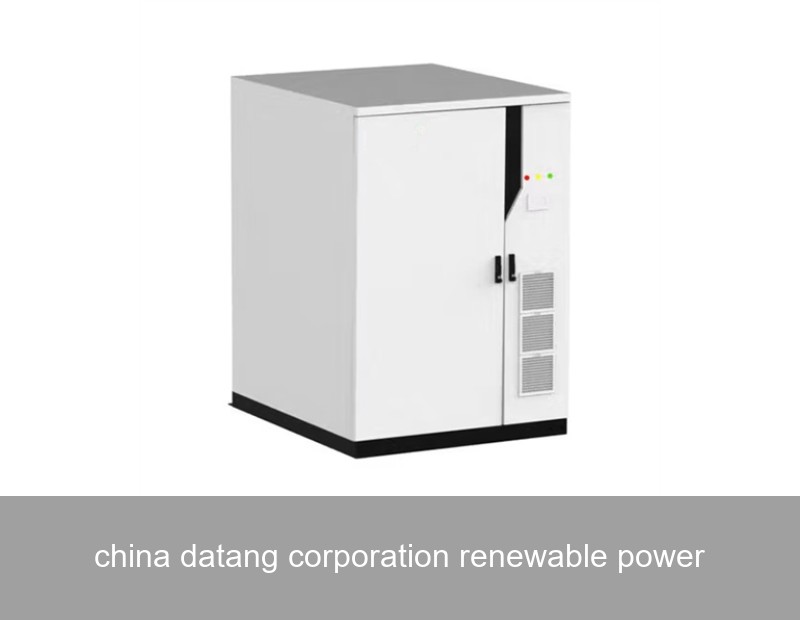
Look at the global energy landscape today, and one trend is unmistakable: the massive shift towards renewable power. From sprawling solar farms in the Mojave Desert to vast offshore wind parks in the North Sea, nations are investing heavily to decarbonize their grids. Leading this charge in Asia is the China Datang Corporation renewable power initiative, a colossal force developing gigawatts of clean energy. But here's a question we at Highjoule often ponder: What happens when the sun doesn't shine, or the wind stops blowing? The success of giants like Datang doesn't just highlight our green ambitions; it underscores the most pressing challenge of our energy transition—the need for advanced, intelligent storage. Let's explore how the growth of renewable power is making smart energy storage not just an option, but an absolute necessity for grids in Europe, the US, and beyond.
The Global Surge in Renewable Power
The numbers are staggering. According to the International Energy Agency (IEA), renewable electricity capacity additions jumped nearly 50% in 2023, reaching almost 510 gigawatts (GW). Solar PV alone accounted for three-quarters of this expansion. This isn't a regional phenomenon; it's a global one, driven by policy, falling technology costs, and corporate sustainability goals. Entities like the China Datang Corporation renewable power division are pivotal, operating as both utilities and developers, bringing immense projects online that contribute significantly to national and global renewable targets. Their work in wind, solar, and hydro is a testament to the scale at which the energy sector is transforming.

Image Source: Unsplash - A large-scale solar farm, similar to those developed by major energy corporations globally.
China Datang Corporation: A Renewable Power Giant's Strategy
To understand the scale, let's look closer. China Datang Corporation (often referred to as CHINA DATANG or simply Datang) is one of China's "Big Five" state-owned power generation enterprises. Its renewable power portfolio is a cornerstone of its strategy. The corporation has been aggressively pivoting from coal-based generation, with ambitions to have 50% of its installed capacity come from non-fossil fuels by 2025. This means deploying thousands of megawatts of new solar, wind, and hydropower projects. This strategic shift mirrors a worldwide pattern where major energy producers are fundamentally rethinking their asset base, creating a domino effect that stresses traditional grid infrastructure designed for predictable, constant power from fossil fuels.
The Critical Gap: Why Generation Isn't Enough
Here lies the core challenge. Renewable sources like solar and wind are inherently variable and intermittent. The grid, however, requires a perfect balance between supply and demand in real-time. When a cloud passes over a massive solar farm or wind speeds drop, generation can plummet in minutes. Conversely, during peak production hours, there can be more power than the local grid can absorb, leading to "curtailment"—where renewable energy is wasted. This volatility creates two major problems:
- Grid Instability: Frequency and voltage fluctuations can damage equipment and lead to blackouts.
- Economic Inefficiency: Wasted clean energy and the need for expensive "peaker" plants (often gas-fired) to fill gaps defeat the environmental and economic goals of the transition.
This is precisely where the narrative shifts from mere generation to intelligent management. The sheer scale of projects from companies like China Datang Corporation renewable power amplifies this need on a grand scale.
The Highjoule Solution: Intelligent Energy Storage for a Stable Grid
At Highjoule, we see this not as a problem, but as the defining opportunity for modern energy systems. Since 2005, we've specialized in bridging this very gap. Our advanced Battery Energy Storage Systems (BESS) are the shock absorbers and buffers for the modern grid. Think of them as a high-tech reservoir: they store excess renewable energy when production is high and release it precisely when it's needed most.
Our product suite, including the commercial-grade HJ-Cube and the industrial-scale HJ-Matrix, is designed for this era of variability. But we go beyond just hardware. Our integrated smart energy management platform uses AI and predictive analytics to:
- Forecast renewable generation and load patterns.
- Automatically dispatch stored energy to maximize self-consumption, provide grid services, or avoid peak demand charges.
- Seamlessly integrate with existing solar, wind, and grid connections.
For a utility-scale solar farm inspired by the model of China Datang Corporation renewable power projects, a Highjoule BESS can transform an intermittent resource into a reliable, dispatchable power plant. It can provide critical grid services like frequency regulation, helping to maintain the grid's balance every second of the day.
| Challenge | Traditional Grid Response | Highjoule BESS Solution |
|---|---|---|
| Mid-Day Solar Peak | Curtailment (wasting energy) or grid overload | Store excess energy for evening peak demand |
| Sudden Drop in Wind | Ramp up gas-fired peaker plants | Instantaneously discharge stored power to fill the gap |
| Grid Frequency Dips | Manual adjustment from large generators | Automated, millisecond-frequency response |
A Real-World Case: Smoothing Solar Peaks in California
Let's make this concrete with a case from California, a leader in renewable adoption with a grid that faces significant solar variability. A commercial developer with a 20 MW solar facility was experiencing severe curtailment during peak sunlight hours, losing valuable revenue and reducing the project's overall efficiency and return on investment. Furthermore, the local utility was concerned about voltage swings affecting nearby customers.
The solution was a co-located 8 MW / 32 MWh Highjoule HJ-Matrix system. Here’s what happened:
- Data: The system captured over 95% of would-be-curtailed solar energy.
- Economic Impact: It enabled energy arbitrage—selling stored power during high-price evening hours—boosting project revenue by an estimated 22% annually.
- Grid Benefit: It provided voltage support, stabilizing the local distribution network and deferring the need for costly grid upgrades.
This example mirrors the challenges and solutions relevant to large-scale renewable integration anywhere, including projects by entities like China Datang Corporation renewable power. It demonstrates that storage is the key to unlocking the full value of renewable assets. You can read more about California's grid challenges from the California Independent System Operator (CAISO).

Image Source: Unsplash - An engineer monitoring advanced energy storage systems, similar to Highjoule's installations.
Beyond Storage: The Future is Integrated and Intelligent
The next evolution is the true integration of generation, storage, and load into resilient microgrids. Imagine an industrial park powered by its own solar canopies, backed by a Highjoule BESS, with intelligent controls that can "island" from the main grid during an outage or price spike. This is the level of energy independence and resilience we are enabling for our commercial, industrial, and utility partners today. As reported by research from the National Renewable Energy Laboratory (NREL), such hybrid systems are becoming the most cost-effective way to ensure reliability. The journey pioneered by massive generation projects needs this intelligent, decentralized counterpart to be fully realized.
Your Energy Future
Whether you're a project manager overseeing a utility-scale renewable farm, a business owner looking to cut energy costs and carbon footprint, or a community planner designing a resilient microgrid, the equation has changed. The growth of renewable power, exemplified by giants like China Datang Corporation renewable power, sets the stage. The final, crucial piece is intelligent storage and management.
So, we leave you with this question: As your organization plans its energy future, how will you bridge the gap between the clean power you generate and the reliable, constant power your operations or community demands?
 Inquiry
 Online Chat