


China Solar Power Inverter: The Heart of Modern Energy Systems
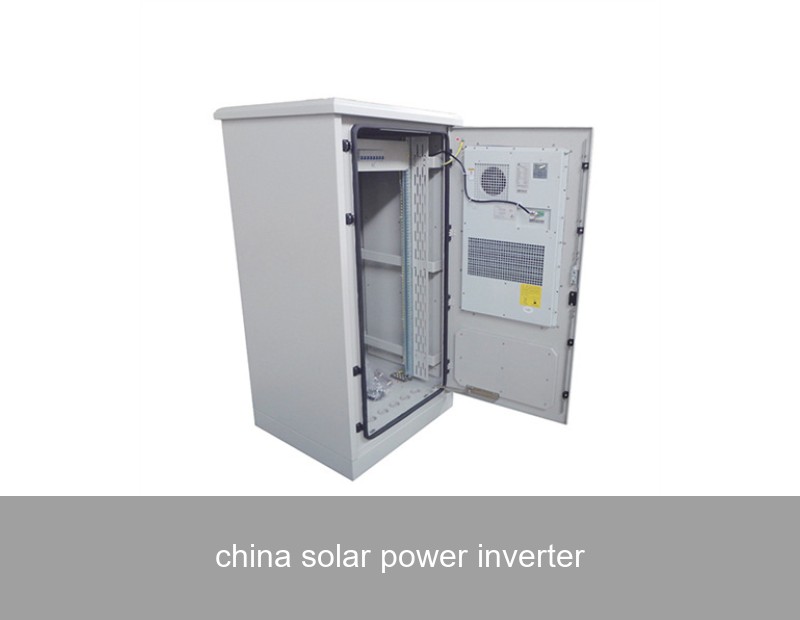
When you think of solar power, the gleaming panels likely steal the spotlight. But for those of us in the industry, the true hero of the story is often humming quietly in the background: the China solar power inverter. This critical device is the brain and heart of any photovoltaic (PV) system, converting the raw DC power from your panels into usable AC electricity for your home or business. Its performance directly dictates your system's efficiency, reliability, and ultimately, your return on investment. As global demand for clean energy surges, understanding the innovation and quality driving today's inverter market, especially from manufacturing leaders, is key to building a resilient energy future. Let's delve into why this technology is so pivotal and how it's evolving to meet tomorrow's grid challenges.
Table of Contents
- More Than Conversion: The Inverter's Evolving Role
- China's Inverter Innovation: Quality, Intelligence, and Scale
- Beyond the Inverter: The Rise of Integrated Energy Storage Systems
- Case Study: A German Industrial Park's Journey to Energy Independence
- Choosing the Right System: Key Considerations for Homeowners and Businesses
- The Future is a Two-Way Street: Inverters and Grid Modernization
More Than Conversion: The Inverter's Evolving Role
Gone are the days when an inverter's job was simply "DC to AC." Think of it this way: if solar panels are the muscles generating power, the modern inverter is the Olympic-level coach and strategist. It performs maximum power point tracking (MPPT) to squeeze every possible watt from the panels under varying weather conditions. It ensures the electricity's waveform is perfectly synchronized with the utility grid (a must for safety and feed-in tariffs). Crucially, it provides vital system monitoring, alerting you to drops in performance.
But the role is expanding. With grids becoming more dynamic and the push for self-consumption growing, advanced inverters now must manage bidirectional power flow, especially when paired with batteries. They are the essential gatekeepers for solar-plus-storage systems, deciding when to store energy, when to use it, and when to sell it back to the grid based on your settings and real-time conditions. This intelligence is what transforms a simple solar installation into a smart, resilient energy asset.
China's Inverter Innovation: Quality, Intelligence, and Scale
The narrative around China solar power inverter technology has matured significantly. Initially known for cost-effective manufacturing, Chinese brands have invested heavily in R&D, driving a wave of innovation focused on efficiency, durability, and smart features. According to the International Energy Agency (IEA), China dominates global manufacturing capacity for solar PV components, with its inverter segment reflecting a similar trajectory of scale and technological advancement (IEA Solar PV Report, 2023).
Today's leading Chinese inverters compete on global benchmarks:
- Peak Efficiency: Models consistently achieve over 98.5% conversion efficiency, minimizing energy loss.
- Advanced Topology: Widespread adoption of transformerless designs and multi-level topologies for lighter weight, higher efficiency, and better grid compatibility.
- Grid Support Functions: Built-in capabilities for voltage/frequency regulation, low-voltage ride-through (LVRT), and reactive power control, which are becoming mandatory for grid interconnection in Europe and North America.
- Cybersecurity & Software: A strong focus on secure communication protocols and user-friendly monitoring platforms that offer granular system insights.
This evolution means that specifying a high-quality inverter is no longer just about the brand's origin, but about the specific features, certifications (like IEC, UL, VDE), and after-sales support that match your local grid requirements and energy goals.

Image: A modern, wall-mounted solar inverter, the central hub of a PV system. Source: Unsplash
Beyond the Inverter: The Rise of Integrated Energy Storage Systems
This is where the story gets even more interesting. The true potential of solar is unlocked when generation is paired with storage. This is no longer a niche concept; it's the foundation of energy independence and grid stability. As a global leader, Highjoule has been at the forefront of this shift since 2005. We don't just see an inverter; we see the core of an integrated energy ecosystem.
Highjoule's solutions, such as our HES Series Hybrid Energy Storage Systems, embody this integrated philosophy. These systems combine a high-efficiency, bi-directional inverter/charger with modular lithium-ion battery packs and intelligent energy management software (EMS). The inverter within this system is specifically engineered for seamless storage interaction, enabling features like:
- Time-of-Use Optimization: Automatically charges batteries with cheap/solar power and discharges during peak rate periods.
- Backup Power: Provides seamless, uninterrupted power during grid outages, a critical feature for businesses and homeowners alike.
- Grid Services: For commercial and utility-scale projects, aggregated systems can provide grid stability services like frequency response.
By thinking beyond the inverter to a complete system, Highjoule ensures compatibility, safety, and peak performance across all components, delivering a future-proof solution for residential, commercial, and microgrid applications.
Case Study: A German Industrial Park's Journey to Energy Independence
Let's look at a real-world application that highlights the importance of inverter intelligence and system integration. A mid-sized manufacturing park in Bavaria, Germany, faced rising grid tariffs and sought to maximize its on-site solar investment (a 550 kWp rooftop array). Their old inverters lacked storage compatibility and smart controls.
The solution involved upgrading to a new fleet of advanced, storage-ready string inverters and integrating a Highjoule C&I Battery Storage System with 800 kWh capacity. The system's core intelligence lies in its inverter/charger technology and EMS, which were configured to prioritize self-consumption and peak shaving.
| Metric | Before Installation | After Installation |
|---|---|---|
| Solar Self-Consumption Rate | 35% | Over 85% |
| Grid Power Demand During Peak Hours | ~180 kW | Reduced to near zero |
| Annual Grid Electricity Costs | €112,000 | €41,000 (est.) |
| CO2 Footprint Reduction | — | Additional 62 tonnes/year |
The data speaks for itself. By choosing an intelligent system built around capable inverter technology, the park significantly cut costs, boosted its green credentials, and gained resilience against energy price volatility. The project underscores a key insight: the inverter is the decision-making engine that turns solar and storage from assets into strategic tools. (Fraunhofer ISE Photovoltaics Report offers context on system economics).
Choosing the Right System: Key Considerations for Homeowners and Businesses
So, whether you're a homeowner or a business manager, what should you look for? It starts with the inverter's capabilities but must encompass the entire system vision.
- For Homeowners: Prioritize safety, simplicity, and self-sufficiency. Look for hybrid inverters or AC-coupled systems that offer easy battery expansion. Highjoule's residential solutions, for example, feature plug-and-play battery modules and an intuitive app for monitoring and control, all managed by a robust inverter platform certified to the highest safety standards.
- For Businesses & Industry: Focus on scalability, peak shaving algorithms, and robust grid-support functions. Your inverter must be a good grid citizen. Highjoule's C&I systems are designed with modular architecture, allowing capacity to grow with your needs, and their EMS can be tailored for complex tariff structures and demand charge management.
Always verify certifications for your region and inquire about the software roadmap—future-proofing through firmware updates is a hallmark of a quality provider.

Image: Utility-scale solar farms rely on hundreds of sophisticated inverters. Source: Unsplash
The Future is a Two-Way Street: Inverters and Grid Modernization
The ultimate destination is a decentralized, interactive grid. In this future, millions of solar and storage systems, each governed by a smart inverter, will act as a virtual power plant (VPP). These inverters will receive signals from grid operators to collectively adjust output or draw power from batteries to stabilize the network. This turns every prosumer into a grid participant.
The ongoing innovation in China solar power inverter technology and in global system providers like Highjoule is directly enabling this transition. We are developing inverters with even more advanced grid-forming capabilities, allowing microgrids to operate independently from the main grid, and enhancing our EMS platforms for seamless VPP aggregation.
The question is no longer just about generating clean power, but about how intelligently we can manage and share it. As you consider your own energy transition, are you looking for a simple component supplier, or a technology partner that can provide the intelligent system to navigate the evolving energy landscape?
 Inquiry
 Online Chat