


Unlocking Grid Stability and Energy Independence: A Deep Dive into the Taiyo 1.2 MW Energy Storage Cabinet
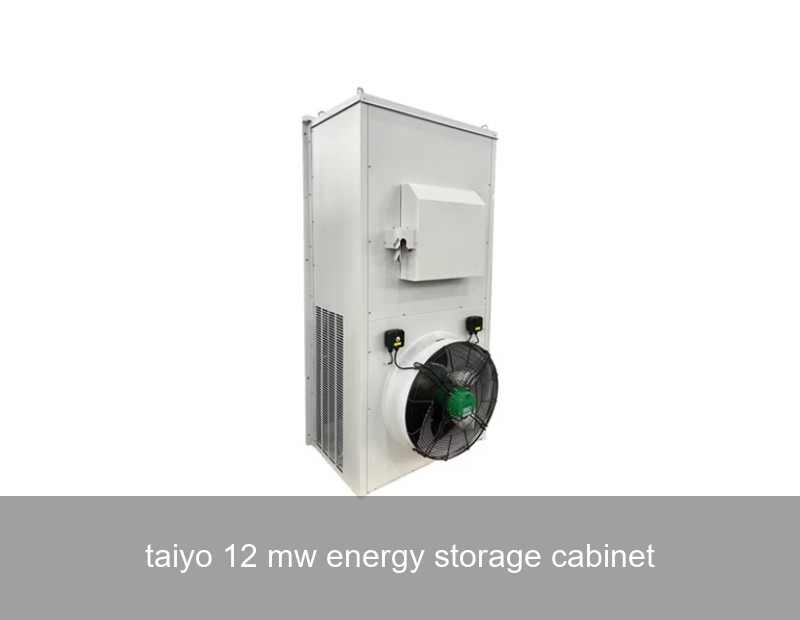
Imagine a world where every solar panel and wind turbine could deliver power precisely when it's needed, not just when the sun shines or the wind blows. This isn't a distant dream; it's the reality being built today with advanced battery energy storage systems (BESS). At the heart of this transformation for commercial and industrial (C&I) applications are powerful, modular solutions like the Taiyo 1.2 MW energy storage cabinet. This technology is more than just a battery; it's a sophisticated power hub, enabling businesses to take control of their energy costs, contribute to grid stability, and accelerate the renewable energy transition. In this article, we'll explore why solutions like the Taiyo are critical, how they work in the real world, and what this means for the future of energy in markets like Europe and the United States.
Table of Contents
- The Challenge: Intermittency Meets Rising Demand
- The Solution: Enter the Containerized Megawatt-Scale BESS
- The Taiyo 1.2 MW Cabinet Deconstructed: More Than Just Batteries
- A Real-World Case Study: Smoothing Peaks in California
- Highjoule's Role: Delivering Intelligent Storage Solutions
- The Future Horizon: What's Next for C&I Storage?
The Challenge: Intermittency Meets Rising Demand
Our global shift towards renewables presents a beautiful paradox: cleaner energy, but with inherent variability. A cloud passing over a solar farm or a lull in the wind can cause significant dips in power generation. Conversely, during peak sunny or windy periods, grids can become overloaded with excess electricity they can't immediately use. This volatility creates a dual problem: grid instability and financial inefficiency for energy producers and consumers alike.
The data underscores the urgency. According to the International Energy Agency (IEA), global renewable capacity is set to expand by 2,400 GW between 2022-2027. However, to integrate this volume effectively, the world needs a massive deployment of energy storage. In the U.S. alone, the Energy Information Administration (EIA) projects that battery storage capacity will multiply significantly, with C&I applications playing a crucial role. This is where megawatt-scale, containerized storage systems become the indispensable linchpin.
The Solution: Enter the Containerized Megawatt-Scale BESS
Think of a 1.2 MW energy storage cabinet as a giant, intelligent power bank for the grid or a large facility. Units like the "Taiyo" are typically pre-assembled, all-in-one solutions housed in standardized containers or cabinets. They are designed for rapid deployment and seamless integration. Their primary functions are transformative:
- Peak Shaving: Storing cheap energy during off-peak hours and discharging it during expensive peak times, slashing demand charges.
- Renewable Firming: "Smoothing out" the jagged output of solar or wind farms, making them behave more like predictable traditional power plants.
- Grid Services: Providing critical services like frequency regulation and voltage support to maintain grid stability, often creating new revenue streams.
- Backup Power: Offering a bridge of reliable power during outages, ensuring business continuity.

Credit: Photo by American Public Power Association on Unsplash
The Taiyo 1.2 MW Cabinet Deconstructed: More Than Just Batteries
While the name often highlights the power rating (1.2 Megawatts), a system like the Taiyo is an ecosystem of advanced components working in concert. Let's break down what's inside the cabinet:
| Core Component | Function | Why It Matters |
|---|---|---|
| Lithium-Ion Battery Racks | The core energy reservoir, typically using LFP (Lithium Iron Phosphate) chemistry for safety and longevity. | Provides high energy density, rapid response, and thousands of charge/discharge cycles. |
| Power Conversion System (PCS) | The "brain" of power flow; converts DC battery power to AC grid power and vice versa. | Determines the system's efficiency and its ability to follow complex grid signals precisely. |
| Thermal Management System | Advanced cooling (liquid or air) to maintain optimal battery temperature. | Critical for safety, performance, and extending the system's operational life. |
| Energy Management System (EMS) | The master software controller that decides when to charge or discharge based on algorithms. | This is where the intelligence lies, maximizing economic value or grid support automatically. |
| Safety & Monitoring Suite | Includes fire suppression, gas detection, and 24/7 remote monitoring. | Ensures fail-safe operation and provides peace of mind for operators and communities. |
This integrated design is what companies like Highjoule have perfected over nearly two decades. Since 2005, Highjoule has been at the forefront, designing smart, efficient, and sustainable power solutions. Our C&I and utility-scale storage systems, which share the same core philosophy as solutions like the Taiyo, are engineered for reliability and are backed by sophisticated software platforms that optimize every kilowatt-hour for maximum return on investment and grid impact.
A Real-World Case Study: Smoothing Peaks in California
Theory is one thing; real-world performance is another. Let's look at a concrete example from California, a leader in renewable adoption and grid innovation.
The Phenomenon: A large winery in Napa Valley installed a significant rooftop solar array. While this reduced their daytime energy costs, they faced a severe problem: their operational peaks (for cooling, crushing, etc.) often extended into the early evening when solar generation dropped. This resulted in punishing "demand charges" from their utility, which are based on the highest 15-minute power draw in a billing cycle.
The Data & Solution: The facility deployed a 1 MW / 2 MWh containerized BESS (similar in scale and function to a Taiyo 1.2 MW system). The system was programmed for peak shaving and solar self-consumption optimization.
- Result: The system reduced the facility's peak demand from the grid by over 40%.
- Financial Impact: This translated to an annual reduction in electricity costs of approximately $125,000.
- Grid Benefit: By lowering its peak draw, the winery alleviated stress on the local distribution grid during the critical evening ramp period, a common challenge known as the "duck curve," as detailed by the California Independent System Operator (CAISO).

Credit: Photo by Thom Milkovic on Unsplash
This case perfectly illustrates the dual value proposition: substantial savings for the business and enhanced stability for the community grid. It's a model replicable across countless industries, from manufacturing to data centers.
Highjoule's Role: Delivering Intelligent Storage Solutions
At Highjoule, we see ourselves as more than just hardware providers; we are partners in energy transformation. Our approach to systems like the Taiyo 1.2 MW energy storage cabinet concept involves:
- Customized Engineering: We tailor system sizing and configuration to match specific load profiles, renewable assets, and local market rules (like FERC Order 2222 in the U.S. or balancing mechanisms in Europe).
- Advanced Software Integration: Our proprietary EMS can be configured for multiple, stacked value streams—managing self-consumption, participating in demand response programs, or even bidding into wholesale energy markets automatically.
- Full Lifecycle Support: From feasibility studies and financial modeling to installation, commissioning, and long-term performance monitoring, Highjoule provides end-to-end support to ensure our clients' storage assets perform optimally for their entire 15-20 year lifespan.
For a business or utility considering a step into large-scale storage, partnering with an experienced provider is crucial. The technology is complex, and the regulatory landscape is constantly evolving. Highjoule's deep expertise, gained from hundreds of deployments worldwide, helps de-risk projects and unlock the full potential of every storage investment.
The Future Horizon: What's Next for C&I Storage?
The evolution of the Taiyo 1.2 MW energy storage cabinet and its peers is far from over. We are on the cusp of several exciting advancements:
- Chemistry Diversification: While LFP dominates today, research into solid-state, sodium-ion, and other chemistries promises even greater safety, lower cost, and resource abundance.
- AI-Driven Optimization: The next generation of EMS will use artificial intelligence and machine learning to predict energy prices, weather, and load patterns with incredible accuracy, making split-second decisions that maximize value.
- Virtual Power Plants (VPPs): Individual systems like Taiyo cabinets will increasingly act as coordinated fleets, forming cloud-based VPPs that can trade power and provide grid services at a scale that rivals traditional power plants.

Credit: Photo by Shane Rounce on Unsplash
These trends point toward a more decentralized, digital, and resilient energy system. The question is no longer if large-scale storage will be mainstream, but how quickly organizations can adapt to harness its benefits.
Your Energy, Your Control
Is your business or community ready to transform its energy profile from a passive expense into an active, strategic asset? What would achieving energy independence and unlocking new revenue streams mean for your operational resilience and bottom line? The journey begins with understanding the power of technologies like advanced energy storage cabinets. We invite you to explore what a tailored solution could look like for you.
 Inquiry
 Online Chat